Not long ago, a friend asked me what I was up to. I told him that I was writing a series of blog posts on the history of The Howdy Doody Show. At that point, he began reciting the names of the show’s characters: “Buffalo Bob, Clarabell the Clown, Princess Summerfall Winterspring, Chief Thunderthud. And what was the name of the bad puppet?” “Phineas T. Bluster,” I said, “Yes.” My friend agreed, “That’s right, Phineas T. Bluster. And what was that funny-looking dog?” “Flub-a-Dub,” I answered, “and he wasn’t a dog; he was a South American animal that was composed of different animals.” We Baby Boomers do know our Howdy Doody characters, but do we really?

I first published this post, “Citizens of Doodyville,” on March 14, 2020. However, since then, I’ve found new and exciting information, which led me to do a rewrite. As before, the post got way too long. To solve that issue, I decided to split it into two posts. In this post, I’ll cover the human characters and, in the next, the marionettes and puppets.
So let’s take a walk down “Doodyville’s” Memory Lane, meeting once again those beloved human citizens, and learn a little bit about the history of those actors who brought them to life.
This post was updated on August 9, 2025
Clarabell the Clown
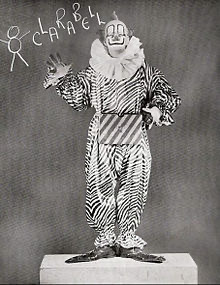
Perhaps the best-known citizen of “Doodyville,” besides Buffalo Bob and Howdy, was Clarabell the Clown. Clarabell wore a baggy striped costume with a ruffled collar. He also had a fringe of bright red hair, with a tuff of it sticking straight up on the top of his head. Belted to his waist was a box with his name on it; attached to it were two horns, one marked YES and the other marked NO, which Clarabell used to communicate, along with pantomime. It seemed that Clarabell’s lot in life was to play pranks on Buffalo Bob, which drove Bob crazy; after which Clarabell would always baptize him with seltzer water from a bottle.
Although Eddie Kean created the clown Clarabell Hornblow, the character’s personality and actions evolved through the three principal actors who honked their horns throughout the 13 years of the program’s run. And it all started with the first actor to put on the clown’s makeup and striped suit and embrace the role, Bob Keeshan.
Bob Keeshan: The First Clarabell
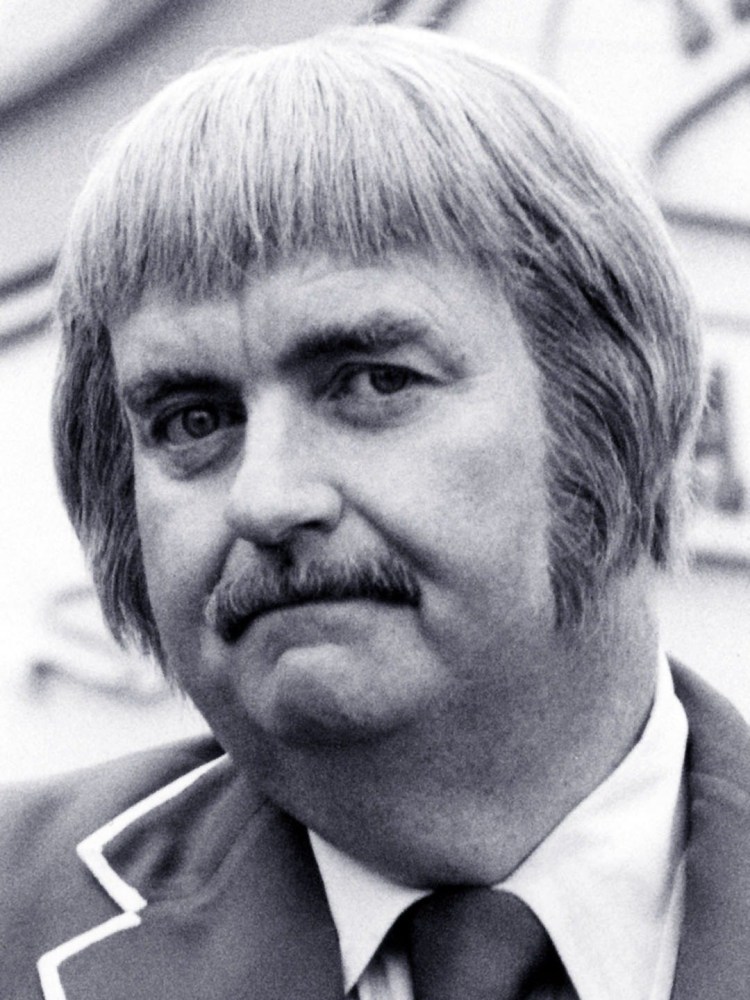
Bob Keeshan got his start in show business as an NBC Page. That’s when Keeshan began working with Bob Smith on his radio show Triple B Ranch, as well as some of Smith’s earlier programs. Bob Smith took a liking to the young Keeshan, calling him Robby. One source I’m using for these posts says that Smith called Keeshan Bobby; however, on the April 6, 1948 broadcast, you can clearly hear Smith say, Robby, not Bobby.
The job of a Page lasted only six months, so when Keeshan’s six months were running out, he asked Smith if he could be hired permanently. At that time, Smith was preparing for his Puppet Playhouse television show, which offered plenty of opportunities for the young Keeshan.
During the first broadcasts of Puppet Playhouse, Keeshan’s job was to hold the cue cards for Smith to read. During one broadcast, Smith needed a prop from offstage. Asking Keeshan to bring it to him. Keeshan picked up the prop and walked on camera wearing his work sport coat and slacks. Keeshan began to appear more and more on camera, always wearing his street clothes.
An NBC executive happened to see Keeshan walk on camera in his street clothes. The executive didn’t think Keeshan’s wardrobe fit the show’s circus theme. Calling the show producer, Roger Muir, the executive ordered Muir to“Get that guy a clown outfit.” The only clown costume in the NBC wardrobe department was that of a classic opera clown.
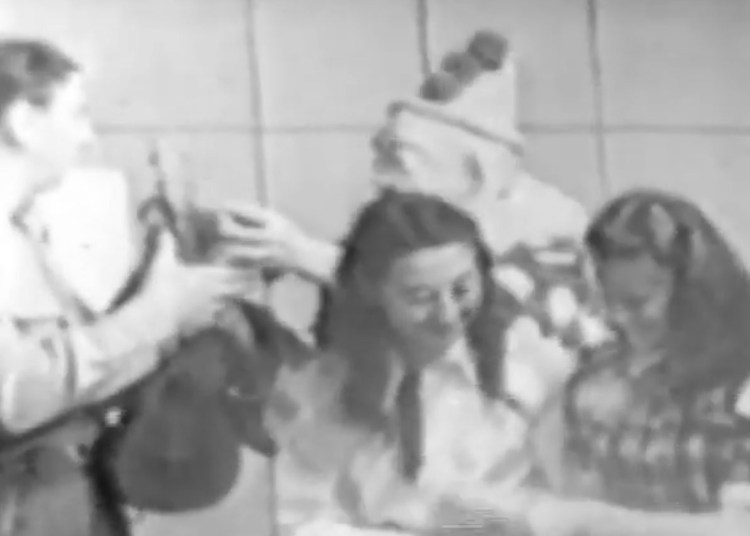
On the telecast of April 6, 1948, Bob Smith did a baseball bit with the “Fun House” kids (pre-Peanut Gallery). In this, Smith sang “Take Me Out to the Ball Game.” When he got to the part of “Buy me some peanuts and crackerjacks,” he stopped singing, telling the kids that they needed some peanuts and crackerjacks. Calling off stage for the snacks, Smith expected Keeshan to bring in the props; it was Keeshan, but this time in clown makeup and the opera clown outfit. If you get a chance, check out this moment on YouTube. It seems to me that Smith was as surprised as anyone to see Keeshan as a clown; could this have been Clarabell’s first prank on Buffalo Bob? Anyway, so began the evolution of Clarabell the Clown.
Because all opera clowns were mute, Keeshan played the role as such. Muir wasn’t happy with the opera outfit, so he sent Keeshan to New York’s Brookes Costume Shop. Muir had called ahead, instructing Brookes to dress Keeshan in a more contemporary clown costume and keep the cost down. The shop just happened to have a bolt of green and white zebra-striped cloth, which they were happy to be rid of. From that, they sewed Keeshan’s costume, adding a big yellow ruff around its neck.
As for Clarabell’s unique makeup, that was created by Dick Smith, the head of NBC makeup at the time. It was Dick Smith who created Clarabell’s bald head, red hair tuffs, red nose, and face makeup. Dick Smith would go on to Hollywood, where he did the make-up for the movies: Little Big Man, The Godfather, The Exorcist, Taxi Driver, and, in 1985, Dick Smith won the Academy Award for Best Makeup for the movie Amadeus. But in all of his credits, he doesn’t mention that he was the one who created the best-known clown in the world.
In 1950, the relationship between Keeshan, Bob Smith, Roger Muir, and Eddie Kean deteriorated. Bob Smith didn’t like the fact that Keeshan couldn’t play a musical instrument; Kean didn’t like that he had no acting ability, and Muir thought Keeshan was too much of an instigator amongst the cast members. Unable to put up with Keeshan any longer, they fired him in June. As a replacement for Keeshan, NBC hired Gil Lamb. But that didn’t last long.
The Peanuts couldn’t be fooled. They knew this imposter was NOT CLARABELL! The public outcry was so great that NBC let Lamb go, less than a month in the role, and rehired Keeshan. Bob Keeshan would remain Clarabell until he was fired again on June 23, 1950, due to a salary dispute. This was known as “the Christmas Eve Massacre,” which I’ll go into greater detail in a later post.
During his tenure on the Howdy Doody Show, Keeshan also played the mystical medicine man, Chief Featherman.
We need not feel sorry for Bob Keeshan, because he would go on to play another children’s television icon, Captain Kangaroo. The Captain ran for nearly 30 years, three times as long as Howdy Doody.
Bob Keeshan died on January 23, 2004, in Windsor, Vermont, at the age of 76. He’s buried in Saint Joseph’s Cemetery in Babylon, New York.
Gil Lamb: The Forgotten Clarabell
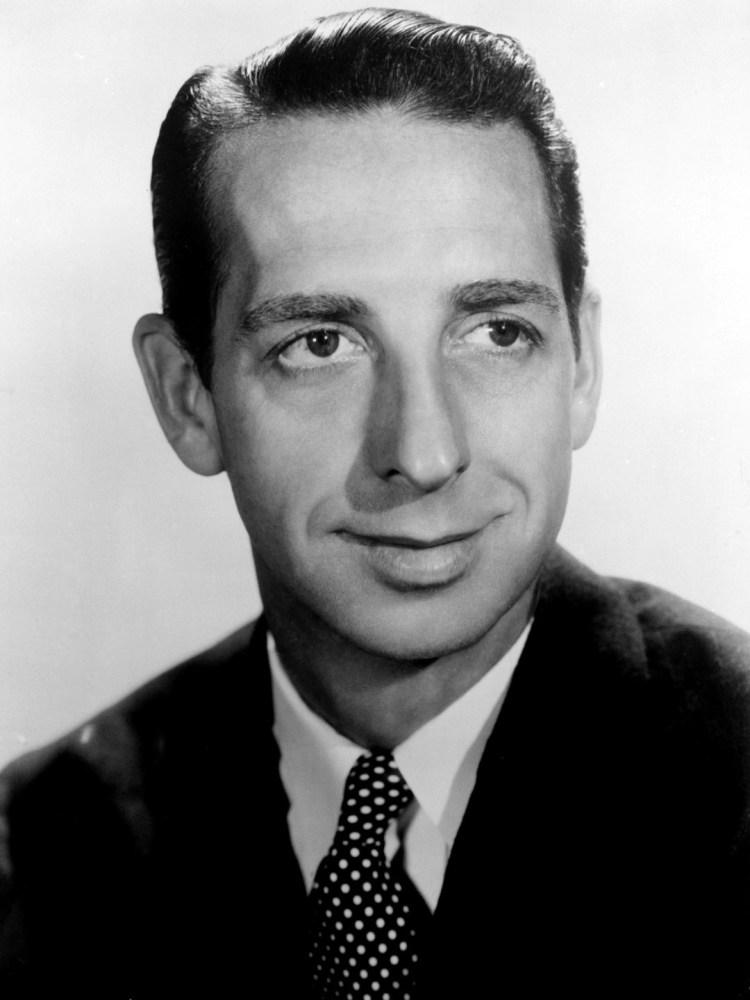
Most of the articles and books on The Howdy Doody Show only list Bob Keeshan, Bob Nicolson, and Lew Anderson in the role of Clarabell. However, just like James Bond’s George Lazenby, there was a fourth, mostly unknown Clarabell, and that was the veteran actor Gil Lamb.
On the very night that NBC fired Keeshan for the first time, they already had a new Clarabell taking the stage: Gil Lamb, a theatrically trained actor and mime. Although Lamb’s Clarabell could dance and play instruments, which made Smith, Kean, and Muir happy. The slim six-foot-three Lamb couldn’t win over the peanuts watching. As I mentioned earlier, the public outcry was so great that NBC let Lamb go and rehired Keeshan.
Although Lamb’s time on Howdy Doody was only seven episodes, he would go on to become a very successful character actor. Some of his films were Breakfast at Tiffany’s, Bye Bye Birdie, Good Neighbor Sam, The Shakiest Gun in the West, The Love Bug, and others. Besides Clarabell, Lamb would also appear as another famous clown.
As I was Googling for information on where Lamb was buried, I saw down the list of links, “gil lamb as bozo.” That really got my attention. It seems that in 1954, Lamb played Bozo in the pilot episode of the television show Bozo the Clown. That show wasn’t picked up, but you can still watch that pilot on YouTube.
Gil Lamb died at the age of 91 in Riverside, California, on November 2, 1995. He was laid to rest at Saint Stanislaus Cemetery in Meriden, New Haven County, Connecticut.
Bernie Morshen: Who?
After Keeshan was fired, for the second and last time, the producers scrambled to find a new Clarabell. To buy them some time, Kean wrote stories that didn’t involve the clown. They needed to find someone quickly, without repeating the mistake made in 1950.
That’s when, according to Davis in his book, they put the suit on the show’s prop man, Bernie Morshen. Morshen appeared as Clarabell for only about a week. During that time, he just honked his horn and stood in the background. Even with his brief and uneventful time on the show, wearing the makeup and suit makes Mordhen an official Clarabell, and also the least known Clarabell of them all.
With Morshan not working out, Muir turned to Nick Nicholson and said, “Nick, you do Clarabell.”
Robert “Nick” Nicholson: The Reluctant Clarabell
Robert “Nick” Nicholson was a friend of Bob Smith’s from Buffalo, New York. Nicholson had been hired by Smith to be the music director for the Howdy Doody Show in October 1952. Besides handling the show’s musical arrangements, he also played the character J Cornelius “Corny” Cobb.
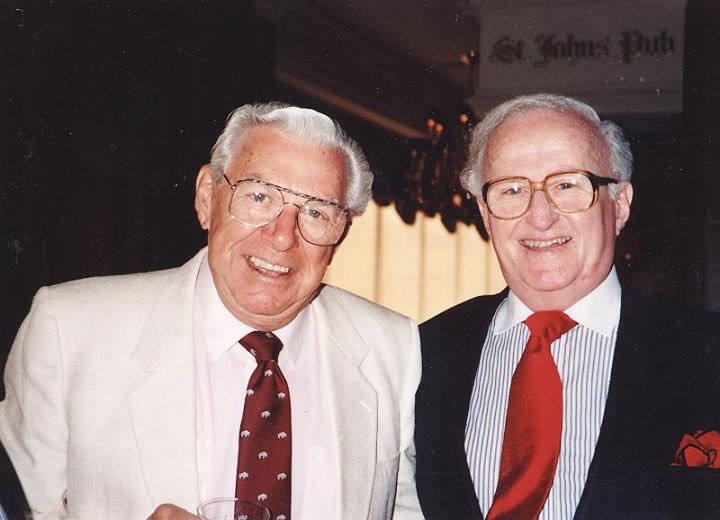
Nicholson wasn’t as much hired for the role of Clarabell, in that he was drafted, as I pointed out above. After they put the makeup and suit on him, they found that he was the spitting image of Keeshan’s Clarabell. Although Nicholson’s Clarabell looked the same, his actions were totally different. While Keeshan was brooding and rough, Nicholson was more relaxed and could play musical instruments.
Even though he wasn’t thrilled with the role, Nicholson would put on the clown make-up until 1954, when he gladly passed the seltzer bottle to Lew Anderson. After leaving the role of Clarabell, he returned to the character of J. Cornelius “Corny” Cobb.
In the 1960s, Nicholson partnered with Howdy Doody’s producer E. Roger Muir, forming the television production company Nicholson-Muir Productions. Nicholson-Muir would produce some of the best-known game shows, one being The Newlywed Game. They also produced the short-lived The New Howdy Doody Show in the 1970s.
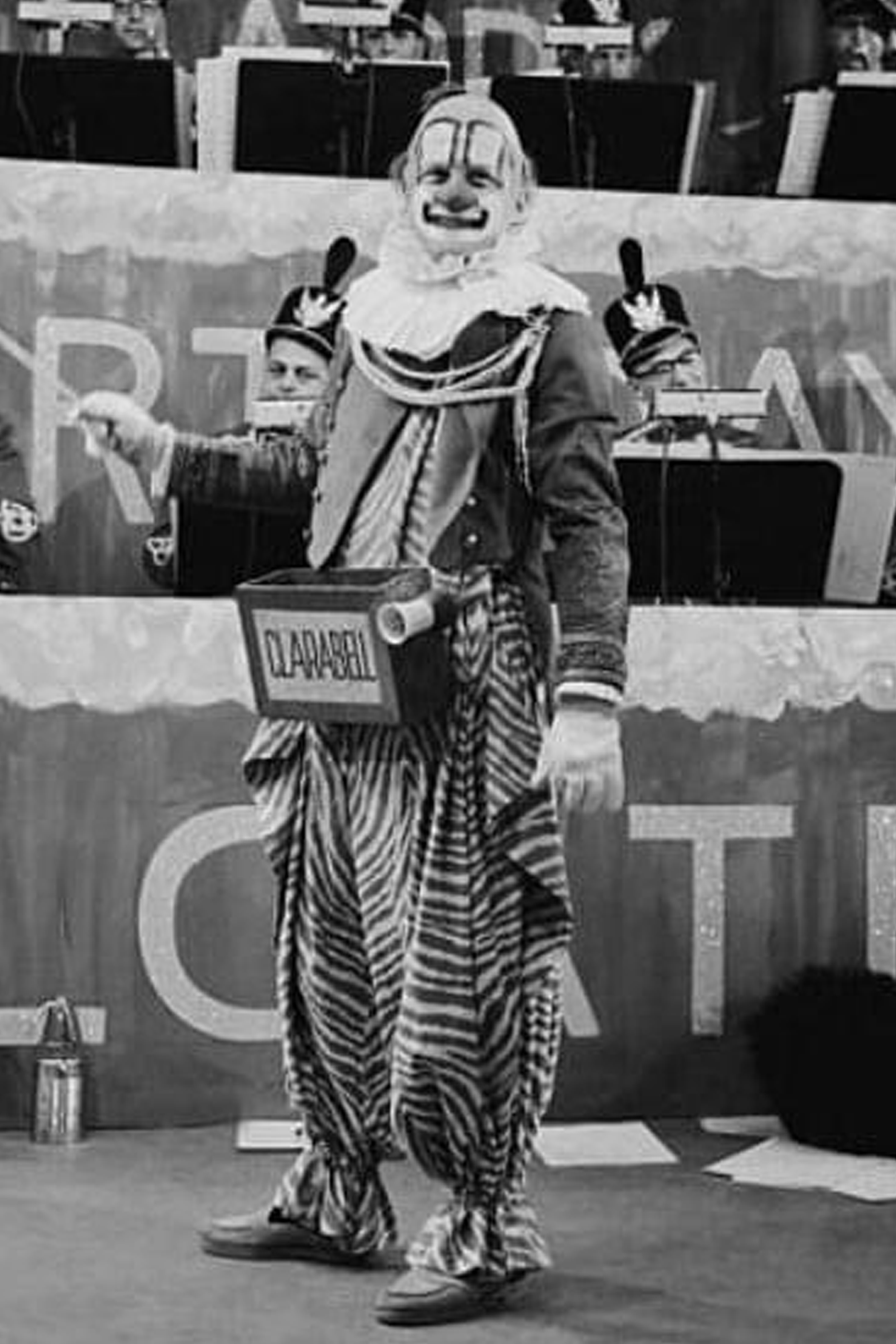
Besides his work on Howdy Doody and in television production, Nicholson was also an accomplished musician. He composed, arranged, and conducted the NBC Symphony for ten years while he was working on The Howdy Doody Show. He would also fill in for bandleader Skitch Henderson on The Tonight Show.
Nicholson was one of the founders of the Westchester Philharmonic, and later in life, he was the principal conductor for the Florida Symphonic Pops (now the Boca Raton Symphonic Pops). He has a music scholarship named in his honor, “The Nick Nicholson Music Scholarship Fund,” at Palm Beach Community College.
Nick Nicholson passed away on September 23, 1993, at the age of 75, in Jacksonville, Florida.
Lew Anderson: The Clarabell We All Knew
As I stated above, Nicholson was never really happy playing Clarabell, and after two years, he requested that he be replaced by fellow musician Lew Anderson.

Lew Anderson would honk the horns and spray the seltzer longer than any of the other actors. Anderson played Clarabell on the show from 1955 till its last episode in 1960, and then on The New Howdy Doody Show, and the 1987 40th Anniversary Special, Hey, Kids, What Time Is It. During the 1970s and 80s, it was Anderson as Clarabell who accompanied Bob Smith’s Buffalo Bob on public appearances.
There is another piece of history with Lew Anderson’s Clarabell. In the thirteen years of The Howdy Doody Show, Clarabell was always mute, never speaking, except once. I mentioned this in my post, “Goodbye Kid’s.”
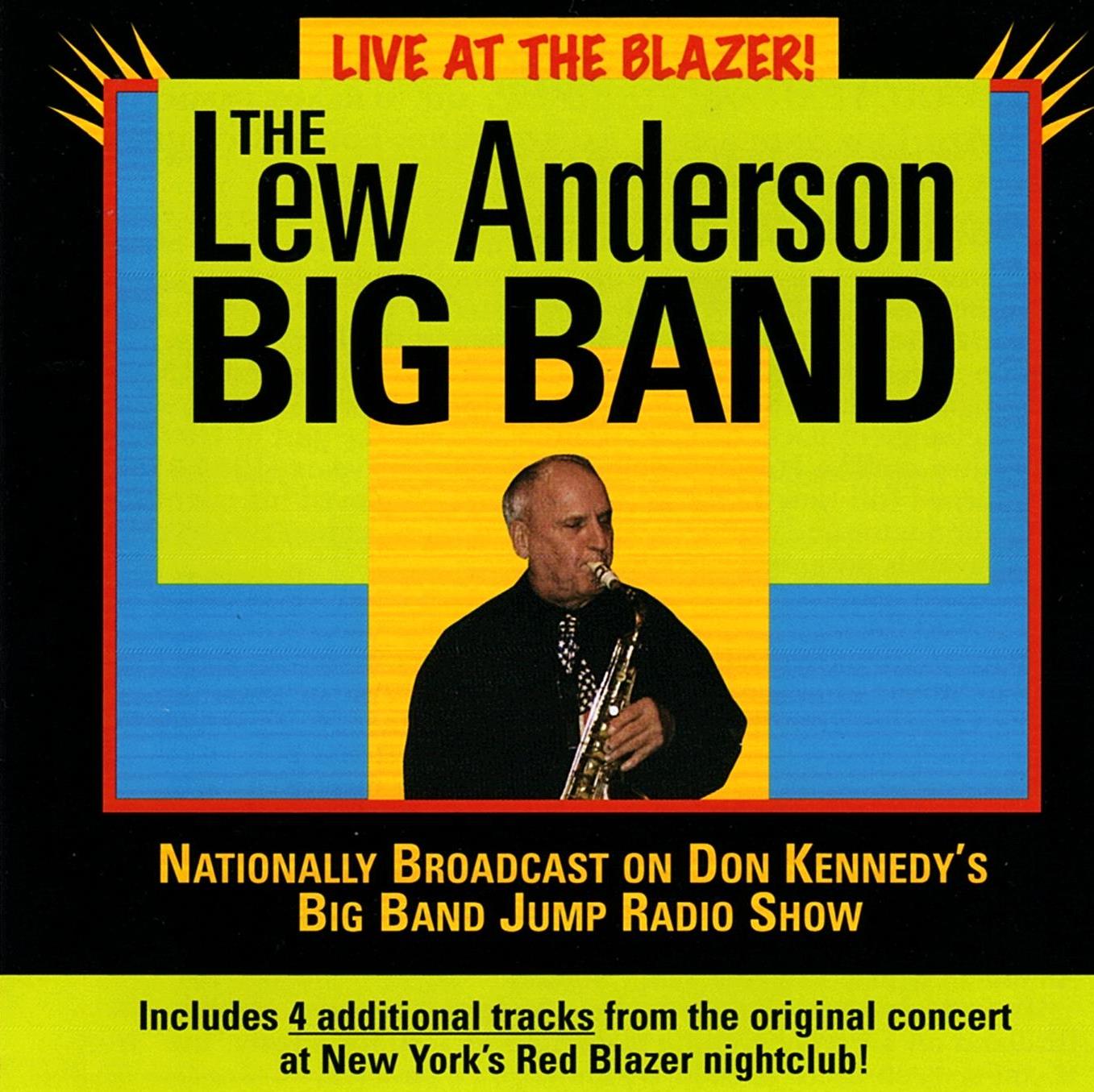
Before becoming Carabell, Anderson was a successful jazz musician, performing on the radio and on The Ed Sullivan Show with his singing group “The Honey Dreamers.” In 1989, Anderson formed a 16-piece jazz orchestra called “The Lew Anderson All-American Big Band.” His band would play at such hot New York jazz clubs as Red Blazer Too, Birdland Jazz Club, and The Half Note Club, to name just a few.
Lew Anderson passed away at the age of 85 on May 14, 2006, in Hawthorne, New York.
Other Clarabells. Well, kind of
The Canadian Clarabell
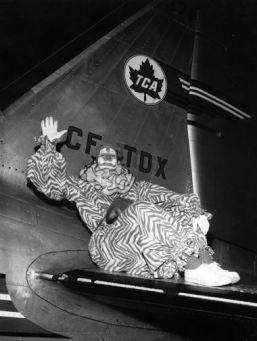
In Part 6: the Peanut Gallery & Beyond I write about the franchised Howdy Doody Show, including the Canadian version. In that segment, I’ll tell of Alfie Scopp, the Canadian Clarabell.
On the Road Again
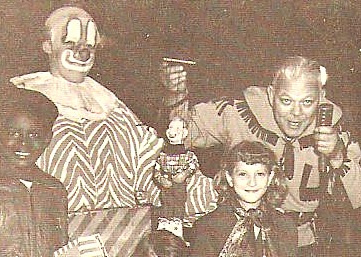
Here’s another interesting piece of Howdy Doody’s history. There was a company named Pol Parrot Road Promotions. This company had Bob Smith’s older brother, Vic, playing “Buffalo Vic,” making personal appearances hawking Howdy Doody merchandise. With Buffalo Vic, there was a host of uncredited actors playing what was known as “Road Clarabell’s.”
Happy Days
There was one other actor who played Clarabell the Clown, and it was on February 18, 1975, Happy Days television show’s episode titled “The Howdy Doody Show.” In this episode, the Cunningham family appears on what was the original Howdy Doody Show, which fits the Happy Days time period. Bob Smith makes a guest appearance as Buffalo Bob. Of course, this show had to have a Clarabell the Clown, and he was played by Bob Brunner.
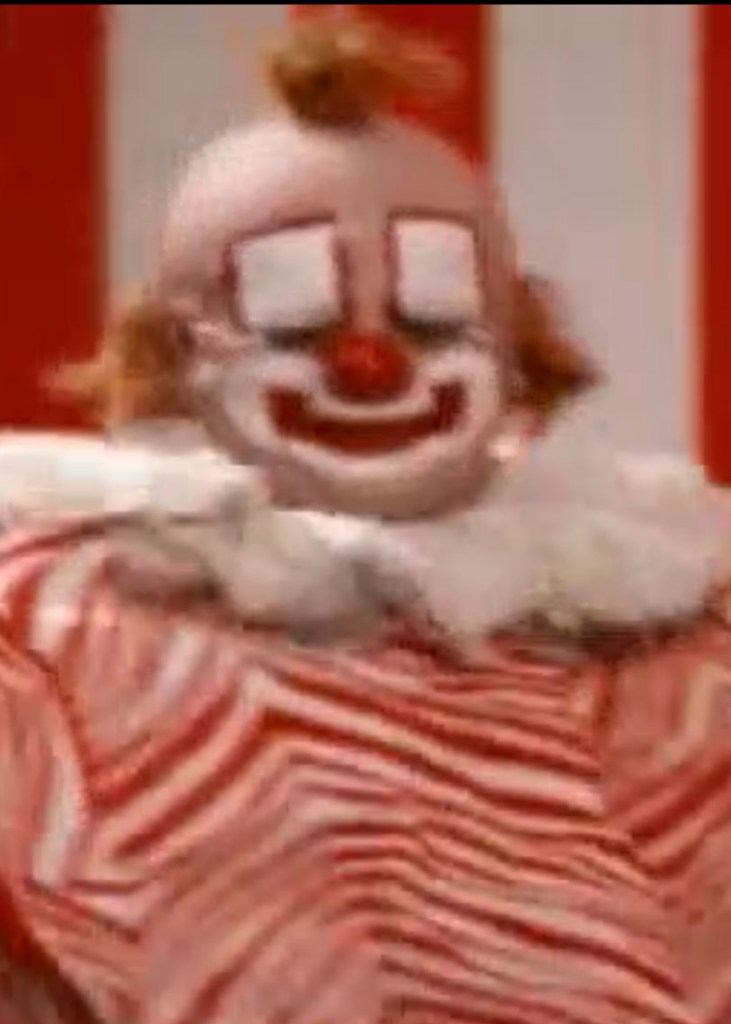
Brunner wasn’t an actor on Happy Days; he was one of the show’s producers. How he got the role of Clarabell in that episode isn’t said. Brunner was also the producer of other television programs, such as The Bad News Bears, Diff’rent Strokes, and Webster.
Bob Brunner died of a heart attack on October 28, 2012, at the age of 78.
I go into more detail on this Happy Days episode in PART 9: HOWDY’S BACK ON TV!
The Unknown “Clara-belly”
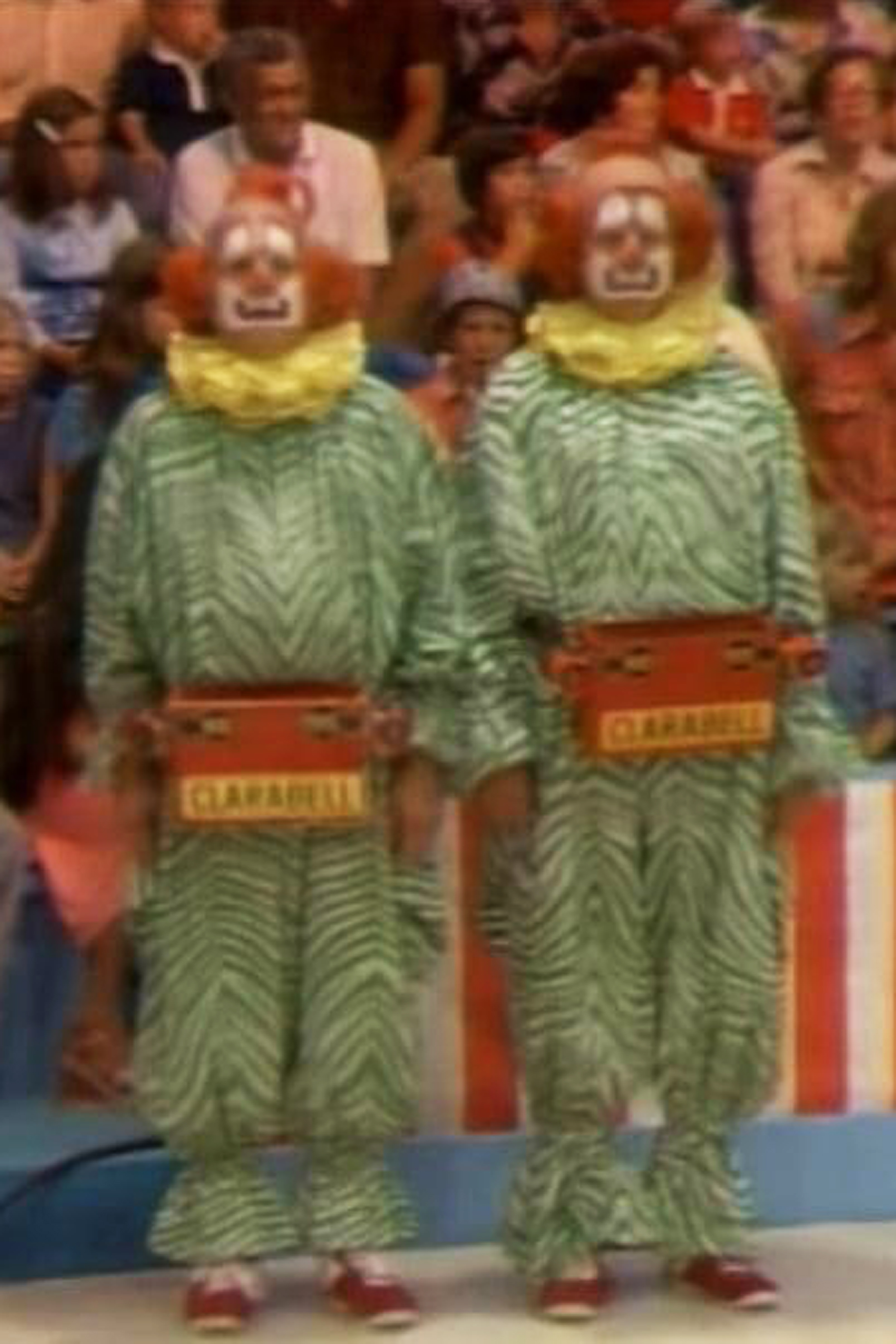
It has recently come to my attention that there was yet another Clarabell, well, kind of. In episode 5 of the New Howdy Doody Show, the storyline featured a Bionic Clown, which was called “Clara-belly.” Lew Anderson was, of course, “Clarabell, but there is no credit given to the actor who played “Clara-belly.”
Princess Summerfall Winterspring
Perhaps the best known, and loved, Indian princess is Summerfall Winterspring of the Tinka Tonka tribe. The producers felt that the show needed a female character to offset the all-male lineup. They did this in hopes of attracting the young girl audience. When the character of Princess Summerfall Winterspring was first introduced, she was a marionette voiced by puppeteer Rhoda Mann.

As with many of the aspects of the Howdy Doody Show, the stories and characters were influenced by marketing. Initially, there was a great demand for princess dolls and clothing, but this demand soon began to lag. Hoping to regain those sales, the producers decided to change the character into a real live person in 1951.
The show’s writer, Eddie Kean, came up with the perfect story to introduce the new live Princess. Using an ancient Indian ceremony led by the mystical Chief Featherman (played by Bob Keeshan) with chanting and a lot of smoke, the puppet Princess was magically transformed into a real person.
The first actress to bring the Princess to life was Judy Tyler.
Judy Tyler
Tyler was a 19-year-old when she was added to the show. And she would play the Indian princess until 1953. After leaving The Howdy Doody Show, she would follow in her mother’s footsteps as a chorus girl, landing a starring role in Rogers and Hammerstein’s Pipe Dream on Broadway.
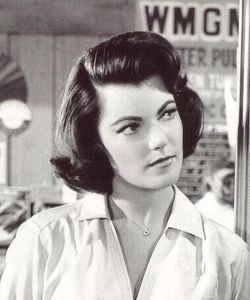
Life magazine did a cover story on Tyler, calling her an up-and-coming Broadway star. In 1957, she was offered movie roles in Hollywood. That year, she appeared in two films: Bop Girl Goes Calypso and opposite Elvis Presley in Jailhouse Rock. Tyler also made a guest appearance on the Perry Mason television series, as the character Irene Kilby, in the episode, “The Case of the Fan Dancer’s Horse,” which aired December 28, 1957. Sadly, that was almost six months after her tragic death.
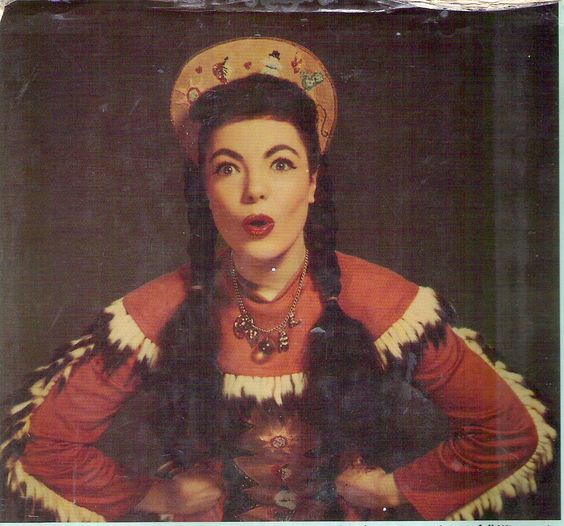
On July 3, while driving back to New York, Tyler’s new husband, Gregory Lafayette, swerved to miss hitting a car and trailer and collided with another vehicle outside Rock River, Wyoming. Judy Tyler, her husband, and another passenger in their car were all killed. It was said that Elvis Presley was so distraught by her death that he refused to watch Jailhouse Rock.
Although Tyler was only on The Howdy Doody Show for a few years, her princess is the most remembered and has overshadowed the actresses who came after.
The Other Actresses Who May, or May Not, Have Played Princess Summerfall Winterspring.
I really thought finding the person who created the original Howdy Doody puppet was hard. But then I began researching the actresses who had played Princess Summerfall Winterspring. You’d think that with all the books and articles written about one of television’s most popular all-time shows, there’d be an accurate listing of its cast members. But no, that wasn’t the case. All the sources list Tyler, but as I stated above, her sad story seems to have obscured information about the actresses who may have followed in the role.
From what I’ve been able to find, there may have been three actresses who assumed the role after Tyler. Some sources list one, but not the others. Even Stephen Davis, in his book, Say Kids! What Time Is It? Notes from the Peanut Gallery only mentions singer Gina Ginardi. And yet, most of my other sources don’t list Ginardi at all. If it weren’t for two of my post readers, I wouldn’t have known about Ginardi or Edith Ivey. And then there’s the often-listed, but with no information about, the mysterious actress Linda Marsh?
What’s made it even harder to research is that some of these actresses hadn’t listed the Howdy Doody Show among their credits.
So, here’s my list of actresses who may, or may not have, played our beloved princess after Judy Tyler.
Gina Ginardi
According to Stephen Davis, Gina Ginardi was the actress/singer who immediately followed Tyler after she left the show. Ginardi was part of a national search for a new Princess Summerfall Winterspring. On January 26, 1954, Ginardi took part in a very unique audition, which took place live on-air during the show. On that show, she was introduced as “Papoose Gina Runningwater.” Shortly after, she was “crowned” the new Princess Summerfall Winterspring. Ginardi was only sixteen years old at the time.

Now the history gets murky as to when she left the show. Davis says that Ginardi wasn’t on the show very long. In his book, Davis recalls one cast member saying, “She didn’t last too long. Why? Because you don’t replace Bob Hope with Morty Putz.” This would support one source that says she left in September of 1955. But again, Gina Ginardi, like many of the other cast members who left, did very well post Howdy Doody.
As an actress/ singer, Gina Ginardi guest-starred on such television shows as The Danny Thomas Show, The Lawrence Welk Show, and The George Jessel Show
Gina Ginardi was most successful as a lounge singer at such clubs as the Desert Inn in Las Vegas, the Moulin Rouge in Hollywood, the El Morocco in Montreal, and the Latin Quarter in Miami Beach and New York City. Many critics compared the young singer to Judy Garland.
Edith Ivey
Another overlooked actress who played the Princess is the movie and radio star, Edith Ivey. Edith Ivey came to my attention thanks to one of my blog followers.
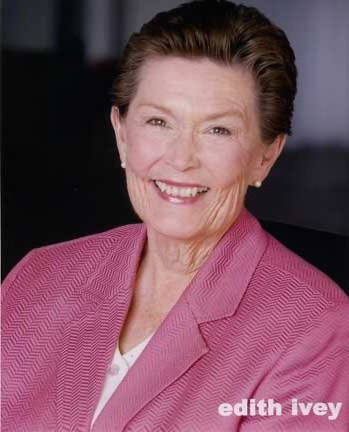
The sources I’d been using for these posts didn’t list Ivey, but after a little digging, I found articles on her career that do credit her as being a Princess Summerfall Winterspring. Her appearance on the show was also confirmed in my discussions with Emmy Award winner and Howdy Doody Historian, Burt Dubrow. Dubrow told me that he had spoken to Ivey and that she was one of those short-term princesses, having only appeared on the show for about a week.
Also, when Ivey talked about her career, she was quite insightful about her time on the Howdy Doody Show. Ivey considered her Howdy Doody co-stars as being extremely talented, diverse, and fun. She also shared her experience of how challenging it was to work on a live TV show. Every day had a new storyline. To help the actors with their lines, Ivey said, “NBC used a primitive teleprompter, which broke down often. So the crew had to resort to good old cue cards.” This indicates that she had firsthand knowledge of the show’s production.
After Howdy Doody, Ivey appeared on a host of different TV soap operas, one of which was Days of Our Lives. Her motion picture credits include Norma Rae and The Curious Case of Benjamin Button.
Linda Marsh
Many of my sources have Linda Marsh playing the Princess. However, the only Linda Marsh I could find does not list Howdy Doody as one of her credits.
This Marsh was born on February 8, 1939, which would have made her sixteen years old at the time Ginardi could have left the show. This is consistent with the ages of both Tyler and Ginardi when they were hired. But again, this is only an assumption that it’s this Linda Marsh that the listings are referring to.
The Linda March I found was an extremely successful television actress, appearing on The Man From Uncle, I Spy, The Wild, Wild West, Daniel Boone, and the original Hawaii Five-O.
But what really caught my attention, on a personal level, was that she was cast in the part of “Ophelia” in John Gielgud’s 1964 Broadway production of Shakespeare’s Hamlet, starring Richard Burton. It was the filmed performance of this production that got me to love Shakespeare and made Hamlet my favorite of his plays.
There Was One Other Actress Who Played the Princess
In my post, “Goodbye Kids,” I present one more actress who played the princess. That princess appeared on the show’s 40th Anniversary special.
Chief Thunderthud
Chief Thunderthud was another Native American live character that lived in Doodyville. Chief Thunderthud was a member of the Ooragnak (Kangaroo spelled backward) tribe.
At first, the Chief was a villainous leader and a nemesis to Howdy and Buffalo Bob. However, Howdy’s good nature and positive attitude converted the evil Chief, who went on to become one of the most popular characters on the show.
The Chief used a greeting that Teenage Mutant Ninja Turtles Michelangelo and surfers would be lost without, “Kowabonga!” How the word came about is really quite simple. Eddie Kean didn’t want to use the greeting, “How,” which was then used in movies and other TV shows. So he created this very, very unique greeting for Thunderthud.
William “Bill” LeCornec
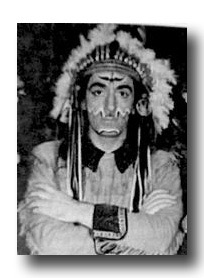
For us Boomers, Bill LeCornec will always be Chief Thunderthud, but his contribution to the Howdy Doody Show goes way beyond that one role.
William LeCornec was born in Marin County, California, in 1915. LeCornec wanted to be an actor, but not in the movie business. Instead, he went to New York for a shot at Broadway, where he appeared in the play, The Firefly.
In 1949, LeCornec went for an audition at the new television network, NBC. He heard they were looking for voice actors and puppeteers for a children’s program called Puppet Playhouse. While living in California, LeCornec learned how to work marionettes, and he was also pretty good with voices. He was able to impress Bob Smith and Roger Muir enough that they hired him on the spot.
LeCornec’s first puppeteer assignment was to take over the operation and voice of the puppet “Dilly Dally” from Rhoda Mann. The voice he created for Dilly would be a big help for him; I’ll cover that in a later post.
Eddie Kean was expanding the show’s characters beyond just puppets. The characters that Kean had LeCornec play were Oil Well Willy and Dr. Singasong. But it would be the character of Chief Thunderthud that would immortalize Bill LeCornec.
LeCornec would play his famous character Chief Thunderthud throughout the show’s thirteen-year run. He put on the Chief’s headdress one more time for Howdy’s 40th Anniversary Special in 1988.
LeCornec was also a member of the cast in the 1976 revival program, The New Howdy Doody Show, but not as Thunderthud. On that show, he played the fictional television producer Nicholson Muir, which was a takeoff on the show’s real producing team of Robert Nicholson and Roger Muir.
I couldn’t find any information on Bill LeCornec after Howdy Doody, except that he moved to Florida to do the New Howdy Doody Show and decided to stay. William “Bill” LeCornec died on September 19, 1997, at the age of 81 in Miami, Florida.
There was another actor hired shortly after LeCornec, who would also play a major role in the development of the world of Howdy Doody: the veteran comic Dayton Allen.
Dayton Allen
Dayton Allen was a native New Yorker, born in the city in 1919. In 1939, he began his broadcasting career as a disc jockey on WINS radio. Besides playing records, Allen also did different character voices, a talent that he’d use throughout his career.
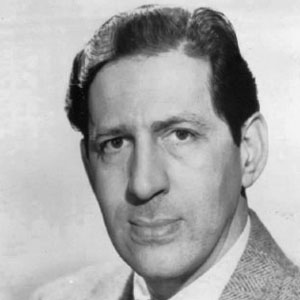
In 1949, while working in the NBC building, Allen met Bob Keeshan. Keeshan invited him to try out for Puppet Playhouse, telling him that the show was looking for voice actors and puppeteers. Bob Smith took one look at Allen, heard his voices, and asked, “You ever work puppets?” Allen answered, “I’m a great puppeteer,” which he really wasn’t.
The first puppet Allen was to operate was Phineas T. Bluster. Since he really wasn’t very good at operating marionettes, he came in early to rehearse in front of a mirror. His work paid off. Bob Smith commented that Allen “Made Bluster breathe. It was just uncanny!” Dayton Allen ended up doing the voices of not only Bluster but also Flub-a-Dub, John J. Fadoozle, and others. Allen also played the live characters of Chief Thunderchicken, Pierre the Chef, Ugly Sam, and his most famous, Sir Archibald the explorer.
Allen would be another one of the cast members who was fired during the “Christmas Massacre.” Although Dayton Allen wasn’t hired back on the original show, as was Bill LeCornec, he would make occasional guest appearances as Sir Archibald on the short-lived New Howdy Doody Show
Beyond Howdy Doody, Allen would be the voice of the cartoon characters Deputy Dawg and Heckle and Jeckle. He also hosted a Sunday night variety show on NBC and appeared often on The Steve Allen Show.
Dayton Allen died of complications from a stroke on November 11, 2004, in Hendersonville, North Carolina, at the age of 85.
Two Other Live Actors of Doodyville
Although they weren’t regular members of the Howdy Doody cast, these two actors were still important in the history of the show.
Ted Brown (Bison Bob)
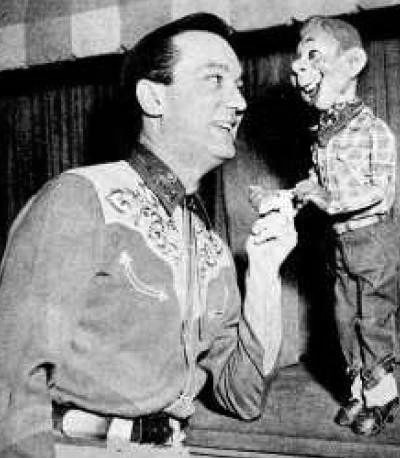
When Buffalo Bob suffered a heart attack in 1954, NBC needed to quickly find a host for the show until Smith recovered. So they brought in Ted Brown, one of the network’s in-house radio DJs, to fill in as the character Bison Bob.
Brown would host the Howdy Doody Show until Buffalo Bob returned in September 1955, after which he went back to his successful radio career. Brown continued to be active on the air until suffering a stroke in 1998. Ted Brown’s radio sign-off phrase was, “Put on the coffee Mama. I’m coming home.”
Ted Brown died on May 20, 2005, at the Hebrew Home for the Aged in Riverside, New York, from complications due to that earlier stroke. He was 81.
George “Gabby” Hayes
Gabby Hayes was already an established western star by the time the Howdy Doody Show went on the air in 1947. George Francis Hayes began his film career in the early 1930s as Hopalong Cassidy’s sidekick “Windy” Haliday. When Hayes moved from Paramount to Republic Studios in 1939, he had to change his stage name because Paramount owned the name Windy. So George Hayes became Gabby Hayes.
On December 11, 1950, NBC aired the Gabby Hayes Show. It was a fifteen-minute program, broadcast three times a week at 5:15 pm. The Gabby Hayes Show was sort of a lead-in to the Howdy Doody Show, which followed at 5:30. Since both shows were done live and in the same studios, it was only natural for there to be guest appearances.

This close proximity of the two shows would become very important. Gabby Hayes would help the Howdy Doody Show after the “Christmas Eve Massacre” of 1952, and also after Buffalo Bob’s heart attack. More on this in my Part 5: Crisis in Doodyville.
Gabby Hayes appeared in over 190 films, with 146 of them being westerns. Gabby Hayes was the sidekick not only to Hopalong Cassidy, but also Roy Rogers, Wild Bill Elliott, and John Wayne. In the 1940s, Gabby Hayes was ranked as one of Hollywood’s top ten western stars.
George “Gabby” Hayes passed away in Burbank, California, on February 9, 1969, at the age of 83.
In the next segment, I’ll continue our walk down Main Street, Doodyville, and this time, we will meet the marionettes who made us laugh.
Sources use:
“Allen Swift.” Wikipedia , Wikipedia, Jan. 2020, en.m.wikipedia.org/wiki/Allen_Swift.
Astolfi, Mark John. “Clarabellapalooza.” Deep-Fried Hoodsie Cups, Mark John Astolfi, 13 Jan. 2011, deepfriedhoodsiecups.wordpress.com/2011/01/13/11132011/.
Astolfi, Mark John. “H*O*W*D*YD*O*O*D*Y!!!” Deep-Fried Hoodsie Cups, Mark John Astoifi , 20 Jan. 2011, deepfriedhoodsiecups.wordpress.com/2011/01/20/1202011.
“Bobby Nicholson .” Wikipedia, Wikipedia, em.n.wikipedia.org/wiki/Bobby_Nicholson. Feb. 2020.
“Clarabell.” Clownopedia, FANDOM, clownopedia.fandom./wiki/Clarabell. Mar. 2020.
Clothier, Gary. “Howdy Doody princess started as a puppet.” Mr. Known-It-All expanded Web edition, Reading Eagle, 31 Aug. 2009, www2.readingeagle.com/article.aspx?id=154825.
Copsey, Jonathan. “Cinema great has seen it all: Roswell resident Edith Ivey regales Rotary of historic career.” Herald, northfulton.com, 5 Dec. 2012, http://www.northfulton.com/archives/cinema-great-has-seen-it-all-roswell-edith-ivey/article_b74a7453-4ce6-54f6-a1ce-0f4b5bf59962.html.
CrazyAboutTV. “The Howdy Doody Show.” CrazyAboutTV, CrazyAboutTV.com, http://www.crazyabouttv.com/howdydoodyshow.html. Feb. 2020.
“Dayton Allen.” Wikipedia, Wikipedia, en.n.wikipedia.org/wiki/Dayton_Allen. Jan. 2020.
Davis, Stephen. Say Kids! What Time Is It? Notes from the Peanut Gallery. Frist Edition, Little, Brown and Company, 1987.
Ellerbee, Boddy. “The Early History Of Howdy Doody…Television’s First Hit.” Eyes Of A Generation…Television’s Living History, Bobby Ellerbee , 4 July 2016, eyesofageneration.com/wp-content/uploads/2016/11/The-Early-History-Howdy-Doody…Televisions-First-Hit-Show-Revised.pdf.
“Gil Lamb .” Wikipedia, Wikipedia, en.n.wikipedia.org/wiki/Gil_Lamb. Mar. 2019.
“Gabby Hayes.” Find a Grave, Find a Grave, 31 Dec. 2000, http://www.findagrave.com/memorial/462/gabby-hayes.
IMDB. “Edith Ivey Biography.” IMDB, Amazon, http://www.imdb.com/name/nm0412378/bio. Accessed 31 Mar. 2020.
IMDb. “The New Howdy Doody Show, Doodyville documentary: episode 3.” IMDb, a Amazon Company , www,imdb.com/title/tt9220144/fullcredits/?ref_=tt_ov_st_sm. Accessed 10 Mar. 2020.
Johnson, Peggy Still. “Edith Ivey-Actress (The Curious Case of Benjamin Button).” PeggyJohnson, Peggy Still Johnson, http://www.peggystilljohnson.com/portfolio/edith-ivey-actress. Accessed 28 Mar. 2020.
“Judy Tyler.” Wikipedia, Wikipedia, Jan. 2020, en.m.wikipedia.org/wiki/Judy_Tyler.
Kids-n-Cowboys. “George F. Hayes as: Gabby Hayes.” Kids-n-Cowboys, Dusty Your Cowboy Sidekick, http://www.kids-n-cowboys.com/gabby-hayes.html. Nov. 2021.
“Lewis Burr Anderson.” Discogs, Discogs, http://www.discogs.com/artist/1350349-Lew=Anderson. Accessed 19 Jan. 2020.
LYRICS ON DEMAND. “Howdy Doody Theme Lyrics.” TV THEMES, LyricsOnDemand.com, http://www.lyricsondemand.com/tvthemes/howdydoodylyrics.html. Feb. 2020.
Mag Web. “Edith Ivey.” Mag Web, magweb.com, http://www.magweb.com/actors/edith_ivey. Accessed 1 Apr. 2020.
McIntire, Mike. “Say, Kids, What Time Is It?” Hartford Courant , Hartford Courant, 6 May 2000, http://www.courant.com/news/connecticut/hc-xpm-2000-05-06-0005060455-story-html.
“Peanut gallery .” Wikipedia, Wikipedia, Feb. 2020, en.m.wikipedia.org/wiki/Peanut_gallery.
Quinn, Matthew W. “Local Actress Recalls 60 Years in the Business, Played Indian Princess on Howdy Doody.” The Current Hub, The Current Hub, 1 Jan. 2013, http://www.thecurrenthub.com/local-recalls-60-years-the-business.
ShatnerWeb. “The Canadian Howdy Doody Show (Late 1954).” ShatnerWeb, ShatnerWeb, http://www.shatnerweb.com/2017/04/02/the-howdy-doody-show-late-1954/. Mar. 2020.
Skooldays. “Howdy Doody.” Skooldays, Skooldays.com, http://www.skooldays.com/categories/saturday/sa1094.htm. Feb. 2020.
Smith, Bob. “I Remember Howdy.” People, People, 30 Nov. 1987, people.com/archive/i-remember-howdy-vol-28-22/.
Smithfield, Brad. “Howdy Doody: The most celebrated children’s show in television history.” Vintage News, Timera Media , 18 May 2017, http://www.thevintagenews.com/2017/05/18/howdy-doody-the-most-celebrated-childrens-show-in-television-history.
“Ted Brown (radio).” Wikipedia, Wikipedia, en.n.wikipedia.org/wiki/Ted_Brown_(radio). Dec. 2019.
The Howdy Doody 8th Anniversary 31 December 1954. Marvin Bakerman, episode December 31, 1954, Marvin Bakerman, 31 Dec. 1954.
“Velma Wayne Dawson.” Find A Grave, Find A Grave, 4 July 2010, http://www.findagrave.com/memorial/54474539/velma-wayne-dawson.
Wikipedia. “Buffalo Bob Smith.” Wikipedia, Wikipedia , en.m.wikipedia.org/wiki/Buffalo_Bob_Smith. Accessed 16 Feb. 2019.
Wikipedia. “Clarabell the Clown.” Wikipedia, Wikipedia , en.n.wikipedia.org/wiki/Clarabell_the_Clown. Dec. 2019.
Wikipedia. “Howdy Doody.” Wikipedia, wikipedia, JJMC89 bot III.
Wikipedia. “The Gabby Hayes Show.” Wikipedia, Wikipedia , June 2021, en.m.wikipedia.org/wiki/The_Gabby_Hayes_Show.
“William E. “Bill” LeCornec.” Find A Grave, Find A Grave, 26 Dec. 2015, http://www.findagrave.com/memorial/156402326/william-e-lecornec.
 Still Current
There is a silly bit of information that I would love to have. Due to my parents taking me on a long car trip I missed the show that was before the last one and never found out the story line as to why everyone was packing up to leave Doodyville.
I been searching the internet for over a decade looking for this story line without success so if you could take the time to full me in I would be graceful indeed,
Bill Meredith
LikeLike
Thank you for reading my posts Bill. The theme of that last broadcast of the original Howdy Doody Show was “Clarabell’s Big Surprise.” It was telecast on September 24, 1960. At the very start of the show Buffalo Bob told the viewers that this show, their 2,343rd, was the last. He also said that Clarabell had a big, a really big surprise, so keep watching. There was no Peanut Gallery on this show, and they’d expanded it to a full hour. Sources say that the cast had a hard time getting through that last show; not a dry eye on the set. You can still watch that show on YouTube. Search, “Howdy Doody Show September 24, 1960 Full Last Episode.”
LikeLike
The song was not, “Take Me Out To The Ball *Park*” but “Take Me Out To The Ball GAME.”
LikeLike
I knew that. What was I thinking. Thanks, I’ll Correct that
LikeLike
The name of the actress that played the Indian princess on the 40th anniversary show is Stevie Vallance. She still sings and records music. She has a website and I have mentioned her a few times on the IT’S HOWDY DOODY TIME Facebook page where you’ll find pictures of her.
LikeLike
You are correct Dan. I go into detail on Ms Vallance in my upcoming post, HOWDY’S BACK ON TV. Thanks for the comment
LikeLike