What I love about researching for my blog posts is discovering those often overlooked little pieces of Interesting and unexpected information. They constantly pop up, and it causes me to say, “OH WOW! I didn’t know that!” That makes telling historical stories much more exciting than just a bunch of dates.

So it is with this series on the history of the television icon, Howdy Doody. What inspired me to begin writing about the Howdy Doody Show was that the original Howdy Doody marionette is at our own Detroit Institute of Arts (DIA). As I mentioned in my introduction to part 1, as a Baby Boomer, the Howdy Doody Show has a deep personal connection for me, and actually seeing him there was the thrill of my life.
My original plan was to write a post on the show itself and then go into the historic legal battle that would finally get Howdy to the DIA. I actually believed I could do that in one or two posts. But as I began digging through the many sources on the subject and collecting information, a few of those little tidbits I mentioned started to pop up. It was then that I realized there was a lot about the show I was unaware of, and I wanted to share that information. So, what I thought would be one or two posts became a multi-part series.
My biggest surprise came when I discovered that Howdy had a Mom and that she lived and is buried near where we go in Palm Springs, California. Also, as I was digging through the many articles on Howdy’s custody battle, one of the articles had the name of a woman I hadn’t seen mentioned before. Yet, upon investigation, she played a unique and vital role in Howdy’s life. There’s also the show’s prop man, who constructed many of the non-human characters we all loved, and the famous husband-and-wife team, who brought professionalism to the program and were pivotal to Howdy Doody’s post-show history and legal battle.
So, this second post in my series is dedicated to Howdy Doody’s Mom and all the other puppeteers and puppet makers, credited and uncredited, who helped to entertain us every day at 5:30 PM for thirteen years, working unseen above the stage pulling the strings.
This post was updated on April 8, 2026
Velma Dawson, Howdy Doody’s Mom
With head puppeteer Frank Paris gone, taking his “ugly” Howdy with him, Puppet Playhouse was left without its main character. NBC had to get a new Howdy Doody, which must be done quickly!
Kean’s storyline of Howdy on the campaign trail and getting plastic surgery only went so far. The young audience could only be put off for so long without seeing the show’s star, and the sponsors didn’t want another “voice coming from the drawer”; they demanded a visible puppet.
To bridge the gap until a new Howdy Doody could be constructed, NBC hired New York puppet-maker Dorothy Zuconic to quickly build a stand-in Howdy. Along with Kean’s plastic surgery story, this puppet’s head was completely wrapped in bandages, so it didn’t need any facial features. Otherwise, this marionette had a completely working body operated by Sky Highchief, aka Ralph Emory.
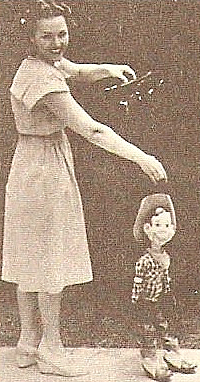
Now, the children in the studio and at home could see a bandaged Howdy Doody, which helped build anticipation about how he’d look when the bandages were removed. Also, as I stated in Part 1, Smith had already been changing Howdy’s voice. The stage was set; NBC needed to create a Howdy Doody to capture children’s hearts.
NBC programming manager Norm Blackburn, who had worked at the Disney Studios, put Bob Smith in touch with two Disney illustrators, Mel Shaw and Robert Allen. With Smith’s approval, they were hired to develop sketches of an innocent-looking young boy, which was the look that NBC and Smith wanted.
After Shaw and Allen’s design was approved, NBC needed to find someone to build their Howdy Doody. Again, Norm Blackburn came to the rescue. Blackburn remembered seeing a young Hollywood puppeteer named Velma Wayne Dawson. Dawson was already well known in the California puppet community and is considered one of the “pioneers of puppetry.”
NBC contacted Dawson, who accepted the job. However, there was a rush; she had to complete it in nine days. NBC sent Dawson Shaw-Allen’s drawings and a recording of Smith doing Howdy Doody’s voice. Amazingly, Dawson was able to finish Howdy on time and send him off to New York. For her work, she was paid $300.
On June 1, 1948, Dawson’s Howdy Doody arrived at the NBC studios. When he was unboxed, everyone was overjoyed by what Dawson had created. It was now time to introduce him to the world.
On June 7th, NBC sent out this news release that read:
HOWDY DOODY WILL BE WEARING A NEW LOOK AFTER FACE-LIFTING ON COAST, REJOINS BOB SMITH ON NBC TELEVISION SHOW TOMORROW.
Zuconic’s stand-in, Howdy, was replaced with the face-wrapped Dawson Howdy Doody to prepare for the transformation. After months of waiting, on June 8, 1948, it was time to reveal Howdy’s new look. Near the end of that day’s show, Bob Smith and Clarabell (Bob Keeshan) slowly built up the suspense, removing the bandages to reveal the new Howdy Doody. This Howdy had a broad, dimpled mouth, red cheeks, big ears, and 48 freckles (one for each of the 48 states at the time).
Since Paris’s Howdy was used only for the first few months of Puppet Playhouse, Dawson’s Howdy Doody is considered the original and the only one we Baby Boomers know.
NBC was so pleased with Dawson’s work that they hired her to make a “back-up” Howdy. But they wanted her to make alterations to Howdy’s face. Dawson disagreed, saying it would change Howdy too much. NBC couldn’t be swayed, so Dawson did what they asked, and sure enough, they weren’t happy with the result; it just wasn’t Howdy.
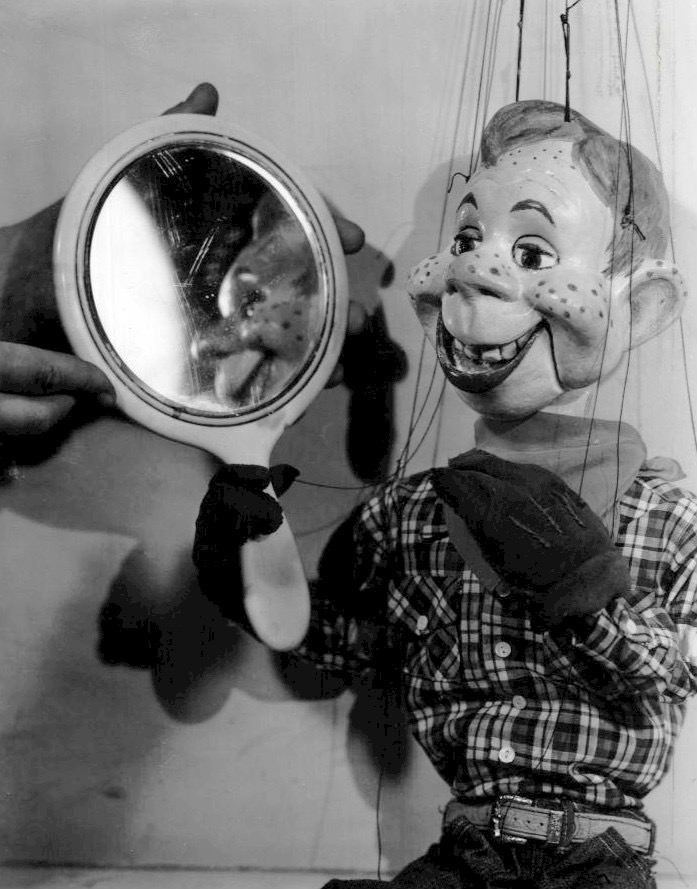
But Dawson’s second Howdy didn’t go to waste. During the “Howdy Doody for President” campaign story, Howdy’s opponent was the mysterious “Mr. X.” The show’s quick-thinking writer, Eddie Kean, came up with the storyline that Mr. X was really Howdy’s evil twin brother, “Double Doody,” for which they used Dawson’s second puppet for that character. That marionette was only used once as Double Doody and later repurposed as John J. Fadoozle, America’s #1 Private Eye. Also, the name “Double Doody” would be used again; more on that later.
Not too long after the new Howdy began performing, Dawson got an emergency call from NBC asking her to come to New York quickly. The reason was that Howdy’s head had been broken during one of the programs. Catching the first flight, Dawson went and fixed Howdy. This revealed a significant problem for NBC: their star could be broken at any time. They offered Dawson the position of head puppeteer for the show. But Dawson declined; she loved California and didn’t want to move to New York.
For a time, Dawson wasn’t credited for creating one of the best-known marionettes in the world. Even the prestigious National Puppeteers of America insisted that Howdy Doody was made by Rufus and Margo Rose, who joined the show in 1952, four years after Howdy had already been introduced on the show. Dawson had to provide documentation from NBC to the organization to prove she was the rightful creator. Even today, some of the sources I used for these posts still attribute the creation of Howdy Doody to the Roses.
Part of the reason could also be that Buffalo Bob Smith didn’t acknowledge Dawson as Howdy’s creator until near the end of his life. A few years before his death, Smith sent Dawson an autographed photo of himself and Howdy. Under Howdy, he wrote, “Hi, Mom.”
Beyond Howdy Doody, Remembering Valma Dowson
In the 1940s, Velma and her husband, John Dawson, moved to Palm Springs, California. John was one of the pioneers in developing golf courses in the Palm Springs area.
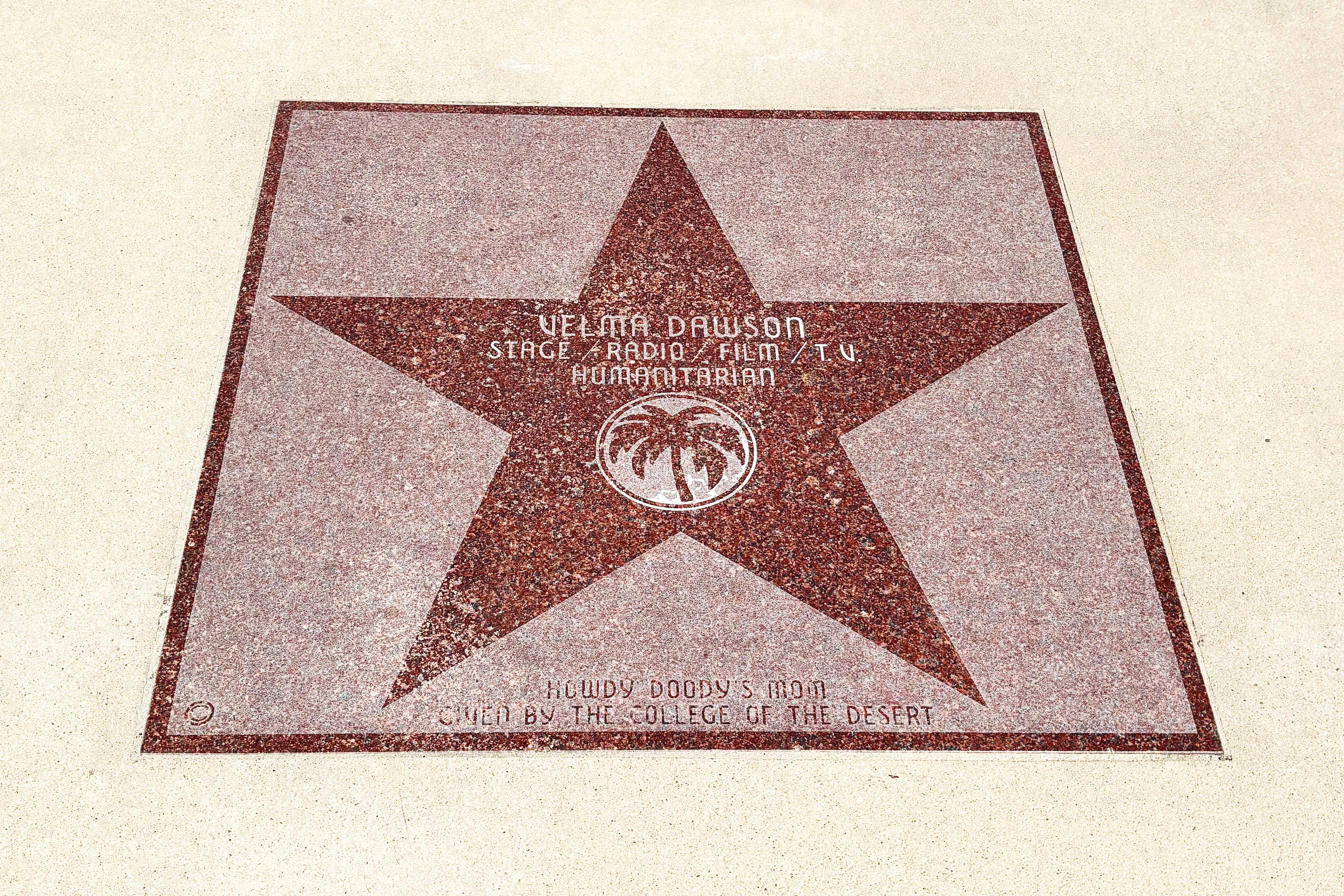
In Palm Springs, Velma continued to entertain local children with her puppet shows. But besides that, Dawson became a major supporter of the College of the Desert, where they named the college’s foundation offices in her honor. In addition, Dawson was one of the founders of Pathfinders, a group that’s dedicated to helping the youth of Coachella Valley. In 2000, the City of Palm Springs and the Palm Springs Chamber of Commerce presented her with a Golden Palm Star on their Walk of Stars.
For all her many accomplishments and community work, fans would travel on a pilgrimage to her home in Rancho Mirage to meet Dowdy Doody’s Mom. To all of this, Valma would simply say, “All I did was make a stupid puppet.”
On September 27, 2007, Velma Dawson passed away at the age of 95 in Palm Springs. Her Desert Sun obituary states that a memorial service was conducted in her honor on November 17 at the Annenberg Theater, part of the Palm Springs Art Museum. The obituary also stated that “Mr. Doody” would be performing. However, that Doody wasn’t her original.
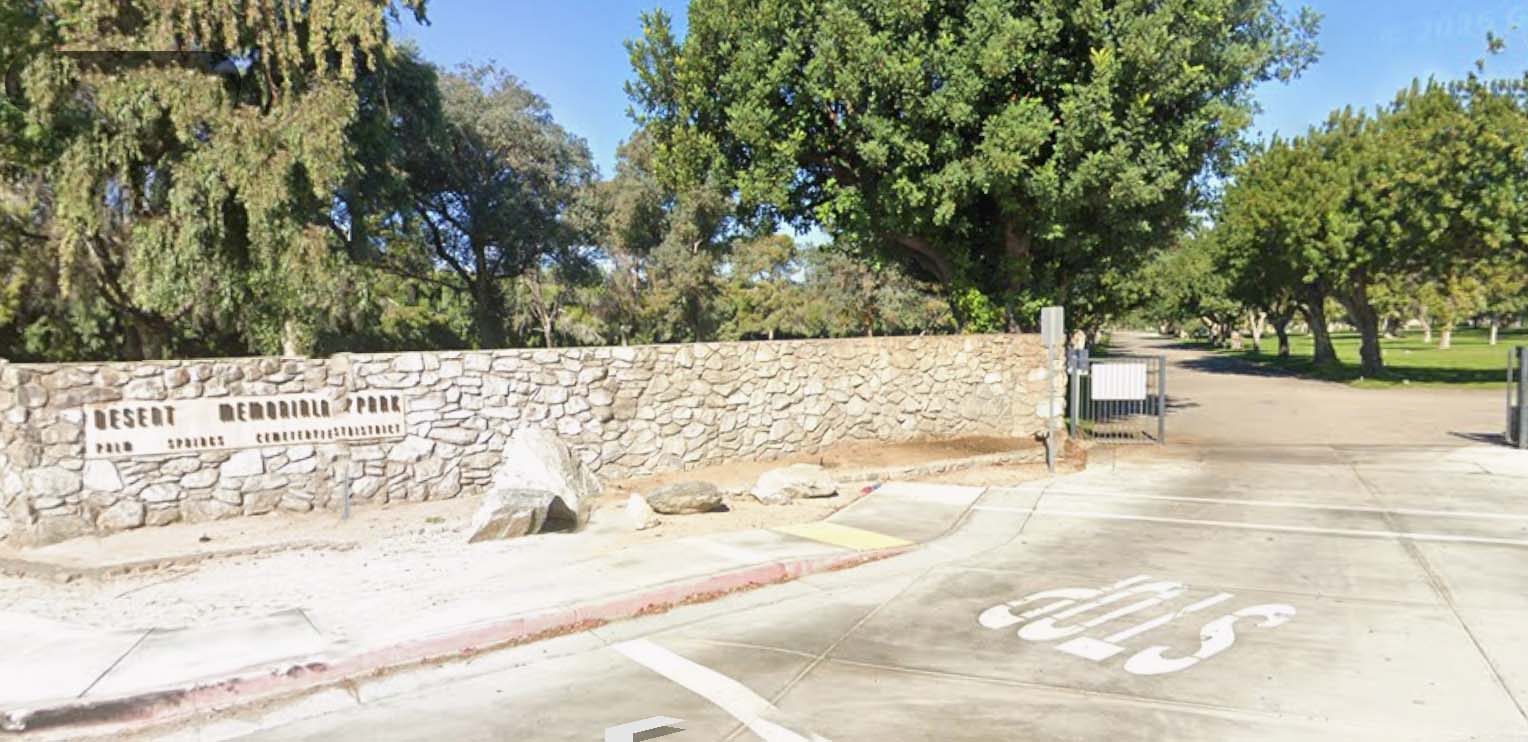
Velma Dawson was laid to rest at Desert Memorial Park in Cathedral City, California. Her grave is just a few rows from that of Frank Sinatra.
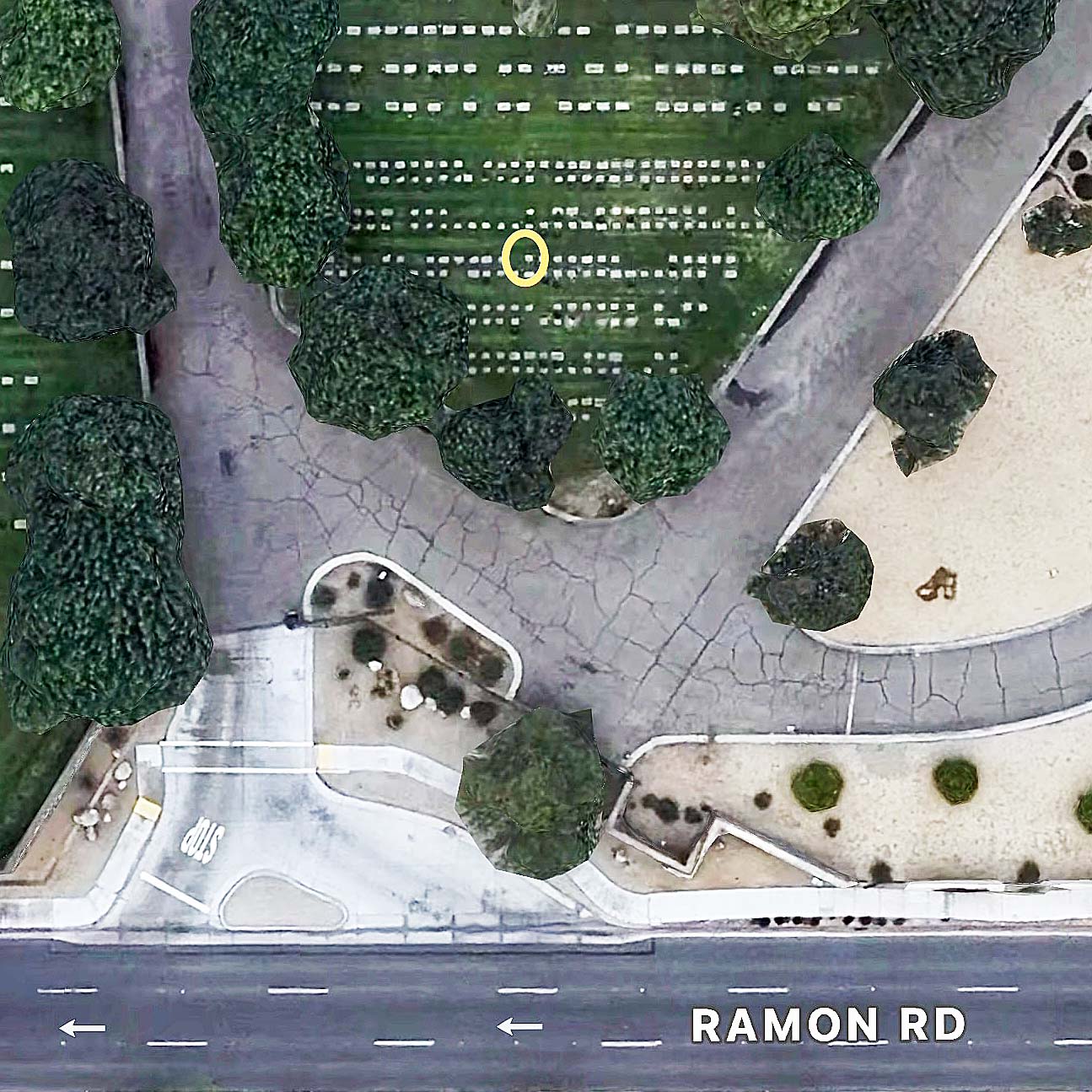
Each year, my wife and I visit Velma’s grave. Paying our respects and remembering Howdy Doody’s Mom.
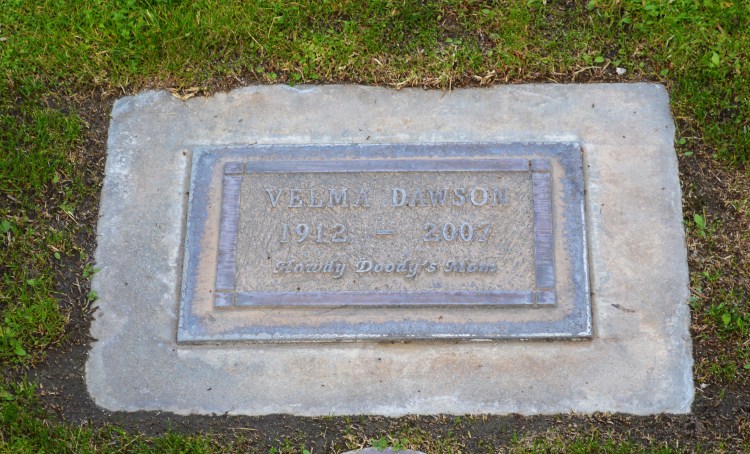
Her headstone reads: Velma Dawson, 1912-2007, Howdy Doody’s Mom.
Scott Brinker
With Dawson turning down their offer, NBC had a big problem. They needed someone to repair their puppets because they couldn’t keep flying Dawson to New York. The network turned to the show’s prop maker, Scott Brinker.
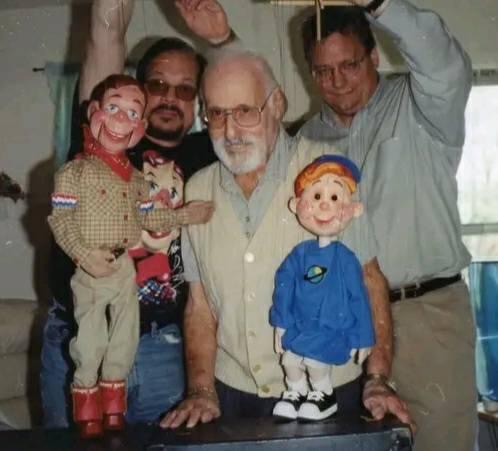
Photo courtesy of Jack Roth
They asked Brinker, “Can you build puppets?” To which he answered, “I can learn.” After quickly studying marionette construction, Brinker became the show’s puppet repairer and maker until Rufus and Margo Rose joined the show.
Scott Brinker continued working on the original Howdy Doody Show until it ended in 1960. In 1987, he joined other Howdy Doody alumni to help with the show’s 40th-anniversary television special. One of his last works was repairing the original Howdy Doody when he was accidentally damaged.
Scott Bringer passed away in Newark, New Jersey, on September 25, 2002, shortly after his 90th birthday. Scott Brinker is one of the behind-the-scenes creative members of the original Howdy Doody Show.

Rhoda Mann
Rhoda Mann’s name caught my attention while researching for my post on Howdy Doody’s custody battle. The way she was presented in the court papers caused me to believe that she was of some importance to the show. But who was she?
Rhoda Mann was mentioned by only two of my sources, and there was no further information about her beyond the fact that she was a puppeteer on the show.

I knew there had to be more, so I dug deeper. Then I found Stephen Davis’s book Say Kids! What Time Is It? Davis goes into great detail on Mann’s convoluted tenure on the Howdy Doody Show. Rhoda Mann, it seems, was a major contributor in the program’s early years. But like Velma Dawson, she was also somewhat overshadowed by Rufus and Margo Rose.
Rhoda Mann was the only one allowed to exclusively work the Dawsons’, Howdy Doody. She did this from the time she first arrived on the show, then for the next five and a half years. However, as mentioned above, her time on the show wasn’t always pleasant.
Rhoda Mann’s story begins when she was just nine years old, teaching herself to work marionettes. Her first professional gig in show business was as the assistant to Henry Gross on his Ali Benali, the Moroccan Wonderman. Then, in 1947, at the age of twenty, she was hired by the renowned puppeteer Frank Paris as one of his assistants on his touring show “Toby at the Circus.” When Paris went to NBC to do Puppet Playhouse, Mann was right there working alongside him on the puppet bridge. And when Paris walked out with his ugly Doody, Mann walked out with him. However, she wasn’t gone from Howdy Doody for very long.
When Dawson’s Howdy arrived, it was apparent that he was going to be more difficult to work with than the other marionettes on the show. As a rule, puppets used on television with live actors had to be larger than standard marionettes. This was due to the differing visual perspectives between the two, which made it very difficult to manage their actions. With Dawson’s Howdy, it was even harder because his head was larger.
After one puppeteer damaged Howdy because of how difficult Howdy was to work, producer Roger Muir knew he had to find an operator who had the skills to handle Howdy Doody. Bob Smith remembered Mann as being natural with the marionettes. Smith thought it was absolutely terrific how she perfectly moved and paced the puppets, perfectly matching the marionette’s actions with those of the actors. They had to get her back for Howdy.
Smith called Mann and offered her the fantastic sum of $100 per show, which was unheard of at the time. Frank Paris couldn’t match the offer, so he let her go back.
Another interesting fact about Mann and the show is that she was also the only woman allowed to wear pants. In those days, all women were required to wear dresses or skirts. Mann was exempt from this policy because she worked from the puppet bridge 12 feet above the stage floor. So you can understand why they let her wear pants.
Besides Howdy, another puppet operated by Mann was Princess Summerfall Wintgerspring. That was before that character was played by Judy Tyler. Mann also provided the voice of the princess. She did this until Judy Tyler came on as the live princess. But trouble happened when Tyler joined the show, telling a little fib that she could also work with puppets. Thinking that they could save money, NBC let Mann go.

However, Tyler couldn’t hide the fact that she had no idea how to handle puppets. So, Smith again called Mann, begging her to return, which she did.
Rhoda Mann remained on the show until she became involved in a salary dispute. On Christmas Eve 1952, she and other cast members were fired, causing what is now known as “the Christmas Massacre.” I’ll cover that in a future post.
Mann did get a little revenge; a few years later, with the help of the American Federation of Television and Radio Artists (AFTRA) union, Mann successfully sued NBC for years of back pay. She was awarded $4,000.
Mann went on to have a successful career as a voice-over artist on radio and television. She was the first woman to do a voiceover in a car commercial, even before Dinah Shore. Mann also voiced many animated characters on children’s programs, including Mother Nature in the long-running 1974 “The Year Without Santa Claus.” And because of her exclusive work with Dawson’s Howdy, Rhoda Mann would become very important in the future court battle over the custody of the original Howdy Doody.
Rhoda married Robert Winkler in 1953. Rhoda Mann Winkler died of cancer in Dobbs Ferry, New York, on March 18, 2015, at the age of 87.
With Mann fired, the show’s producer, Roger Muir, found a replacement. Almost as Mann was walking out the door, puppeteer Lee Carney walked in.
Lee Carney
Lee Carney is another almost forgotten puppeteer of the Howdy Doody Show. Carney and her husband, Mike King, were puppeteers living in Greenwich Village when she got the call from Roger Muir to come to the Howdy Doody Show. Although Muir had heard good things about her, Bob Smith and NBC feared that she wouldn’t be able to handle the problematic Howdy as well as Mann.
But as soon as Carney picked up Howdy’s strings, they found that his movements were much smoother, even better than with Mann. Howard Davis, one of the show’s directors, commented that Carney was one of the best operators he’d ever worked with. Bob Smith wouldn’t have to make another phone call begging Mann to return. NBC also got a bonus; Carney’s husband could fill in as a puppeteer when needed. From what I’ve found, Lee Carney was a puppeteer on the show until it ended in 1960.
I couldn’t find much information about Carney’s post-Howdy Doody career, except that she also worked on Kraft Television Theatre. Her biography says that she moved to California with her husband. Lee Carney passed away from heart failure on February 16, 1995, in Encino, California, at the age of 87.
Although Smith, Muir, and NBC were happy to have a puppeteer who could operate Howdy, they still needed a “master puppeteer” who could not only work the puppets but also build, dress, and repair the show’s many marionettes. For this, they turned to another husband-and-wife team, Rufus and Margo Rose.
Rufus and Margaret “Margo” Rose
It’s easy to understand why Rufus and Margo Rose stood out above Velma Dawson and Rhoda Mann in many of the sources on Howdy Doody. Rufus and Margo were true professionals in their field, billed as “America’s Foremost Artists of Marionette Theatre.” They were already nationally and internationally known when they began working on the Howdy Doody Show.

The Roses began their careers in professional puppetry together in 1931, the year after they were married, when they formed “the Rufus Rose Marionettes.” Their touring production company gained national recognition at the 1936 Chicago World Fair. On Christmas Eve 1948, they produced television’s first significant puppet production, Dickens’s “A Christmas Carol,” for the ABC Network.
Four years later, on Christmas Eve 1952, after most of the Howdy Doody Show’s crew were fired in what is known as “the Christmas Massacre,” NBC immediately hired them to take over the operations of the show’s puppets.
The Roses brought a smoother and more natural movement to the show’s marionettes. In addition, Margo had a great talent for puppet design and construction. She created most of the new characters used on the show from 1952 until it ended in 1960. Some of her creations were Heidi Doody, Mambo the Elephant, Grandpa Doody, Hyde & Zeke, and Hop, Skip, & Jump.
Besides the show’s later characters, Margo made a mold from Dawson’s original Howdy’s head and used it to construct the two Howdy Doodys used on the Canadian show. More importantly, Margo made the stringless “Photo Doody,” which is used for personal appearances and photoshoots, and a backup “Double Doody.”
As stated above, the Roses were so closely connected to the show during the eight years they operated the puppets that they were incorrectly regarded as the makers of the original Howdy Doody. Even with all the misinformation, the Roses never publicly took credit for creating Howdy Doody.
The Roses would continue as the show’s master puppeteers until it ended in 1960. However, their connection and involvement with Howdy Doody went far beyond the show’s end, which I discuss in greater detail in Part 4 of this series.
In 1961, one year after the Howdy Doody Show ended, Rufus Rose ran for the Connecticut State Legislature, where he served for twelve years. Rufus passed away in 1975.
Margo continued to teach the art of puppetry after Howdy Doody at the Institute of Professional Puppetry Arts. In 1974, Margo and Rufus were awarded the President’s Award from the Puppeteers of America. In 1997, Margo was inducted into the Connecticut Women’s Hall of Fame; shortly thereafter, she passed away at 94.
Next: The Citizens of Doodyville
Sources used:
Davis, Stephen. Say Kids! What Time Is It? Notes from the Peanut Gallery. First Edition, Little, Brown and Company, 1987.
Deep-Fried Hoodsie Cups. “H*O*W*D*Y D*O*O*D*Y.” Deep-Fried Hoodsie Cups, Dee-Fried Hoodsie Cups, 20 Jan. 2011, deepfriedhoodsiecups.wordpress.com/2011/01/20/1202011.
Ellerbee, Bobby. “The Early History of Howdy Doody…Television’s First Hit Show.” Eyes Of A Generation…Television’s Living History, Booby Ellerbee, 4 July 2016, http://www.eyesofageneration.com/wp-content/uploads/2016/11/The-Early-History-Howdy-Doody…Televisions-First-Hit-Show-Revised.pdf.
“Lee Carney.” IMDb, IMDb, http://www.imdb.com/name/nm0138818/bio?ref_=nm_ov_bio_sm. Accessed 2 July 2020.
McIntire, Mike. “Say, Kids, What Time Is It?” Hartford Courant, Hartford Courant, 6 May 2000, http://www.courant.com/news/connecticut/hc-xpm-2000-05-06-0005060455-story-html.
“Robert “Buffalo Bob” Smith.” Find A Grave, Find A Grave, 27 Mar. 2003, http://www.findagrave.com/memorial/7294174/rober-smith.
Severo, Richard. “Buffalo Bob Smith, ‘Howdy Doody’ Creator, Is Dead at 80.” The New York Times, The New York Times, 31 July 1998, http://www.nytimes.com/1998/07/31/arts/buffalo-bob-smith-howdy-doody-creator-is-dead-at-80.html.
Smithfield, Brad. “Howdy Doody: The most celebrated children’s show in television history.” Vintage News, Timera Media, 18 May 2017, http://www.thevintagenews.com/2017/05/18/howdy-doody-the-most-celebrated-childrens-show-in-television-history.
University of Connecticut. “Rufus and Margo Rose.” University of Connecticut, University of Connecticut, bimp.uconn.edu/education/american-puppeteers/rufus-and-margo-rose/. Accessed 18 Jan. 2020.
“Velma Wayne Dawson.” Find A Grave, Find A Grave, 4 July 2010, http://www.findagrave.com/memorial/54474539/velma-wayne-dawson.
Wikipedia. “Buffalo Bob Smith.” Wikipedia, Wikipedia, en.m.wikipedia.org/wiki/Buffalo_Bob_Smith. Accessed 16 Feb. 2019.
Wikipedia. “Howdy Doody.” Wikipedia, Wikipedia, JJMC89 bot III.
 Still Current
Great read Cuz. Still can’t believe it was on for 13 years!!!! thank you.
Sent from my iPad
>
LikeLike
Hi, Ron.
For Howdy Doody’s 50th Anniversary in 1997, ABC News sent me to interview Buffalo Bob Smith at his home in Flat Rock, NC. We spent an afternoon reminiscing, then Bob and I sat down at the piano. (And — roll tape.)
LikeLike
That was great, thank you so much for sharing. I’m envious of you, having met one of my childhood heroes
LikeLike
Ron, thanks for your research. I recall there was an item called the Boomer Zoomer on the show, but nothings comes up online. Have you come across this? I think itbwas half ship and half train or something like that. Thanks, Fred
LikeLike
Yes, I do recall something called that. I’ll put your question out the the Doodyville Historical Society members to see if they can help. Again thanks for reading my posts
LikeLike
According to my fellow Doodyville Historical Society members there were actually two exotic modes of transportation in Doodyville: the Boomer Zoomer and the Air-O-Doodle. It was the Air-O-Doodle that was half ship and half train. Again thanks for asking Fred
LikeLike
<
div dir=”ltr”>Thanks. Then wh
LikeLike
Years ago I heard that an actress to be Clarabelle, quit the day before the first show. They hired an actor and changed the spelling to Clarabell. Is there truth to this story?
LikeLike
Hi Doug, that story is completely and totally false. Never was a women hired or considered to play Clarabell. The story of Clarabell is very interesting. I go deep into this character in my next post, PART 3: Citizens of Doodyville. Thanks for the question.
LikeLike
No offence. But, what’s the death date of Scott Brinker?
LikeLike
Thank you for this question. I turned to those who knew Scott Brinker, and they couldn’t remember. I turned to the general members of the Doodyville Historical Society. Thomas Johnson responded. Scott Brinker died on September 25, 2002 at 90. I will be add that to my post. Thanks
LikeLike
Thanks for that and if you and the others know more information of Howdy Doody, Add them to a special Wiki Site I made, Howdy Doody Wiki.
LikeLike
Michael, attached is the link to my updated post on Scott Brinker. https://stillcurrent.blog/2020/02/21/say-kids-what-time-is-it-the-history-of-howdy-doody-part-2-howdy-doodys-mom/
Please checkout my other posts on Howdy Doody.
LikeLike
What’s the death date of Scott Brinker?
LikeLike
September 25, 2002
LikeLike
Thanks.
LikeLike