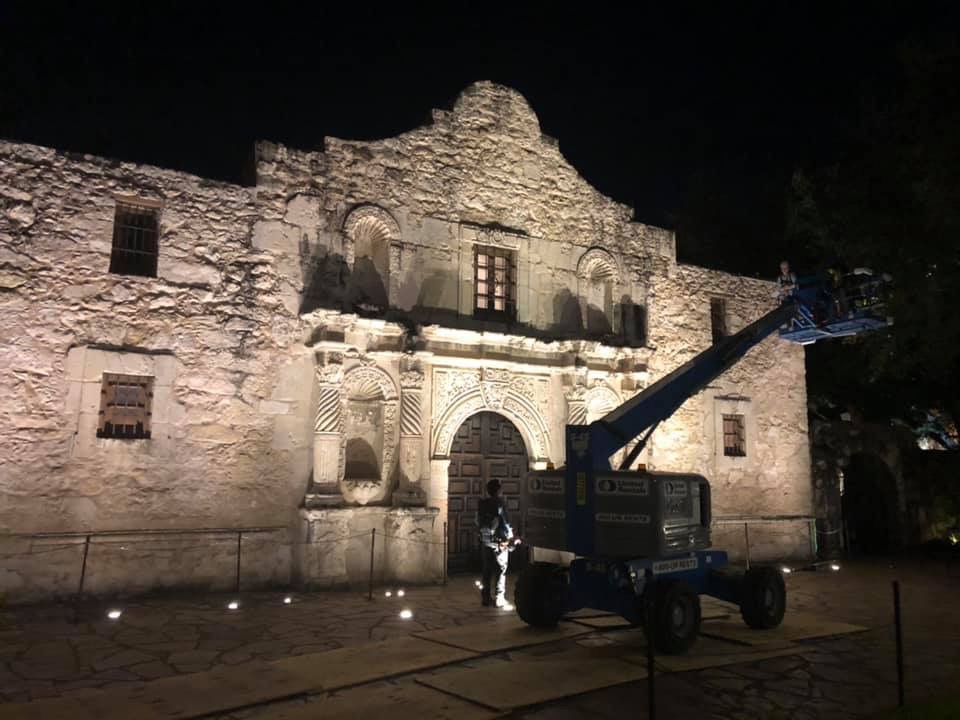
“We are literally witnessing a disintegration of the church right before our eyes,” was the comment made by nationally known heritage consultant George Skarmeas to the San Antonio Express-News on the dire condition of the Alamo’s church.

As I wrote in my post, History of the Alamo, Part VII: The Era of Daughters of the Republic of Texas, the state had been informed of mismanagement of the Alamo properties by the Daughters of the Republic of Texas (DRT) for years, but when it became evident that the disintegration of these historical structures was far worse than first thought, the state had to step in and act fast.
In 2011, the Alamo was placed under the control of the State’s General Land Office (GLO), and on May 12, 2015, the GLO took over the complete day-to-day operations and caretaking of the Alamo from DRT, ending a 107-year conservatorship. Although the DRT had helped to save the Alamo’s two remaining buildings and to maintain them, they really didn’t have the expertise on what to do, or not do, to better preserve these centuries-old structures.
In this, the tenth in my series on the history of the Alamo compound, I’ll tell how the GLO is assessing the conditions of the Alamo’s two remaining buildings, and how they’re putting to use the 5 million dollars of emergency funding to save them before they’re lost forever.
The Long Barracks
The first, and most looming, peril to the structural conditions of the Alamo’s remaining buildings came when signs that the Long Barrack’s roof was beginning to fail.
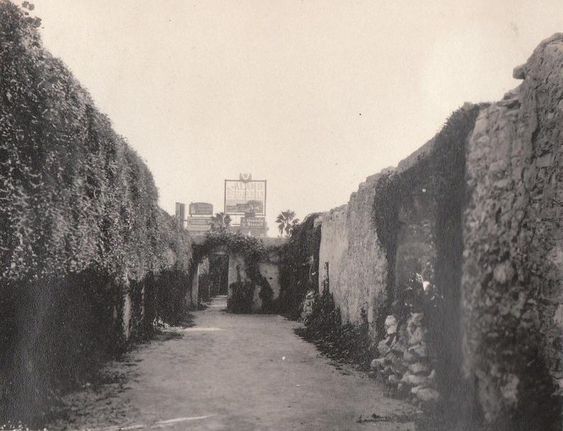
After almost being torn down in the early part of the 20th century, the Long Barracks would only be partially rebuilt between 1913 and 1916, when funds to finish the project ran out. The ruins would stand roofless and overgrown by vines until 1968, when the DRT would finally roof it. The DRT then moved its museum from its first location, now the Alamo gift shop, to the Long Barracks.
When the roof’s failure was discovered, the GLO quickly moved; Cram Roofing of San Antonio, which has worked on other historical buildings, was contracted to replace the failing roof and repair the water damage to the old walls before it was irreversible.
This project was one of the most difficult for Cram Roofing. Usually, they’d anchor their work platforms to the outer walls of the building; however, this couldn’t be done due to the fragile conditions of the barracks’ old stone walls. Instead, the entire 5,500 sq. ft. of the Long Barrack’s exterior had to be wholly enveloped in scaffolding.
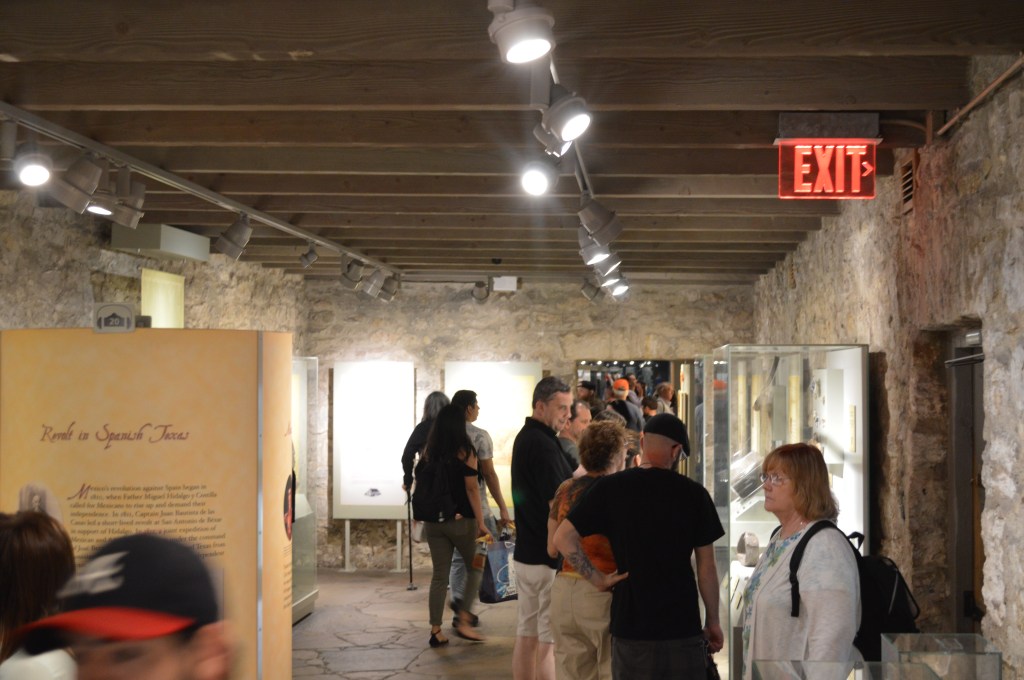
Add to that another issue, an average of 7,000 visitors a day tour the grounds of the Alamo, and the GLO didn’t want them contending with workers moving equipment and materials onto the site when it was open. So Cram needed to deliver all necessary items for each day’s work before the Alamo opened at 9am, and wait until after 5:30pm before removing anything.
Over ten weeks, the company removed the entire old roof, down to the stone, and completely replaced it with a new, more efficient one, while still keeping the building’s historical integrity.
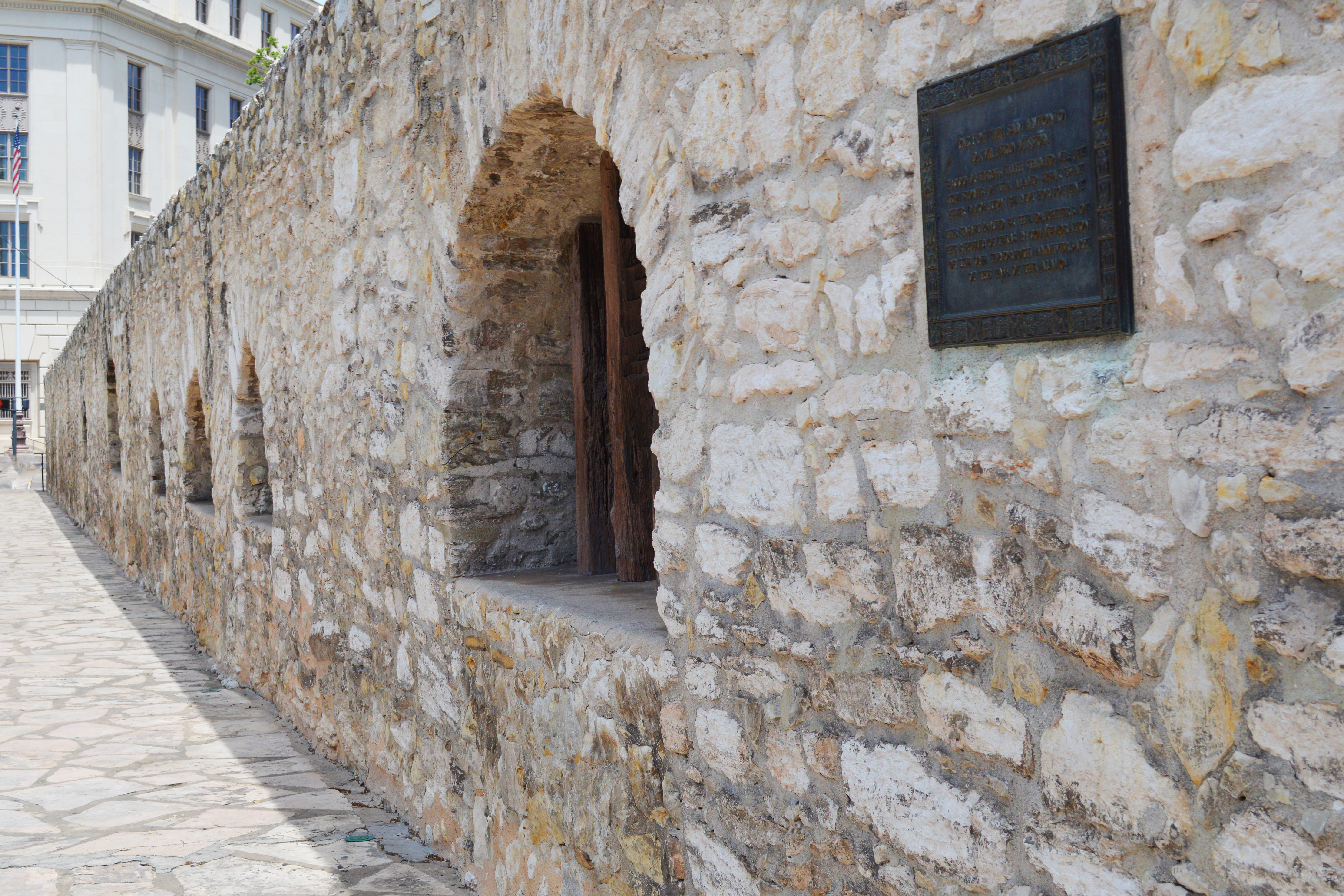
Also, a recent archaeological survey of the Long Barracks answered a long-standing question: Did the reconstructed walls of 1913-1916 have any historical accuracy? What was discovered was, yes. Those doing the reconstruction back then had indeed used the barracks’ original foundations.
Although only its west wall is somewhat original, the Alamo’s Long Barracks is still an essential link in the Alamo story.
Saving the crumbling Alamo Shrine
The Alamo church is the most original of the two remaining structures, and also in the greatest danger. For over three centuries, the Alamo church had suffered much, and there was never any real attempt to do an extensive assessment of its condition until 2015.
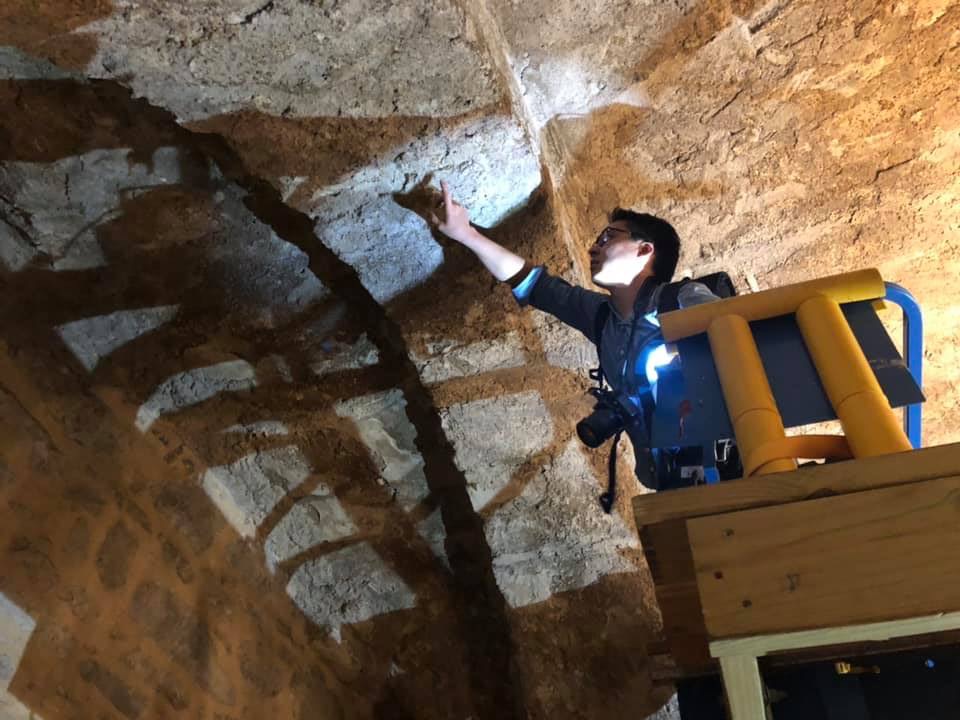
In 2015, the state commissioned two restoration experts to head the preservation efforts: Ivan Myjer, a stone conservator from Boston, who has worked on historical sites around the world, and master stone mason Miroslav Maler. These two men spent a month atop a crane going over the Alamo church inch by inch to determine the extent of the damage and how to repair it.
Using radar and X-ray imagery, it was discovered that the church’s walls had been poorly constructed by its original mission builders, who had not used proper reinforcement between its outer walls, only loose rubble.
It was also discovered that over 2 feet of soil and other debris had built up over the centuries around the foundation of the church, allowing groundwater to slowly creep up into the foundation, weakening it.
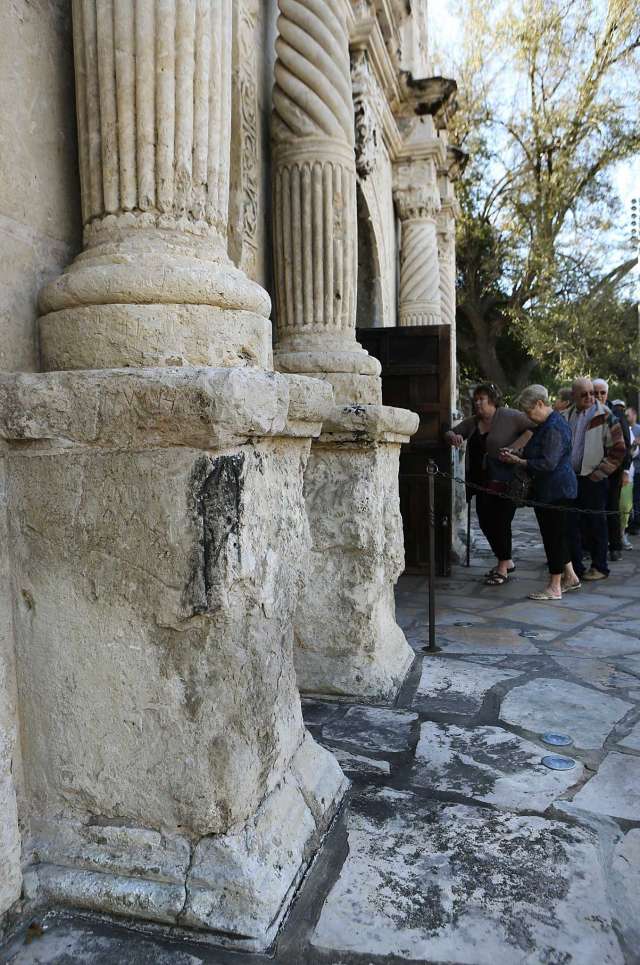
Further testing also showed that other factors having a devastating effect on the church were: vibrations from traffic, acid rain, and the harsh Texas climate.
To help reduce some of the traffic vibration, as part of the “Reimagining” of Alamo Plaza, the City of San Antonio plans on closing the streets that surround the Alamo.
To help mitigate the effects of rising groundwater, the GLO will clear away the accumulated soil and other materials down to the church’s original foundation.
Another concern, that’s hardly noticed by visitors, is that the famous Alamo façade is dotted with mold. This mold is slowly eating away at the limestone, further weakening it. In addition, large sections of the church’s façade have been lost due to weathering and vandalism. All of these areas needed to be addressed in a proper restoration process, and this is what Myjer and Maler specialize in.
Where the deterioration is extremely bad, the restorers use a process that’s used throughout the world on other historical structures, such as the Parthenon in Athens and the Colosseum in Rome. Reconstructions are made of the affected areas that mirror the original. These reconstructions are made out of crushed limestone and other materials, which are consistent with materials used in the 18th century, when the Alamo was first constructed. These new pieces are then carefully reinserted into the damaged areas, giving it the look of the original.
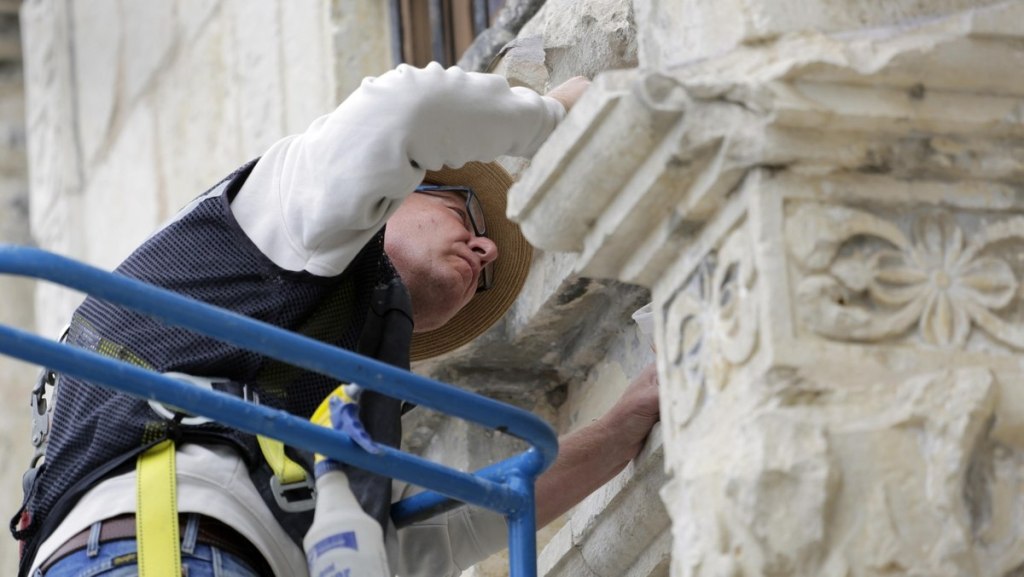
Another task for the restorers is to correct some of the earlier faulty repairs. While some of these corrections can be done using the process I described above, other alterations that have been made over the years, such as non-original windows and doors, will remain to avoid damaging the surrounding stone.
Still, the greatest threat to the integrity of the Alamo church remains what the DRT had unknowingly done: the Alamo church’s cement roof and air-conditioning.
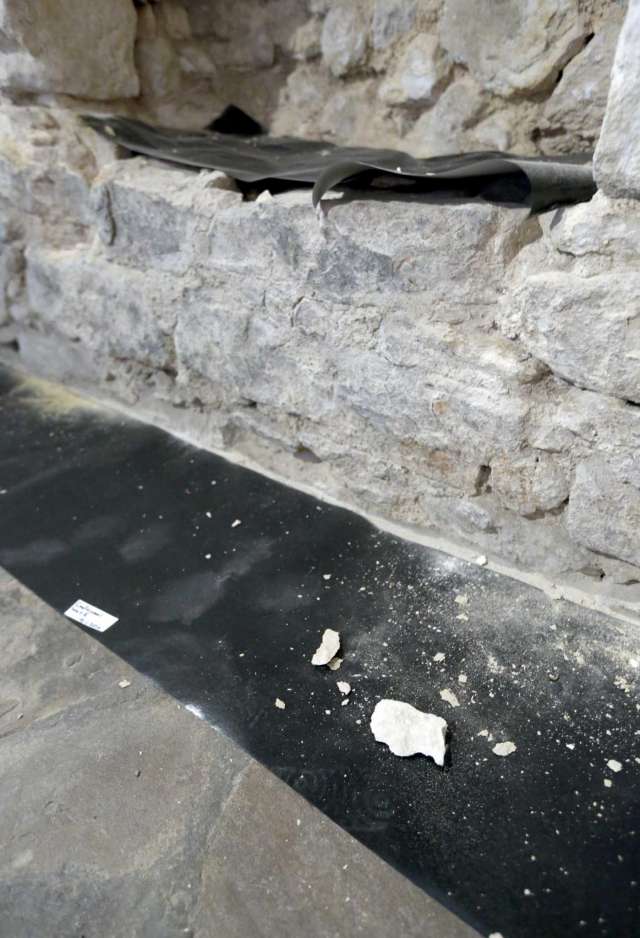
Again, as I told in Part VII, the moisture imbalance caused by the Alamo’s air-conditioning is causing the church’s walls to literally crumble away. I saw this for myself during my 2018 visit. In the side rooms of the church, black butcher paper has been laid along the walls to collect the chunks that fall off. The restorers are using this to gauge the rate of deterioration.
One idea to reduce the moisture imbalance caused by air-conditioning is to increase the temperature, allowing the natural process of the thick limestone walls to work effectively. As for the heavy roof, that is still to be decided.
Not taking the Alamo for granted any longer
Since the GLO has been in charge of the work of saving and restoring these last two remaining buildings, it has been their top and urgent priority. And after the decades of neglect, their work is just beginning.
If the Alamo is to be preserved for future generations, these historic and famous buildings can no longer be taken for granted, and we can no longer think that they’ll always be there.
My next posting will cover the “Reimagining” of Alamo Plaza. Will it be a rediscovery, or another battle of the Alamo?
Some of my sources:
Weissert, Will. “Restoring the Alamo-experts’ delicate mission.” Military Times, Sightline Mrdia Group, 11 Nov. 2015, http://www.militarytimes.com/off-duty/2015/11/11/restoring-the-alamo-experts-delicate-mission.
Blische, Kevin. “Re-Roofing The Alamo.” Facility Executive, Facility Executive, 28 2016, facilityexecutive.com/2016/07/re-roofing-the-alamo.
Dobson, Courtney. “Re-Roofing the Alamo.” Roofing Contractor , Roofing Contractor Magazine, 4 Apr. 2016, http://www.roofingcontractor.com/articles/91528-re-roofing-the-alamo.
Huddleston, Scott. “Alamo’s AC may be causing harm.” San Antonio Express-News, San Antonio Express-News, 26 Nov. 2016, http://www.expressnews.com/news/local/article/Alamo-s-AC-may-be-causing-harm.
Associated Press. “Roof being replaced at the Alamo’s Long Barrack.” Washington Examiner, Washington Examiner, 19 Aug. 2014, http://www.washingtonexaminer.com/roof-being-replaced-at-alamos-long-barrack.
Hardy, Michael . “My Grandfather Air-Conditioned the Alamo. Now the Building Is Crumbling, and It’s All His Fault.” TexasMonthly, Texas Monthly, 5 Dec. 2016, http://www.texasmonthly.com/the-culture/grandfather-aie-conditioned-the-alamo-now-building-crumbling-fault.
Gay, Eric. Ivan Myjer, stone conservator repairing the Alamo’s facade. 2015. “Restoring the Alamo-experts’ delicate mission,” by Will Weissert. Military Times, 11 Nov. 2015, http://www.militarytimes.com/off-duty/2015/11/11/restoring-the-alamo-experts-delicate-mission.
Technicians scan the Alamo church for damage. “Alamo CEO,” by Douglass McDonald. Alamo CEO, Facebook. Accessed 7 Apr. 2019.
Luther, William. Black butcher paper collecting Alamo wall chips. 2016. “Alamo’s AC may be causing harm,” by Scott Huddleston. San Antonio Express-News, 26 Nov. 201, http://www.expressnews.com/article/Alamo-s-may-be-causing-harm-10637994.php#photo-11868339.
Owen, Bob. Weather-damaged base of piller. 2015. “Alamo’s AC may be causing harm,” by Scott Huddleston. San Antonio Express-News, 26 Nov. 2016, http://www.expressnews.com/article/Alamo-s-may-be-causing-harm-10637994.php#photo-11868350.
 Still Current
Why doesn’t people from THE ALAMO get in touch with English Heritage in UK and ask them how to repair it they have far more experience in restoration of old buildings dating back a 1000 years not a couple of hundred
I’m not surprised they have problems due to lack of history in USA
LikeLike
Now that the GLO has taken control they’re consulted with many restoration and preservation organizations, not sure if the one you referred is one of them. The biggest stumbling block is the political pressure. Please read the other posts in my series, and Part XI which will be posted soon, which will give a better idea of the history of the Alamo compound. As for the lack of history in the USA, that’s not truly fair. Please read my posts on the Roman Forum and Colosseum. Thank you very much for your comment.
LikeLike
The renovation of THE ALAMO seems to be taking an eternity to much money to be made taking there time
LikeLike
No, that’s not the case. Work on restoring the Alamo hadn’t really begun until the GLO took over control. It has really been ramped up since, even with there still being a lot of political pushback. Please read my other posts in this series, and my forth coming Part XI. Thanks for the comment.
LikeLike
I was at a meeting with this guy Skarmeas lied this back teeth he’s the clown who wanted to put glass walls up at the compound around the church
LikeLike
Thanks for the comment Alan. What’s happening at the Alamo is still ongoing. Please keep reading my posts in this series. Part XI will add more to the timeline. As the new “battle of the Alamo,” plays out I continue to watch. There will be a Part XII early 2020.
LikeLike
I do not have any problem I look forward to your updates I live in UK so do not get much information as I would like but still think you are a bit one sided towards the GLO who in my opinion do not do enough to keep THE ALAMO in the condition it should be
LikeLike