
This post isn’t about a well-known business but rather a famous dessert. Discovering this story is another reason I love “everyday history”- you never know when or where you’ll stumble upon it. And finding this little historical gem is a perfect example.
During a quick weekend trip to New York State to track down where one of my wife’s Revolutionary War ancestors had settled near the City of Batavia, we passed through the small town of LeRoy. On the town’s welcome sign, it read, “LeRoy, the Home of Jell-O.” This was an exciting and unexpected surprise, so I had to check it out.
Like McDonald’s, almost everyone has a Jell-O story from their childhood. For me, it was my Mother adding Pineapple chunks to Strawberry Jell-O, which is now my Daughter’s favorite, too.
But before we tour LeRoy’s Jell-O Gallery museum, let me give you a short history of Jell-O and its connection to LeRoy.
From the kitchen of Pearle and May Wait.
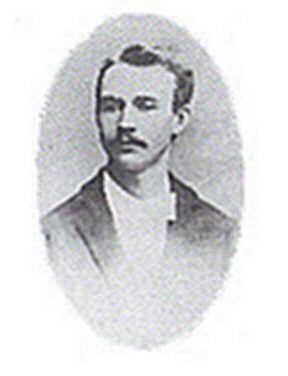
In 1897, an entrepreneurial couple named Pearle and May Wait had been unsuccessfully trying to start a cough syrup and laxative business in their kitchen. After years of getting nowhere with this line of products, they decided to try something they knew more about: food. Pearle and May excelled at making sweet syrups from local fruits and berries.
No one knows what inspired them to combine their fruit syrups with gelatin and turn them into a powder, but the result was a tasty, sweet, and fruity dessert that became a hit when water was added. Although gelatins had been around for a long time, no one had combined them with anything to make them taste good before the Waits. The desserts of that time were cakes and pies, which took lots of time and many ingredients to make. The process that the Waits developed was quick and easy to make, and a little-known fact was that their Jell-O didn’t need to be refrigerated, which wasn’t available in the late 19th century. All you needed was the powder and water; just let it stand for a while.
May came up with the name for their new product by combining the words gelatin and jelly. She then added the letter “O” at the end, a widespread marking practice. Their first flavors were strawberry, raspberry, lemon, and orange.
Although Pearle and May had invented a revolutionary new tasty dessert, they didn’t have enough money to advertise and promote their new treat. Unable to sell Jell-O themselves, they sold the formula, patent, and name to a neighbor, Orator Frank Woodward, for $450 in 1899.
With his Genesee Pure Food Company, Woodward had the manufacturing capability and was already successful with his roasted cereal coffee substitute, Grain-O. He channeled the income from Grain-O into the marketing and sales for Jell-O, but the initial sales of Jell-O were extremely slow. At one point, a frustrated Woodard thought of selling the whole business, including Grain-O and Jell-O, for $35.
But Woodward, being a natural-born marketer, wouldn’t give up. He developed a two-part strategy: first, he’d send his sales force out, wearing fancy suits, to distribute free samples and the Jell-O cookbook he had created. He then instructed his salesmen to visit the local grocers, warning them to stock their shelves with the new product, as “they’ll be a run on the store for it.” Although it worked in the local region, it didn’t have the far-reaching success Woodward hoped for.
Early in 1900, Orator became ill, and his wife, Cora, took over running the business; she would finally develop the full potential of Jell-O. In 1904, Cora hired William Humelbaugh to help with the advertising. Humelbaugh suggested that they run an ad for Jell-O in the Ladies’ Home Journal, one of the most popular magazines of the time, for $336; the ad featured a smiling housewife in an apron proclaiming that Jell-O was “America’s Favorite Dessert.” This new advertising campaign took off, causing sales for Jell-O that year to jump to $250,000. Jell-O sales continued growing, and well-known artists, including Norman Rockwell, were hired to create artwork promoting Jell-O.
In 1925, the Postum Cereal Company (today’s General Foods) bought Genesee Pure Foods and Jell-O. At that time, the Jell-O factory was the largest employer in LeRoy. In 1964, the corporation moved its Jell-O manufacturing operation out of LeRoy, which ended almost a century in the city. The original Woodward factory has since been torn down.

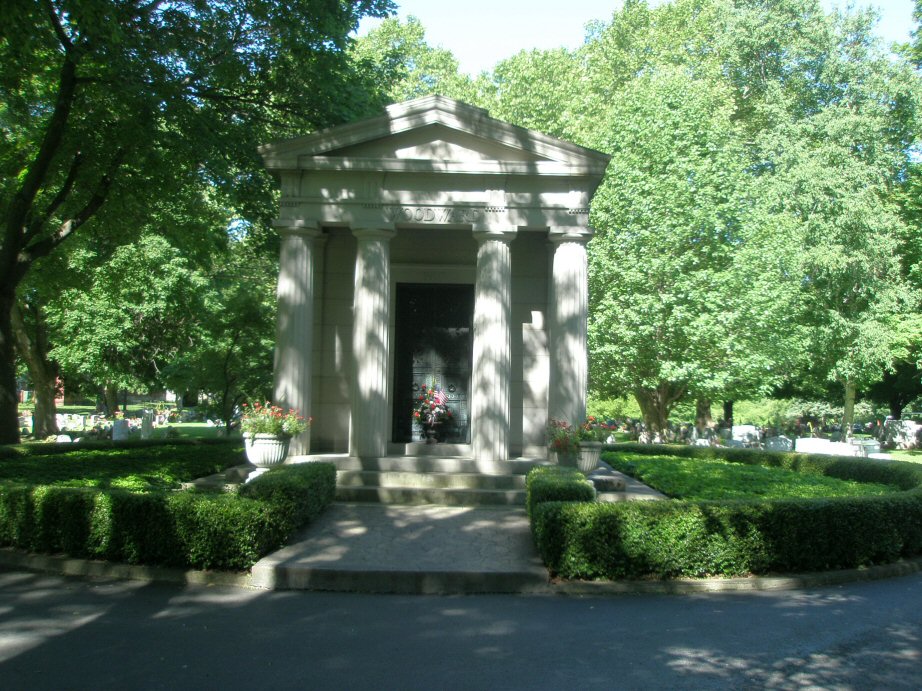
The story of Jell-O, like McDonald’s, is one of both success and misfortune. Pearle and May Wait sold their invention for $450, which would be around $12,000 today, while Orator and Cora Woodward’s company raked in $250,000, around $6.2 million today, in sales for Jell-O just five years later. This difference between these two stories can be seen at LeRoy’s Machpelah Cemetery, where both families are laid to rest.
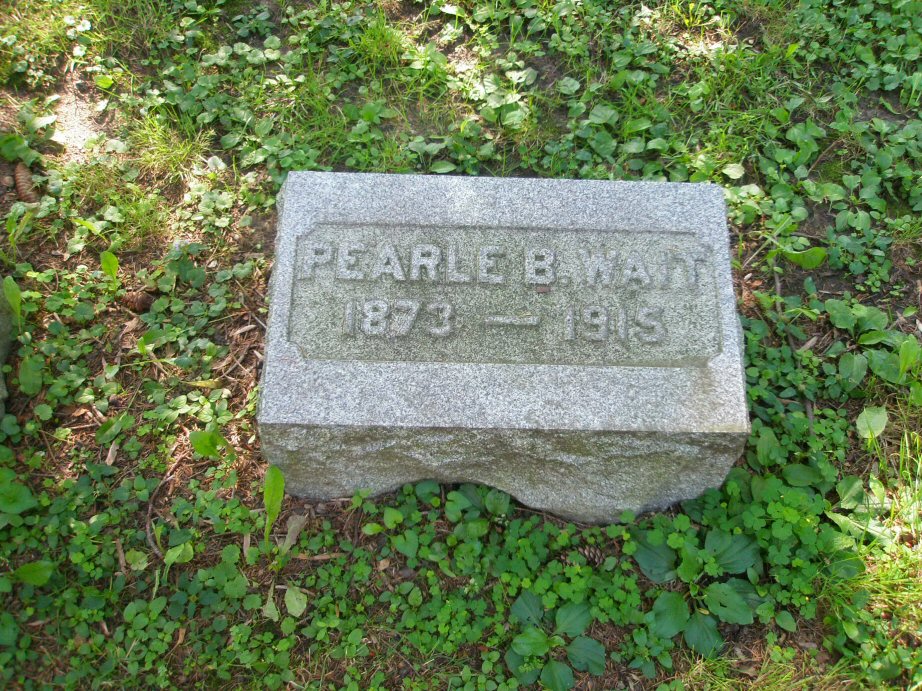
The Woodwards are entombed in a Greek-style crypt, while Pearle and May lie side by side with only simple headstones.
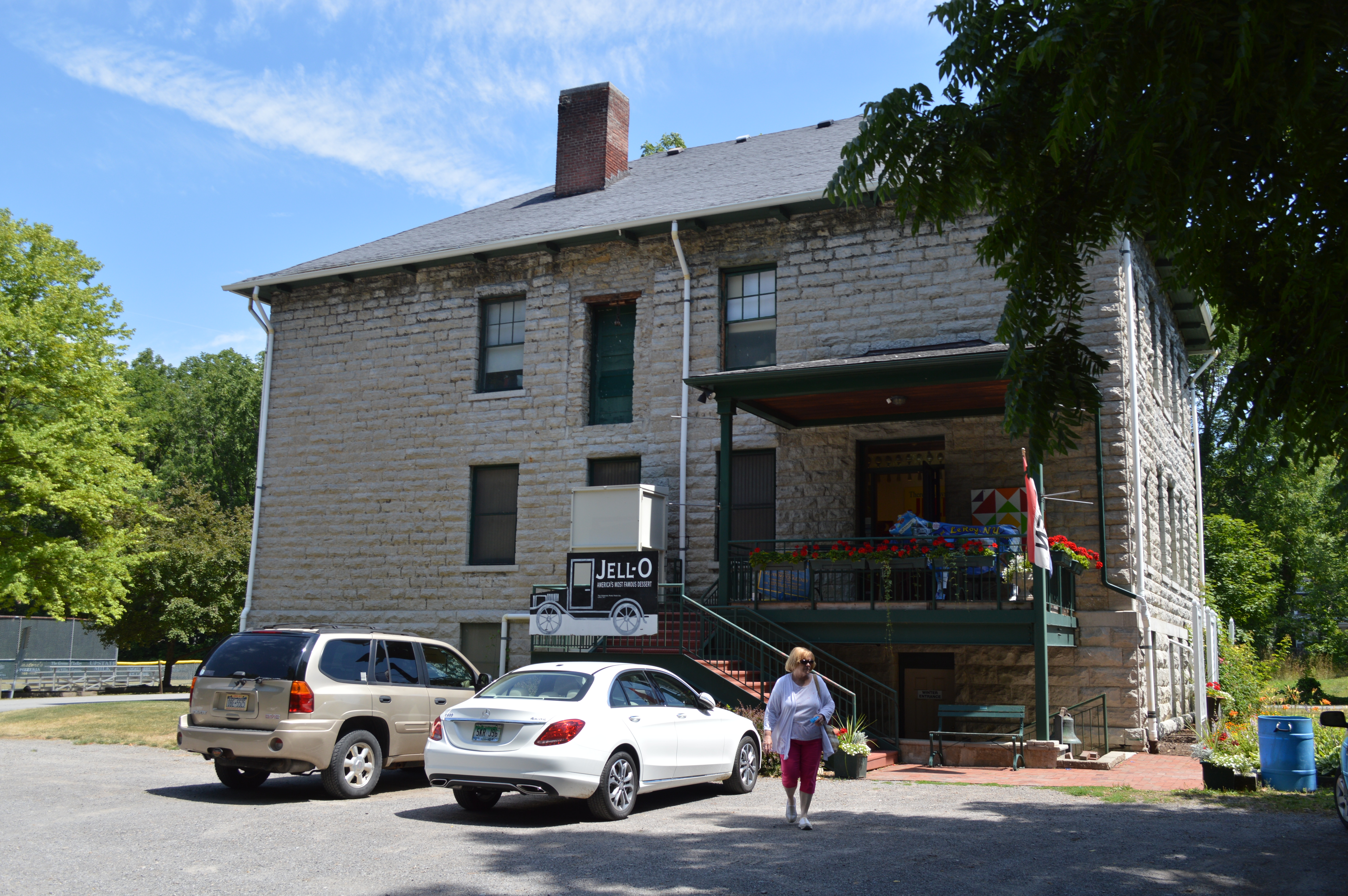
The Jello Gallery
LeRoy is about thirty miles from Rochester, New York, on Route 5 (East Main Street). The museum, known as the “Jell-O Gallery,” is located about a half mile east of Oatka Creek, behind the equally historic LeRoy House (more on that later).To find the LeRoy House, you just need to look for the burgundy and gold yard sign for the LeRoy House on the north side of the road. You can park on the street or use the parking lot in the back. The Jell-O Gallery is located on the second floor of the building that was once the Union Free School (more on that later).
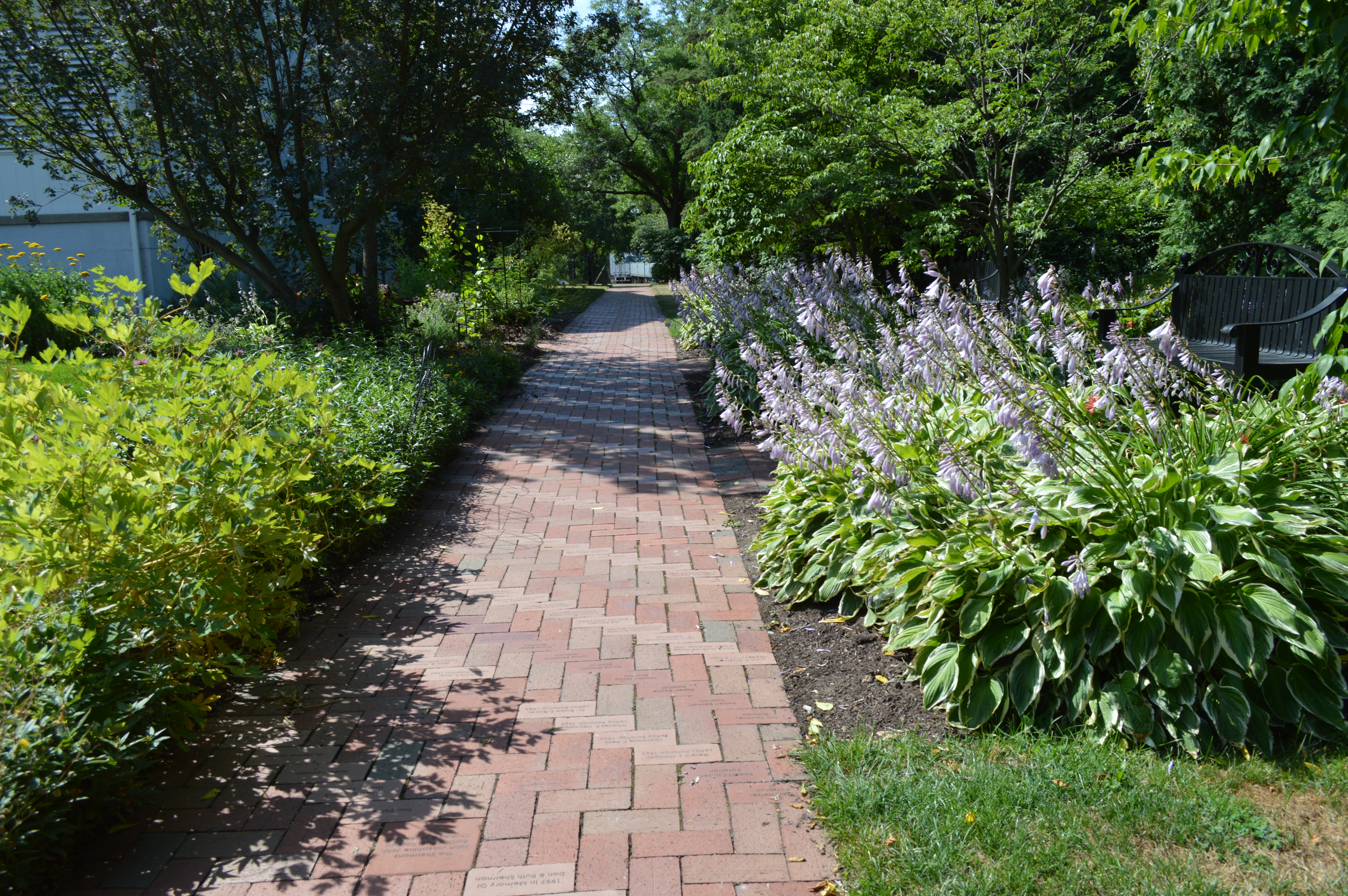
Another thing I enjoy about researching for my posts is discovering new information or details I missed while visiting these sites. This allows me to tell you the background story and what to look for when you visit. For example, when visiting the museum, I almost missed the “Jell-O Brick Road,” with the names of the former factory employees inscribed on the bricks.
In addition to the history of Jell-O, the museum is filled with thousands of related items, including molds, advertising posters, signs, toys, recipe books, and more. You can also vote for your favorite Jell-O flavor.
The museum is operated by the LeRoy Historical Society. It is open seven days a week from April through December: Monday through Saturday, 10 am to 4 pm, and Sunday, 1 pm to 4 pm. From January through March, it’s only open weekdays from 10 am to 4 pm. It’s closed on major holidays.
Admission is inexpensive: Adults are $5, children 6 to 11 are $1.50, and children 5 years and under are free. The transportation history exhibit downstairs is also included with the admission.
The LeRoy House and Union Free School

When you visit the Jell-O Gallery, give yourself time to check out the LeRoy House.
This Greek revival-style house was initially built as a land office in the early 19th century. These land offices were part of the United States government’s independent General Land Office agency, which was formed in 1812 to survey and distribute public lands.
The LeRoy House was built by Jacob LeRoy, one of the area’s early land agents and settlers. LeRoy expanded the house over time, making it one of the region’s largest and most well-furnished homes. In fact, LeRoy hosted the wedding reception for Daniel Webster’s second marriage to one of his sisters at this house.
Today, the LeRoy House is a museum that displays its history as a land office and of life in the early 19th century. Walking through, you’ll go back in time to what life was like in the finer homes on the early frontier. Upstairs, a room is dedicated to the American Boy Scouts, featuring uniforms and other items.
The Union Free School

Besides housing the Jell-O Gallery and transportation museums, this three-story limestone building was the first home of the LeRoy Academic Institute, one of the first educational schools in the area, and later, the local high school. In the 20th century, it ceased being used for education and was converted to manufacturing patent medicines. The historical society bought it, along with the LeRoy House, in the 1940s.
This next segment goes along the Jell-O Brick Road piece.
The Horse of a Different Color
In the 1939 MGM film The Wizard of Oz, the horse that pulls the carriage that takes Dorothy and her followers through the Emerald City to see the Wizard keeps changing color. When Dorothy asks about this, the carriage driver tells her, “It’s a horse of a different color.” So why have I included this story in this post on Jell-O? To make this scene, they used four white horses, three of which were tinted a different color. In filming, they switch between the horses, making it look like the same horse is changing color. The technicians didn’t use dyes to color the horses, which could have harmed the animals. Instead, they rubbed the horses with a blend of lemon, cherry, and grape Jell-O powder. This allowed them to get the desired color effect of yellow, red, and purple, as seen in the movie. Their only issue with using Jell-O was that the horses kept licking off the sweet powder.
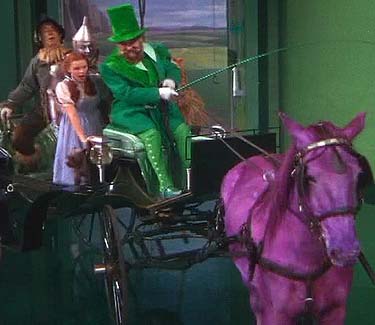
Oz Wiki website.
This post was updated on August 29, 2024


So very interesting.great article Ron
LikeLike
Thank you so much Arlene
LikeLike
a fascinating read
LikeLike
Thank you
LikeLike