I can remember clearly when the first McDonald’s restaurant opened near where I grew up in Mount Clemens, Michigan. To be honest, I wasn’t too excited about this interloper, since we already had our own “Golden Point” hamburger drive-in. But eventually, Mickey Dee’s won out, and “The Point” vanished into fond memories.

Over the years, McDonald’s finally became my hamburger place of choice. I remember getting five hamburgers, two orders of fries, and two large Cokes for $1.83. But that was back in the late 1960s, and McDonald’s is much different today. Back then, you’d walk up to a window at the front of the building, order your food, which was waiting in rows behind the server. The famous French fries were cut from whole potatoes right there in the restaurant; the milkshakes were hand-made with real ice cream and blended in a large mixer; and you ate in your car. Also, all the servers were young men.
We all have our stories to tell about our trips to McDonald’s, but what’s the history of this great American iconic restaurant chain? Personally, I had no idea how this place with its golden arches came about until I read Ray Kroc’s autobiography, “Grinding It Out.” What I learned from his book is that Kroc wasn’t the originator of McDonald’s, but rather its marketer and developer, shaping it into what it is today. In his book, Kroc credits two brothers in San Bernardino, California, with creating the process and giving it its name.
While visiting Palm Springs, California, a few years ago, I learned about a museum on the site of the original McDonald’s restaurant in San Bernardino. So I decided to drive over and see where it all had started. But before I tell you about this museum, let me present some of the convoluted history of this worldwide American icon and how it came to be.
This post was updated on September 12, 2026
It all began with Dick and Mac, the McDonald brothers
The history of McDonald’s Restaurants, as with most successful enterprises, followed a long and winding course. McDonald’s very roots began with two California transplants from Manchester, New Hampshire, Richard “Dick” and Maurice “Mac” McDonald, who went west to chase their own American dream.
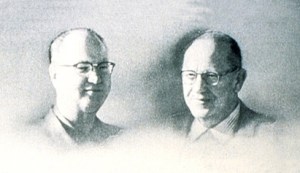
Photo from Wikipedia
The brothers moved to Southern California in the 1930s to start their careers, not as restaurateurs but in the growing entertainment industry. After less-than-successful attempts in entertainment, they decided to try their hand at the restaurant business. The brothers opened a Hot Dog stand in the small California town of Monrovia, which they named the “Airdrome,” after the small nearby airport, the “Foothill Flying Field.” They constructed their stand from borrowed lumber in an octagon shape, building it on the famous old Route 66. Their small stand was successful enough for them to move their parents out to California and open two additional stands.
However, the McDonald’s story really began in 1940, when the brothers decided to move their restaurant to the City of San Bernardino, about fifty miles to the east. The reason for this move has two different variations, depending on the source. One source says the brothers moved because their customer base in Monrovia was primarily patrons of the town’s racetrack. This source says that when the racetrack season ended, so did the hot dog stand’s business. The other reason given is that San Bernardino was a much larger city with more potential. Whatever the reason, it was with this move that the story of McDonald’s really began to take shape.
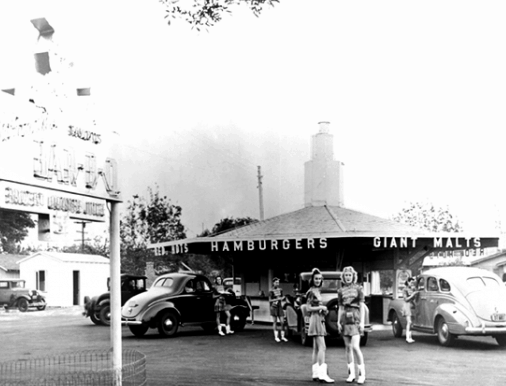
Photo Pinterest
When the brothers moved to San Bernardino, they didn’t just relocate their business; they also moved the entire building. Cutting their octagon stand into two pieces, they trucked them to a small piece of land at the corner of 14th and E Street (also on the old Route 66) and reassembled them. Now at the new location, the brothers also decided to expand the restaurant’s menu to include barbecue items. In 1940, they opened their new restaurant, McDonald’s Barbecue, named after their family.
Since they were making changes, they also embraced the new and popular drive-in concept, complete with young female carhops. This new restaurant was very, very successful for the brothers. But there were issues: their expanded menu was costly and time-consuming to prepare, and the carhops were drawing unruly teenage males that kept families away. Because of its success, it came as a big surprise to the community when, just eight years later, the brothers closed the restaurant in early 1948 to reinvent themselves again.
Richard “Dick” McDonald: the Henry Ford of fast food

Photo from the internet.
In their reevaluations, the brothers took an inventory of what menu items were the biggest sellers; they found that hamburgers and French fries topped the list, so they decided to limit the new menu to just those items, along with soft drinks and milkshakes. They solved the car-hop issue by discontinuing them and decided to hire only male workers. The brothers still wanted a drive-in-type restaurant; only it had to be new and unique, and serve food faster than traditional restaurants and drive-ins.
It was Dick, with his engineering background, who designed the kitchen to maximize the speed, efficiency, and output of food preparation while still maintaining high food quality. Dick even invented a utensil, based on a candy confectioner’s cone, to precisely squirt out the right amount of condiments, and also a mechanized hamburger press to make the patties.
To speed up milkshake production, they purchased eight Multimixer blenders (more on this later) capable of producing five shakes at a time. The principles of Dicks’ design were essentially a food assembly line, similar to what Henry Ford used to make his automobiles. Dick named his new process the “Speedee Service System.”
Another byproduct of their faster food preparation and limited menu was that it allowed the brothers to reduce their prices: hamburgers were 15 cents, French fries were 10 cents, and a creamy milkshake was only 20 cents. This was great for budget-conscious families.
On December 12, 1948, Mac and Dick cut the ribbon on their new “Speedee Service” McDonald’s. However, their “new” concept for a drive-in restaurant didn’t go over well at first; the young customers still came looking for the car-hops. But soon, truckers, construction workers, taxi cab drivers, and families traveling along Route 66 discovered this restaurant where they could get a good meal fast and at a low price. It wasn’t long before the McDonald’s parking lot was jammed, with long lines of customers standing at the counter to order.
The birth of the “Fast Food” industry
With its ever-increasing crowds and popularity, the restaurant began drawing more than just those looking for a great meal deal. Other restaurateurs came, taking advantage of Mac and Dick’s openness, and copied this new fast-food process for their own restaurants; among them was Taco Bell founder Glen Bell. Realizing they could make money by selling Dick’s process, the brothers began limited franchising of the Speedee Serve System in 1953 for a fee of $950. For that fee, the purchaser simply received a manual outlining the system.
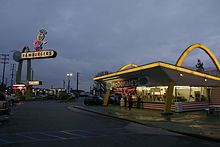
Photo from Wikipedia
As requests mounted from those wishing to use the Speedee Service System, Dick thought it was time to standardize the look of the restaurant’s building. Dick’s idea was that the building itself would be an eye-catching sign to attract customers. With a rough sketch, the brothers began shopping for an architect who could turn Dick’s idea into reality. Finally, they selected California architect Stanley Meston, along with his assistant Charles Fish. The two took the rough drawing and created what would become the world’s most recognizable business symbol, the “Golden Arches.”
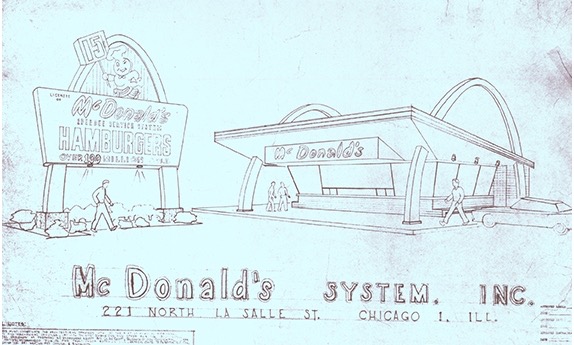
Photo from Pinterest
The first franchisee to use this new building design was Neil Fox for his restaurant in Phoenix, Arizona. Another first that Fox brought to McDonald’s history was that he was the first, other than the original, to use the name “McDonald’s” for his restaurant. Up until then, the McDonald brothers hadn’t made the name part of the franchise. When the brothers asked Fox why he used the name, they thought it meant nothing outside San Bernardino. Fox answered that he believed the name was “lucky.” From then on, the name McDonald’s became part of the franchise. Over the next year, the brothers successfully sold a few franchises. With that money coming in and the continued success of their own restaurant, they were pretty content.
But that was about to change. In 1954, the success of McDonald’s had caught the attention of someone else: a 52-year-old Chicago salesman named Ray Kroc, looking for his big break.
Ray Kroc
Although in his autobiography “Grinding it Out,” Ray Kroc doesn’t mention that the McDonald brothers already had a number of franchises in existence by the time he arrived in 1954. Or that the Carnation Corporation had offered the brothers a partnership to expand McDonald’s nationwide before him. But it would be Ray Kroc who would forever change the lives of Mac and Dick McDonald and begin to shape McDonald’s into what we know today.
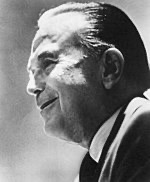
Photo from Wikipedia
Raymond Albert “Ray” Kroc was a traveling salesman from Chicago who was constantly looking for his “Big break.” Kroc had been a real estate salesman, a paper cup salesman, and sometimes a piano player. Kroc was 52 years old and the sales representative for Prince Castle’s “Multimixer.” The Multimixer was a heavy-duty commercial blender that could handle five malts or shakes at one time. So large was this unit that even the largest soda shops only needed one to do the job. So it was a big surprise for Kroc when a small drive-in restaurant in San Bernardino, California, had ordered eight of those units. This got Ray’s attention, and he decided to go to California himself to check out what this “McDonald’s” was doing that required eight of his mixers.
At first, Kroc observed what was happening from across the street, where he was amazed at how big the crowds were and how quickly they were being served. Finally, he went over and introduced himself to the brothers. Dick and Mac were excited to meet the salesman for their mixers and, as always, proudly and openly showed him the efficiency of their Speedee Service System.
Ray Kroc did what even Carnation couldn’t: get the brothers to partner with him. The original agreement had Dick and Mac owning the West Coast franchises, while Kroc would be the franchise agent east of the Mississippi River. In this agreement, Kroc would pay the brothers for the rights to use their concept, which included: the Speedee Service System, the McDonald’s name, and the restaurant building design. Kroc would get 1.5 percent of gross sales, while the brothers would receive 0.05 percent.
Soon, Kroc’s ambition and drive caused deep conflicts between him and the brothers. Mac and Dick were content to run their small restaurant, but they disliked the rapid expansions and changes Kroc proposed. Finally, when Mac and Dick refused to answer his letters, a frustrated Ray Kroc forced the brothers to sell. In 1961, Kroc bought out their interests and the entire concept for $ 2.7 million.
The dissolution of the partnership was not pleasant. Kroc found that the original restaurant and the land it sat on weren’t part of the sale. Although he didn’t own the restaurant, Kroc owned the name, forcing the brothers to change their McDonald’s to the Big M. Then, adding insult to injury, Kroc built one of his “McDonald’s” just down the street from the brothers. Sadly, Dick and Mac couldn’t compete with the restaurant they helped to create. The Big M closed in 1962. The brothers never opened another restaurant or any other business afterward.
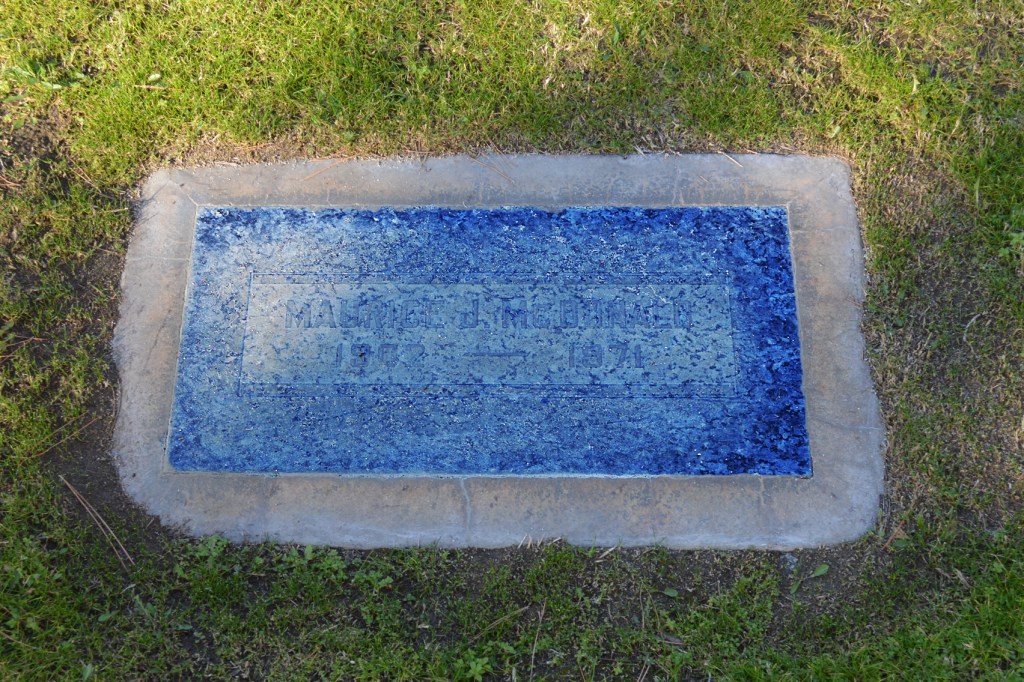
Photo by author
Maurice “Mac” McDonald
Just nine years after the sale, on December 11, 1971, Maurice “Mac” McDonald died of a heart attack. His family said Mac never recovered from the stress he and his brother suffered in their battle with Kroc. Mac is buried at Desert Memorial Park in Cathedral City, California. His sun-faded grave marker simply reads, Richard “Dick” McDonald
Richard “Dick” McDonald
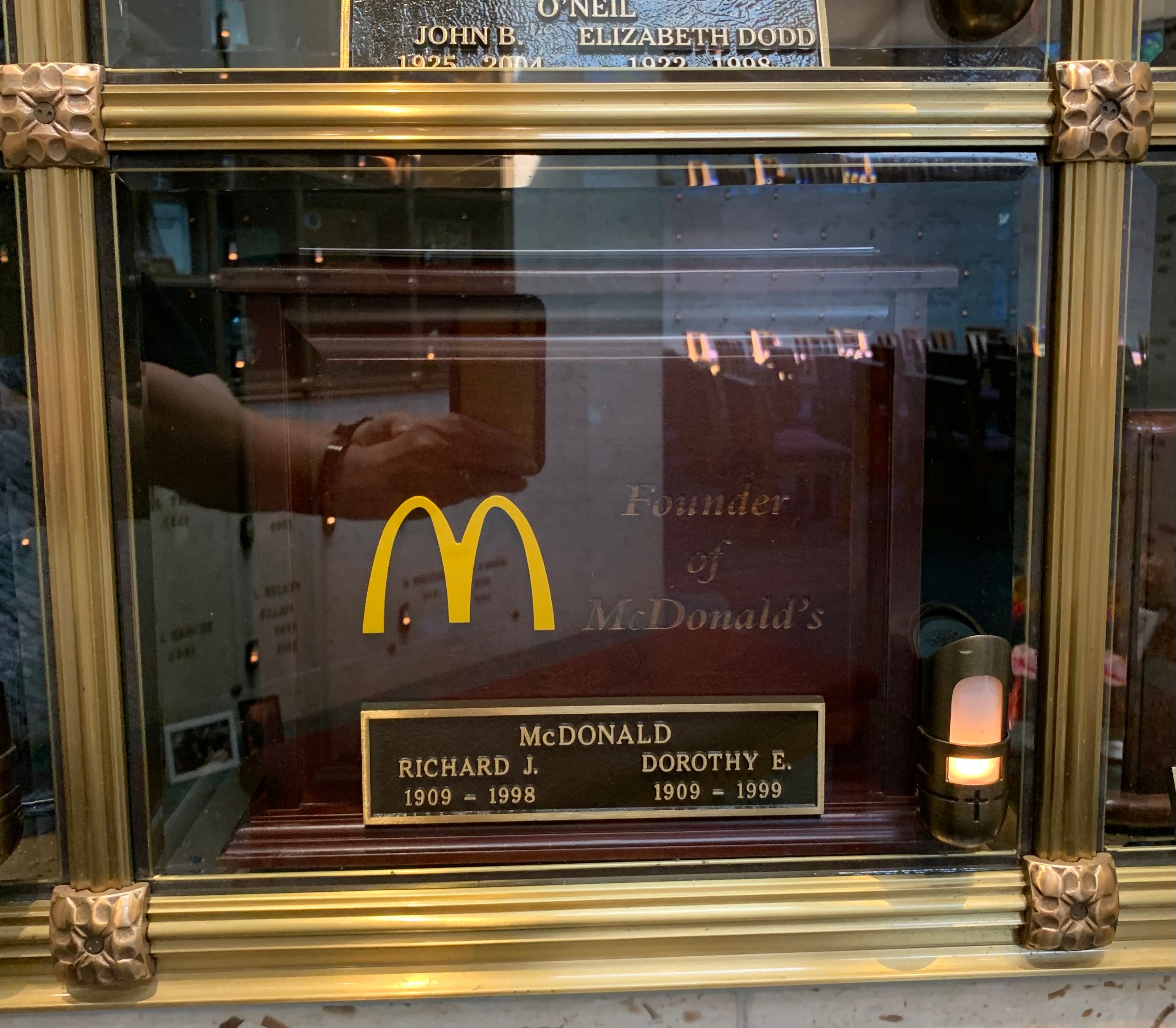
After Mac passed, Dick returned to Manchester, New Hampshire. After years of being ignored by the McDonald’s Corporation, he and his brother were finally recognized for their contributions in creating McDonald’s. On November 30, 1984, Dick McDonald was served a ceremonial 50-billionth McDonalds hamburger by Ed Rensi, then president of McDonalds USA.
On July 14, 1998, Richard James “Dick” McDonald, the man who developed the Speedee Service System, passed away in a nursing home in Manchester. His cremated remains are interred at Mount Calvary Cemetery in Manchester, New Hampshire, but unlike his brother’s grave marker, Dick’s urn is etched with “Founder of McDonald’s.”
Raymond Albert “Ray” Kroc
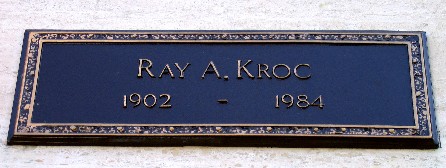
Ray Kroc died on January 14, 1984, just months before Richard McDonald was served McDonald’s 50 billionth hamburger. Upon his death in 1984, Kroc’s net worth was around $600 million. Raymond “Ray” Kroc is entombed in a mausoleum at El Camino Memorial Park in Sorrento Valley, San Diego, California. On his marker, it just says, “Ray A. Kroc.”
As a side note, I found it interesting that Kroc paid the McDonald brothers $2.7 million for the exclusive rights to McDonald’s. When Kroc’s wife, Joan, passed away in 2003, she left the remainder of their estate to several charities. That total was $2.7 billion.
Where it all began: Fast Food Restaurants
When you visit this historic site and tour the McDonald’s museum, remember that not only did Dick and Mac start what would become the world’s largest restaurant chain there, but they also helped create the fast-food industry.
The original McDonald’s Restaurant site and museum is located at 1398 North East Street, San Bernardino, California.
The McDonald’s original site museum
For eleven years, the original building sat empty, falling into disrepair. In 1972, the building was torn down and replaced with a music store owned by the San Bernardino Civic Light Opera Association. When the original sign was also slated for demolition, a concerned neighbor, seeing that a bit of history would soon be lost forever, mounted a campaign that saved it. This sign will help you find the museum.

Photo by author
When the property went into foreclosure in 1998, it was purchased by Albert Okura, a modern fast-food acolyte and founder of the Juan Pollo rotisserie chicken restaurant chain. The building now holds both the unofficial McDonald’s museum and the corporate offices of Okura’s Juan Pollo restaurant chain.
Okura says that it was McDonald’s that caused him to choose a career in fast food. So when the opportunity to purchase the site arose, he jumped on it. Besides his love for McDonald’s, Okura knows that this site is a valuable piece of American restaurant history and shouldn’t be lost.

Photo by author
Okura opened his “unofficial” McDonald’s museum on December 12, 1998, the 50th Anniversary of when Dick and Mac opened the original McDonald’s. The museum not only features items from the early years of McDonald’s, including items used by the brothers in the original restaurant, but also more contemporary items. There is also a host of McDonald’s packaging, advertising, and promotional items to see. If you have anything McDonald’s in your possession that you can part with, they do accept donations; they’d really love to have a Ronald McDonald costume.
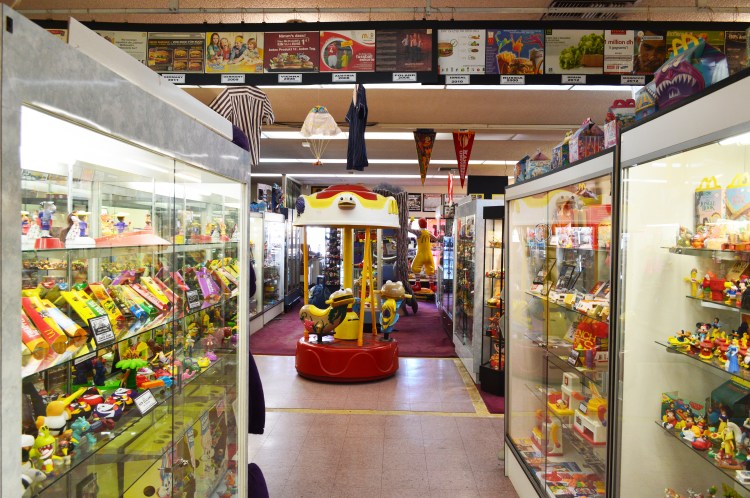
Photo by author
This museum is called “unofficial” because it’s not sanctioned by the McDonald’s Corporation. For years, McDonald’s didn’t recognize this as the site of the “original” restaurant. They consider Ray Kroc’s first McDonald’s in Des Plaines, Illinois, as being location #1. They even ignored all the other franchise locations sold by the McDonald brothers before Kroc entered the picture, such as the one in Downey, California, which opened in 1953. That location still exists, and its building remains almost unchanged since it opened.
Happily, the McDonald’s Corporation has recently been taking a more historically grounded stance regarding its origins. One of the most significant changes is at the company’s annual “Founders Day” celebration. At first, only Ray Kroc was the founder. But now, Dick and Mac McDonald are also recognized as founders.

Photo by author
The original McDonald’s Restaurant site and museum is located at 1398 North East Street, San Bernardino, California.
Sources:
Buck, Fielding. “Celebrate the birth of fast food at the McDonald’s museum in San Bernardino .” The Sun, MediaNews Group, 7 Dec. 2018, http://www.sbsun.com/2018/12/07/celebrate-the-birth-of-fast-food-at-the-mcdonalds-museum-in-san-bernardino.
“Desert Memorial Park.” Wikipedia, Wikipedia, 12 Jan. 2020, en.m.wikipedia.org/wiki/Desert_Memorial_Park.
“Famous Memorials in Desert Memorial Park.” Find A Grave Cemeteries, Find A Grave, http://www.findagrave.com/cemetery/188858/famous-memorials?page=2#sr-1414. Accessed 16 Sept. 2019.
Josh. “The Original McDonald’s: A Museum in San Bernardino.” California Through My Lens, Josh, 23 Aug. 2019, californiathroughmylens.com/original-mcdonalds-museum-san-bernardino.
“Maurice James “Mac” McDonald.” Find A Grave Memorials , Find A Grave, http://www.findagrave.com/memorial/14303576/maurice-james-mcdonald. Accessed 12 Sept. 2019.
“McDonald’s .” Wikipedia, Wikipedia, 29 Jan. 2020, en.m.wikipedia.org/wiki/McDonald%27s.
McDonald’s. “History.” McDonald’s, McDonald’s Corp., corporate.mcdonalds.com/corpmcd/about-us/history.htm. Accessed 15 Jan. 2020.
Napoli , Lisa. “The Story of How McDonald’s First Git Its Start.” Smithsonian , Smithsonian Magazine, 1 Nov. 2016, http://www.smithsonianmag.com/history/story-how-mcdonalds-first-got-its-start-180960931/.
“Original McDonald’s Site Museum.” RoadsideAmerica.com, RoadsideAmerica.com, http://www.roadsideamerica.com/story/16857. Accessed 31 Jan. 2020.
“Ray Kroc.” Wikipedia, Wikipedia, 30 Jan. 2020, en.m.wikipedia.org/wiki/Ray_Kroc.
“Richard and Maurice McDonald.” Wikipedia, Wikipedia, 21 Jan. 2020, en.m.wikipedia.org/wiki/Richard_and_Maurice_McDonald.
Sterling Multi Products, Inc. “Soda Fountain Multimixer History.” Sterling Multi Products, Inc., Sterling MultiProducts, http://www.sterlingmulti.com/multimixer_history.htm. Accessed 18 Jan. 2020.
Wikipedia . “Oldest McDonald’s restaurant.” Wikipedia, Wikipedia, Dec. 2019, en.m.wikipedia.org/wiki/Oldest_McDonalds%27_restaurant.


Reblogged this on Ancien Hippie.
LikeLike
Great blog you have herre
LikeLike
Thank you so much
LikeLike