
Mykonos
Mykonos is one of the most popular Greek islands for vacationing Europeans. This is due to its warm weather and its world-famous beaches. Mykonos is situated at the center of the Cyclades archipelago, which lies along the eastern side of the Greek mainland. Mykonos is approximately 33 square miles in size and reaches an elevation of 1,119 feet above sea level. The population is slightly over 10,000, with the majority of residents residing in Chora. Chora in Greek means “the Town”, with its official name being Mykonos, following the Greek practice of naming the central town after the island.
Archaeological findings have revealed that the first inhabitants of Mykonos were the Neolithic tribe known as the Kares, dating back to approximately 3,000 BCE.
The first to actually settle the island were the Ionians, who came from Athens,
around the early part of the 11th century BCE. Although the Ionians lived on Mykonos, the majority of the people resided on the nearby island of Delos, just a short mile away across the water. I’ll explain the reason for this later in this post.
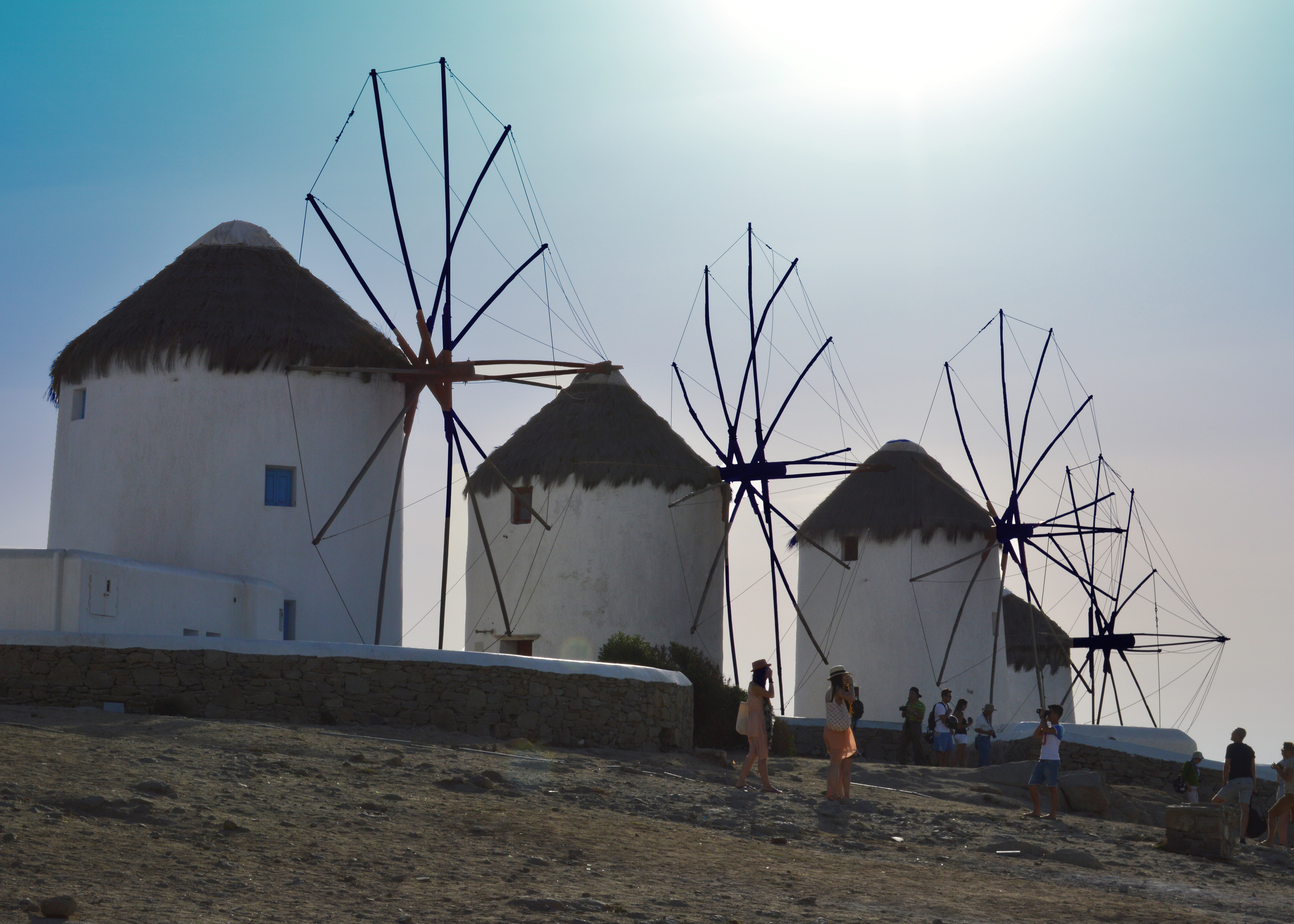
When you see photos of Mykonos, you’ll most likely see its windmills. These windmills, standing in rows on the hills overlooking the main town, are the defining feature of the island. What’s surprising is that they were not built by the Greeks, but rather by the Venetians, who controlled Greece in the 16th century CE. Some of the windmills are still used to mill flour, while others serve as homes or are used for storage.
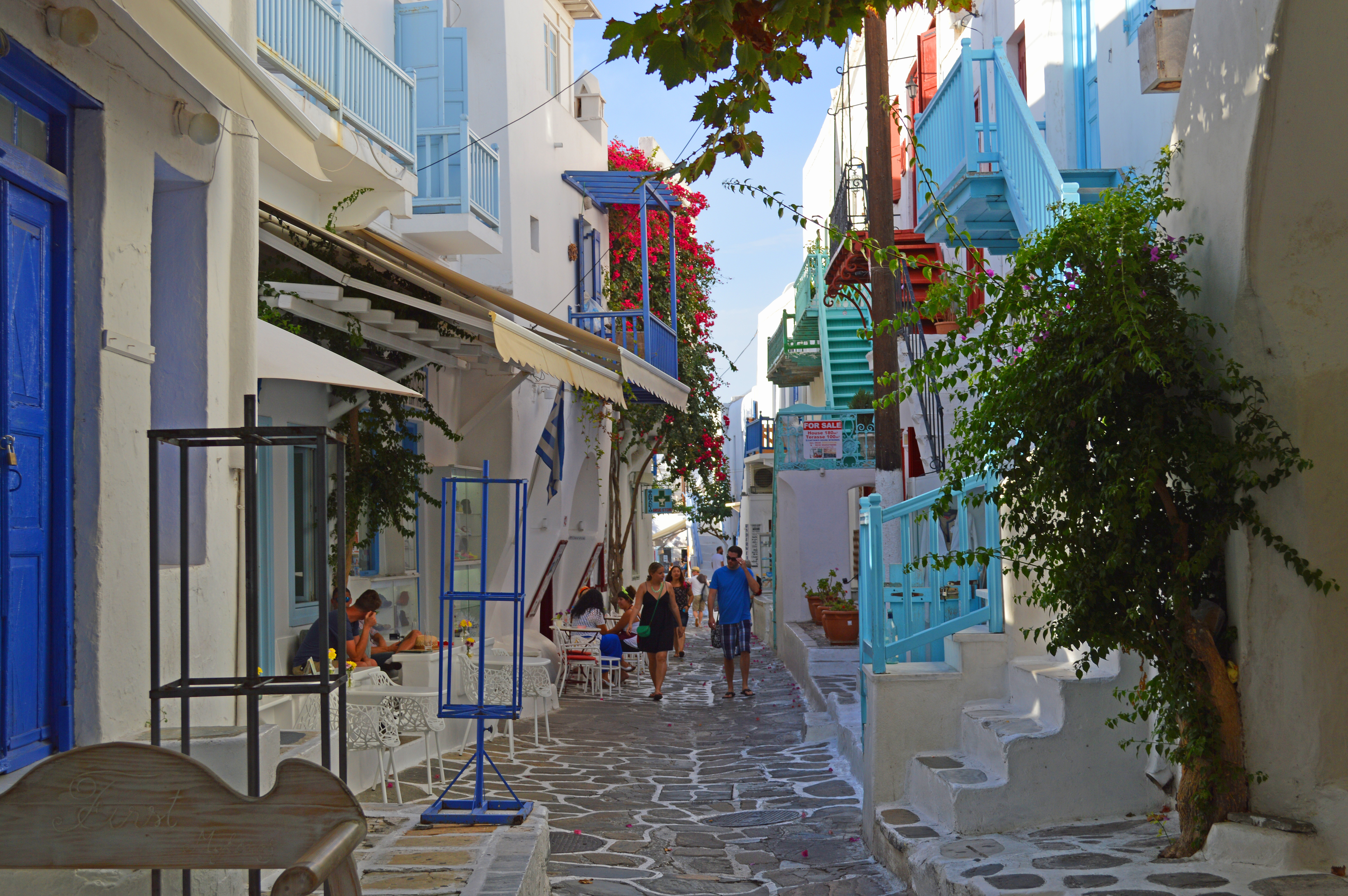
The harbor of Mykonos has been referred to as “Little Venice,” with its rows of fishing houses and balconies hanging over the sea. The streets of Mykonos are bright and pleasant, with colorfully painted doors and trim on whitewashed buildings.
The Island of Delos
To be honest, the one stop on our tour of Greece I was least interested in visiting was Mykonos. For me, the tour was to see the ancient Greek sites, and all that I knew of Mykonos up till then was the beaches and windmills. Then our tour director told us about the Island of Delos. The Island of Delos happens to be the largest Greek archaeological site in the world. Making it one of the most important historical and mythological sites of ancient Greece.
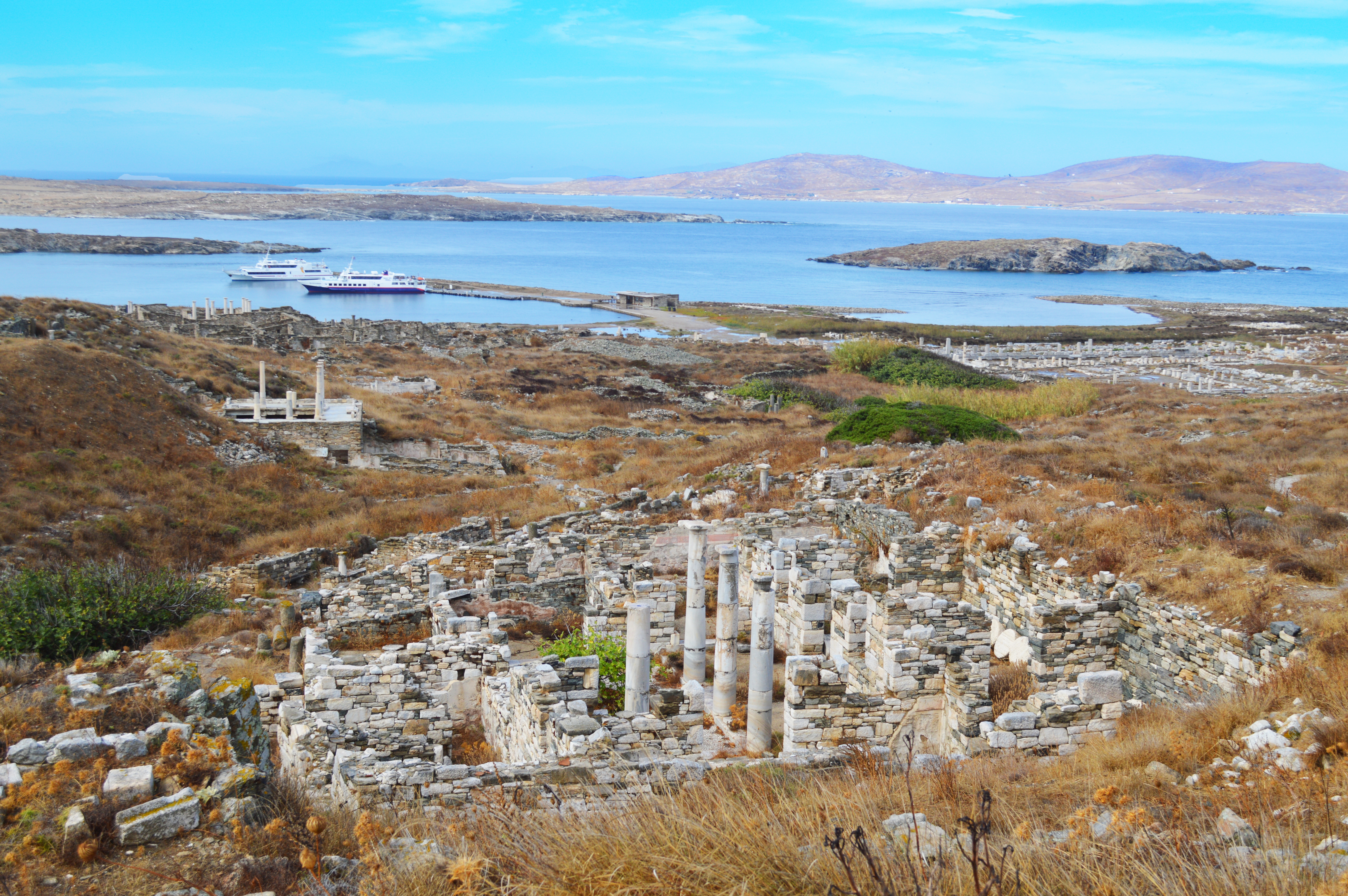
Believed to have been the birthplace of the Greek gods Apollo and his twin sister Artemis, Delos became one of the most sacred sites in ancient Greece, alongside Delphi and Olympia. In addition, being at the center of the Cyclades archipelago, Delos became a major seaport in the eastern Mediterranean.
Archaeologists have discovered prehistoric stone huts on the island, which suggests that Delos was inhabited as early as the third millennium BCE. Ancient Greek historian Thucydides (460-400 BCE) claimed that the original inhabitants were the piratical Carians. According to Thucydides, these people were expelled by the legendary King Minos of Crete.
Delos was already a significant pilgrimage site by the time of the Greek poet Homer (possibly born around the 8th century BCE), and is mentioned in his poem The Odyssey.
The island was a significant cult center, spanning the period from 900 BCE to 100 CE. While the island was under the control of the Athenians, to purify this sacred island for worshiping their gods, they dug up all the graves and relocated them to other islands. In fact, it was even unlawful to die or be born on Delos.
Due to it being a sacred site and seaport, by the 8th Century BCE, close to 25,000 people lived on Delos. Even though there were few natural resources to support that number of people. As I mentioned earlier, this was more than on Mykonos. However, in the first century CE, Delos was in decline, having been attacked several times, and the all-important sea trade routes changed.
In the first century CE, the island was attacked many times, and the shipping trade routes, so crucial to the island’s people, changed. Unable to support itself, the once vibrant center of Greek culture and trade became deserted.
Today, excavations at Delos are among the most extensive in the entire Mediterranean. Many of the artifacts found there are either on display in the island’s museum or at the National Archaeological Museum.
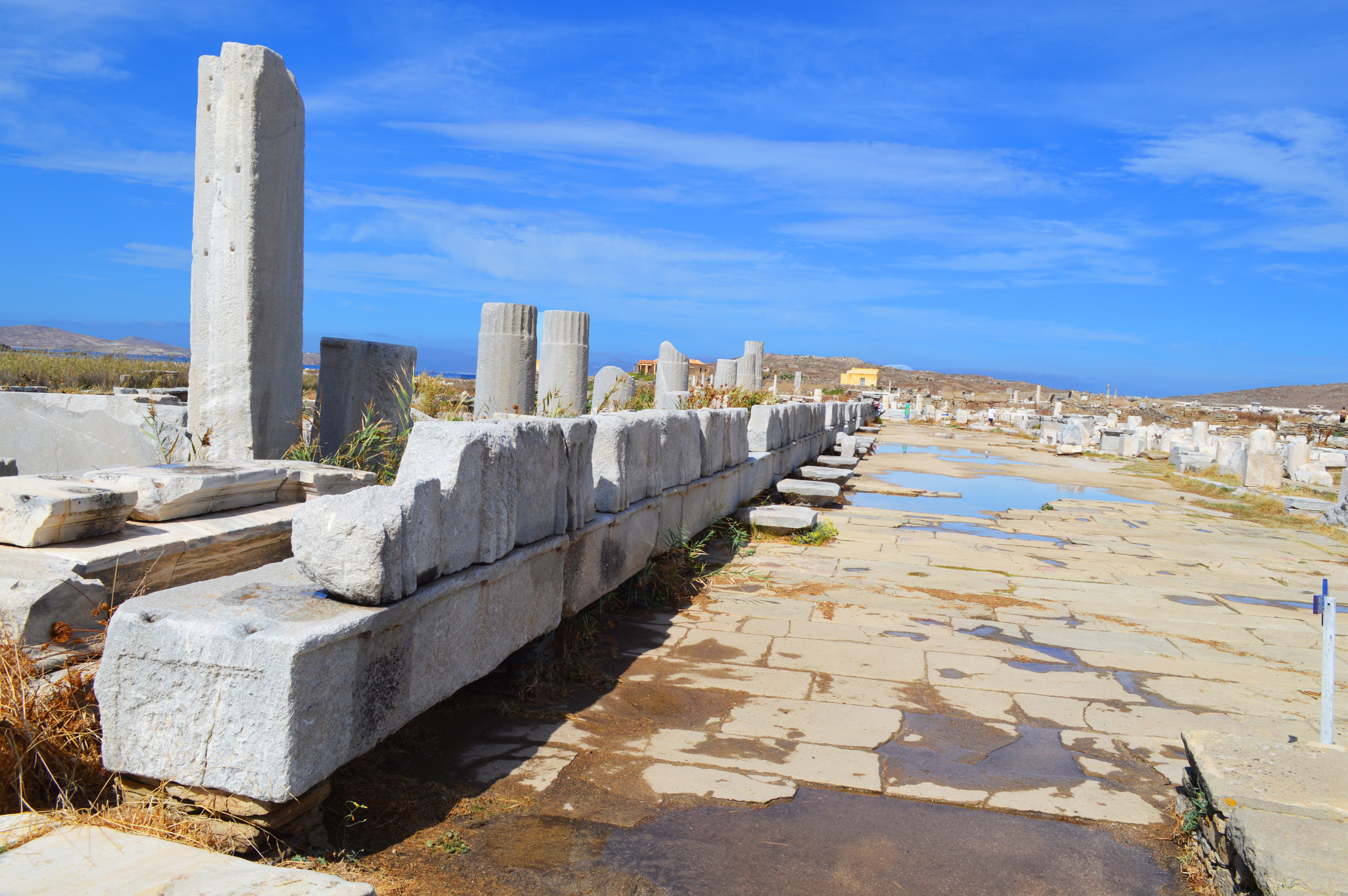
To get to Delos from Mykonos, you need to take a high-speed ferry. What awaits you is a massive, ancient, ruined city, spreading out as far as the eye can see. There, you’re able to walk its ancient streets, lined with shops. Witness the remains of columned temples. See preserved mosaic floors and statuary.
All of this was unbelievable. But what caught my attention was the rocky Mount Kynthos.
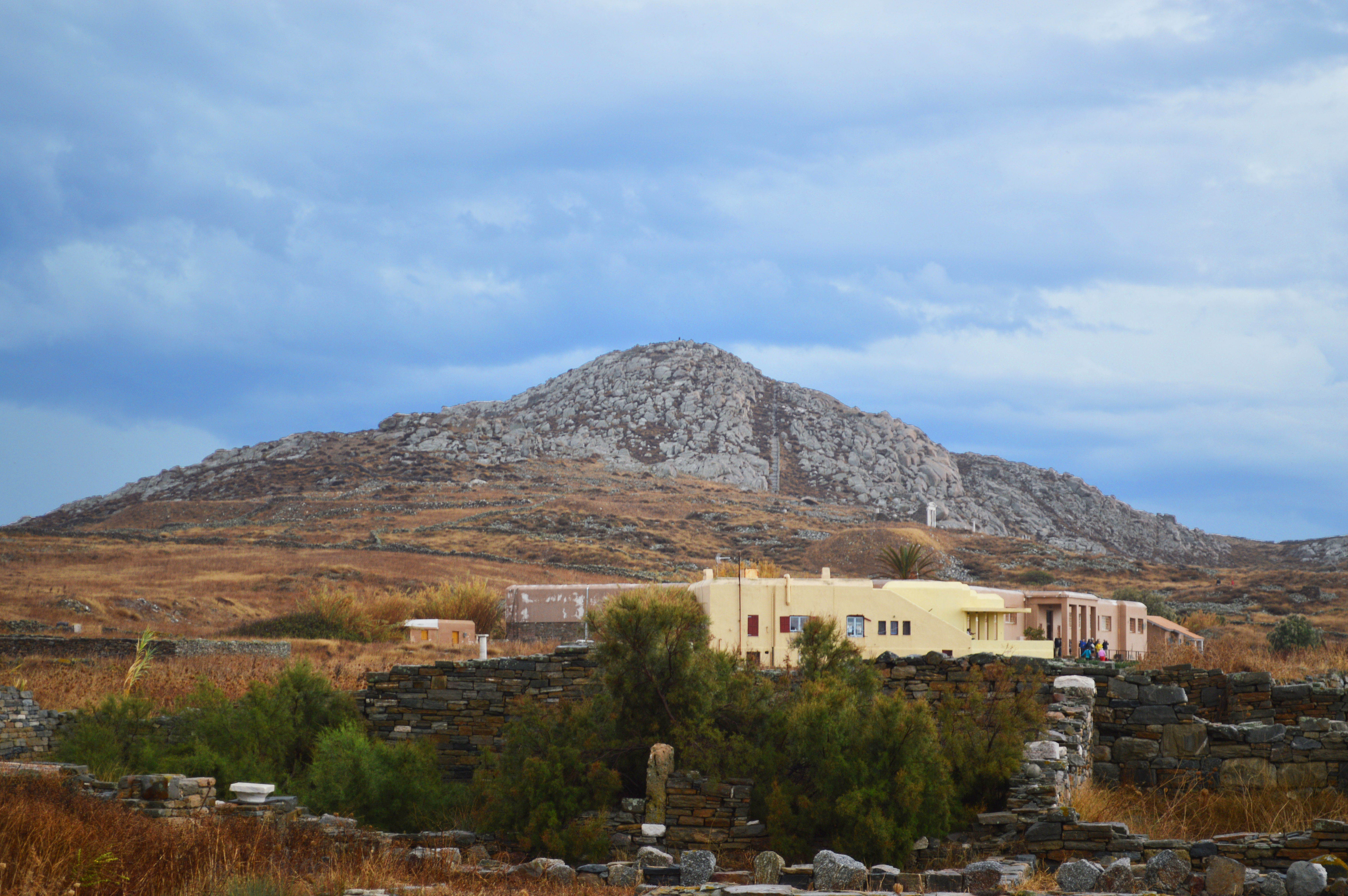
At its height, there stood a temple to Zeus at its summit. Although Kynthos isn’t extremely high (only 367 feet above sea level), its rockiness and the steep trail to the top make it a challenge to climb.
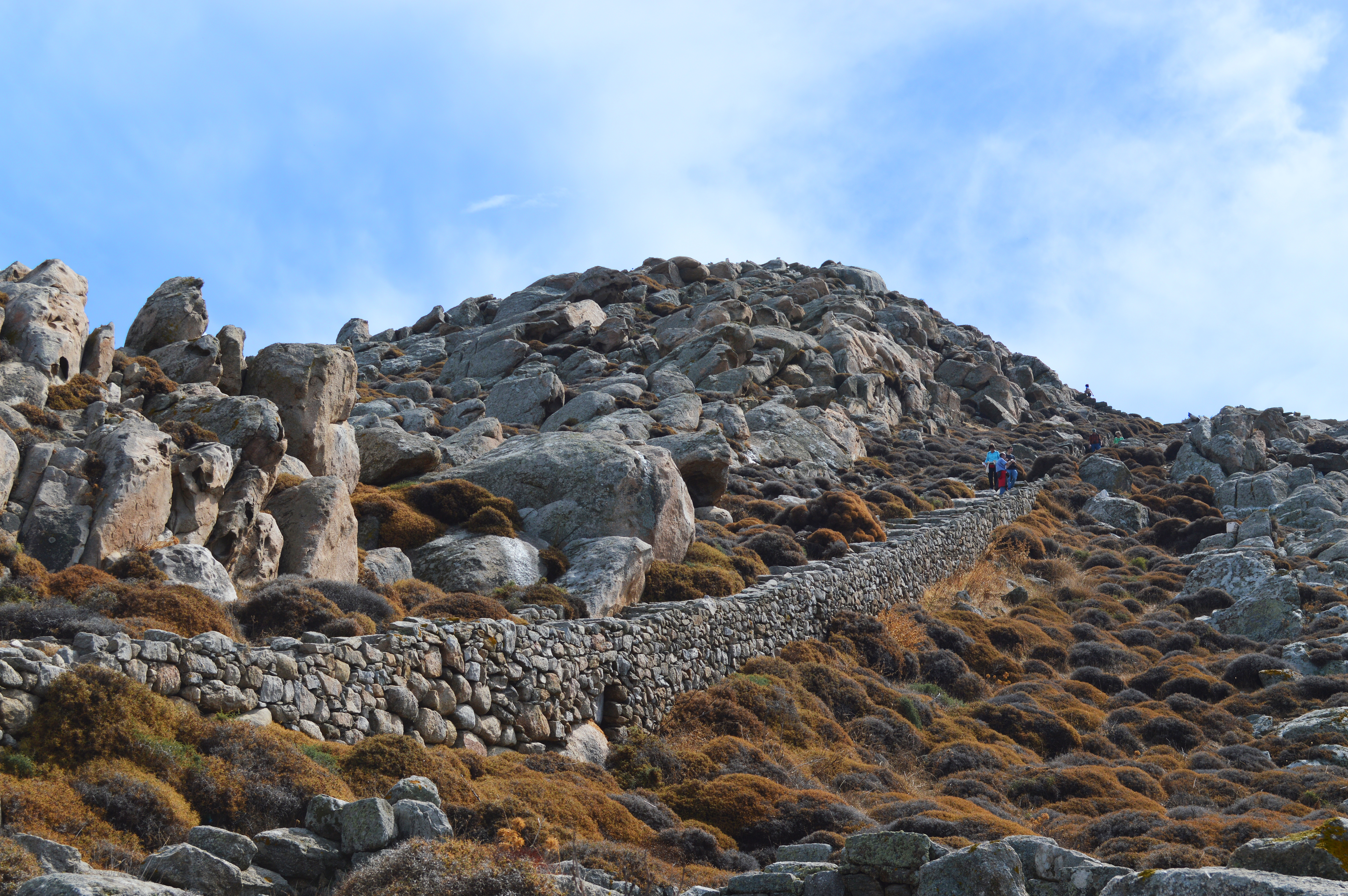
Mount Kynthos
But it’s well worth the effort. From the summit, you can see just how massive the archaeological site really is. Also off in the distance, you can see the surrounding islands of Mykonos, Naxos, Paros, Syros, and Rhenia.
So, when you go on a tour, don’t assume what there is to see. You might be really surprised if you just investigate a little deeper.
 Still Current
After reading this I have had to edit my latest post… Sadly I do not know as much about Ancient Greece as I had thought. Thank you for your insight!
LikeLike
I’ve had a passion for Ancient Greece since I was a kid (which was a few decades ago). I’m still learning, Delos was a major surprise. Check out my other posts on Greece, and up upcoming one on the island of Santorini (Thera). Thank you so much for commenting.
LikeLiked by 1 person
I will definitely check out your other posts. Thank you for sharing, I love Greek Mythology and ancient Greek things.
LikeLike