Friday, March 4, 1836: Santa Anna calls a council of war, Mexican artillery moves closer to the Alamo, and a possible emissary from Travis.
Early in the evening of March 4th, Santa Anna called together his generals and senior officers to decide the fate of the Alamo.
This meeting lasted well into the night as Santa Anna and his officers debated on how to move forward. Some believed they should wait a few more days before attacking, giving Filisola time to arrive with the two heavy 12-pounder siege cannons Gaona had failed to bring. Their position was that those big guns could destroy the fort’s weak north wall, causing fewer casualties when they attacked. However, those closest to Santa Anna wanted to strike immediately. They argued that the Alamo already had received reinforcements, and there were reports that more could be on the way. Their thought was to attack while the numbers were still in their favor.
Santa Anna ended the meeting, saying he’d give his answer later that morning. However, there was one decision made that some officers didn’t like. It was decided that no prisoners would be taken.
That evening, the Mexicans added a third artillery battery north of the Alamo. This one was only two hundred yards from the fort’s north wall.
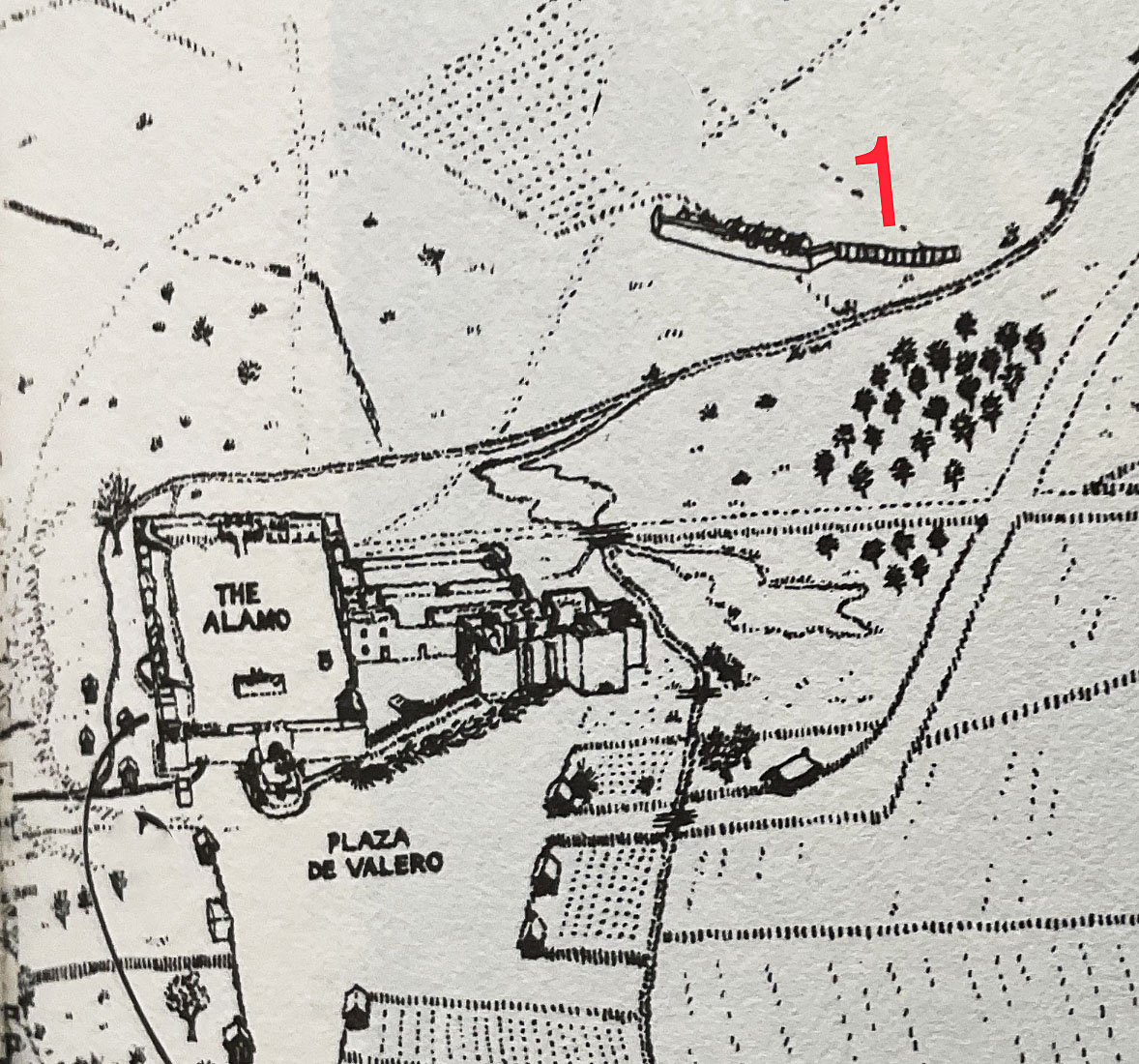
Also, two controversial events may or may not have occurred on this day. One has a woman, or possibly two, leaving the Alamo to meet with Santa Anna, and the other has additional reinforcements entering the Alamo.
There are two versions of women meeting with Santa Anna. One account comes from General Filisola’s memoirs. According to Filisola, “about nightfall, it was reported that Travis Barret, commander of the enemy garrison, through the intermediary of a woman, proposed to the general in chief that they would surrender arms and fort with everybody in it with the only condition of saving his life and that of all his comrades in arms.” The other account comes from an 1876 interview by Susanna Dickinson. Dickinson said, “Two women escaped to the enemy and betrayed our situation about 2 days before the assault.” Both stories bring questions on their validity.
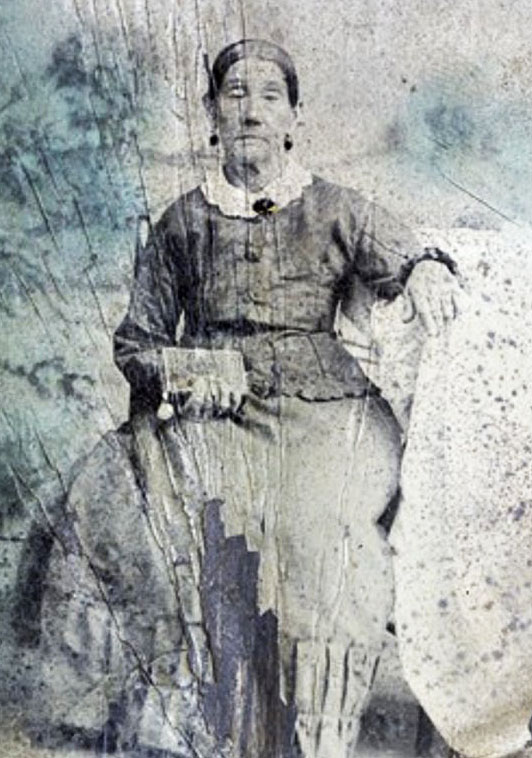
With Filisola, he wasn’t even in Béxar when this alleged meeting was said to have taken place. And from his statement, “It was reported,” it would seem that Filisola got his information secondhand. As for Dickinson’s account, she hadn’t made this claim until that 1876 interview. You would think that she would have mentioned this earlier. And lastly, legend has Juana Gertrudis Navarro Alsbury, Jim Bowie’s cousin-in-law, as being the woman or one of the women who met with Santa Anna. However, from reliable accounts and her own testimony, she never left the Alamo until after the battle.
We celebrated the bravery and sacrifice of the immortal 32 for almost two hundred years. But could others have come to the aid of the Alamo? This very controversial theory is presented by author Thomas Ricks Lindly in his book Alamo Traces: New Evidence and New Conclusions. In his book, Lindly says that 30 to 60 additional reinforcements entered the Alamo on the morning of March 4th. However, Texas Ranger historian Stephen L. Moore challenges Lindly’s claim.
In his own article, Texas Rangers at the Battle of the Alamo, which appeared in the Texas Ranger Dispatch magazine, Moore states that the company Lindly says entered the Alamo was actually in Bastrop, Texas, better than a hundred miles from the Alamo.
While both of these are interesting, little accepted documentation supports them. The recognized writings from Alamo survivors, Santa Anna, and his officers do not tell of these events happening.
 Still Current