Monday, February 29, 1836: Leap Year Day
Leap Year Day brought a slightly warmer temperature, and thankfully, the biting wind also slackened, making the weather much more bearable.
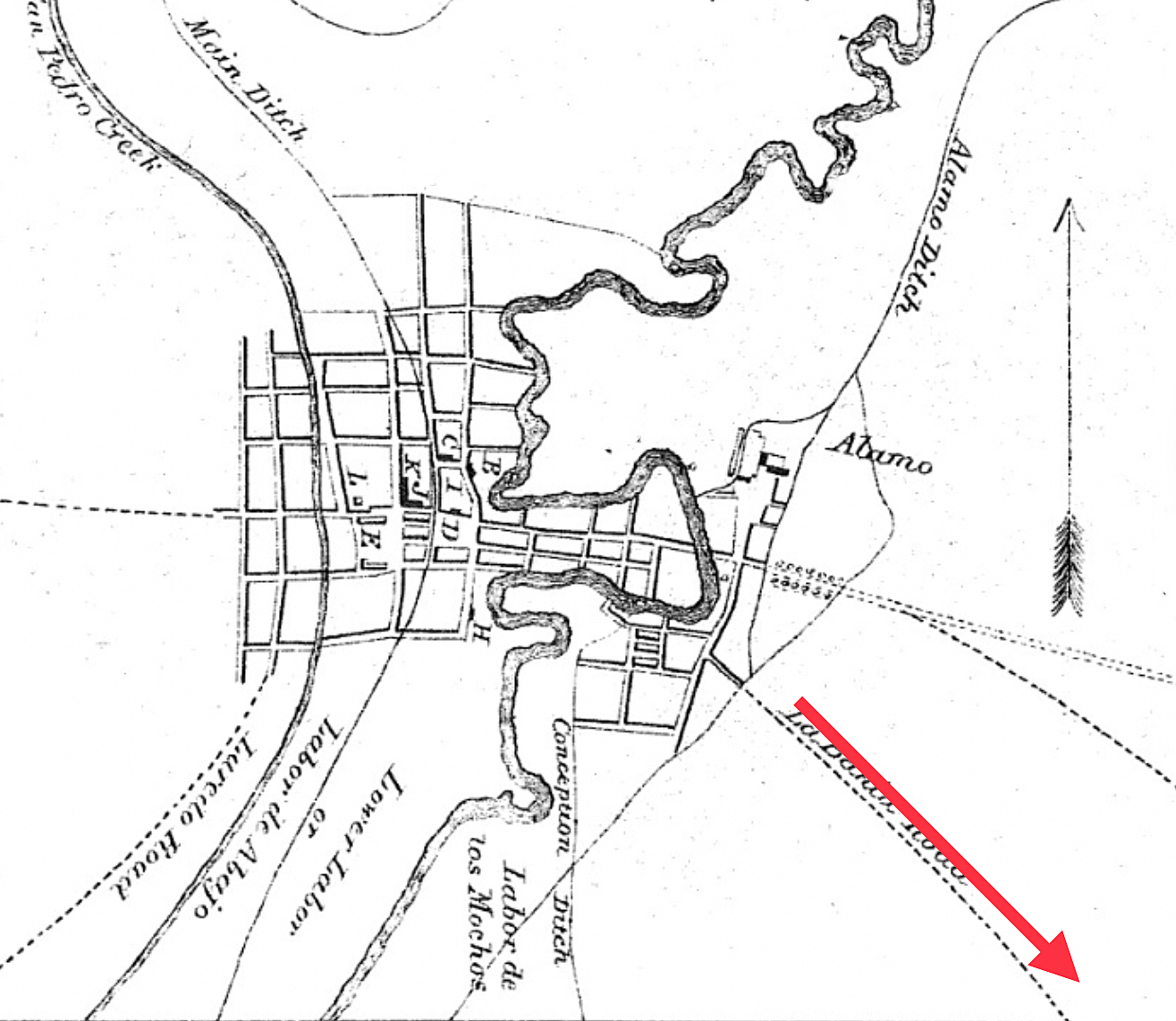
On this day, Santa Anna received word that reinforcements from Goliad were on the way to assist the Alamo. To answer this, he sent General Sesma with a detachment of Dolores Cavalry and Jiménez Battalion down the La Bahia (Goliad) Road to intercept them. At that time, Santa Anna wasn’t aware that Fannin had abandoned his attempt to come to the aid of the Alamo.
Also, on February 29, another controversial event may or may not have taken place. As the story goes, Santa Anna proposed a three-day ceasefire, which Travis accepted. The supposed purpose of this armistice was to allow Tejanos in the Alamo to leave the fort to save themselves. But there was a contingency to Santa Anna’s offer: they had to surrender their arms and swear an oath to Santa Anna’s government. This story also says that Travis didn’t try to stop those who wanted to leave. Although this story sounds intriguing, there are questions.
This account of a ceasefire comes from a 1907 interview given by Alamo survivor Enrique Esparza, son of Alamo defender Gregorio Esparza. The issue with Esparza’s story is that he was only eight years old at the time of the battle and only told this story of a ceasefire seventy-one years later. In addition, Esparza’s story isn’t supported by accounts from other Alamo survivors.
There’s another source cited by some historians to support a ceasefire and an offer of clemency to the Tejanos and all the Alamo defenders. This is found in a section of Santa Anna’s 1837 defensive manifesto, written a year after the fall of the Alamo. In this section, Santa Anna wrote that he made a “generous measure, characteristic of Mexican kindness,” to Travis by offering the defenders their life if they surrendered their arms and swore allegiance to him and Mexico. Santa Anna said that his offer was delivered to Travis by Colonel Almonte. Santa Anna wrote Travis refused his offer by resuming the gunfire. As with Esparza’s story, Santa Anna’s account also has issues.
The biggest issue with Santa Anna’s account is that it was a relatively small section in Santa Anna’s more extensive manifesto. According to historian Todd Hanson, in his commentary on page 355 of the Alamo Reader, Santa Anna wrote this to deflect the blame for his atrocities at the Alamo. In Hanson’s opinion, Santa Anna was telling the reader that he had offered Travis a way out, but Travis refused, so don’t blame him for what he did on March 6.
These two accounts are the only ones that mention an armistice taking place. No reference to an armistice appears in any of the published journals of the Mexican officers under Santa Anna, including that of Colonel Almonte. However, historians are still split on whether a ceasefire had occurred. As always, what would a story of the Alamo be without some controversy?
 Still Current