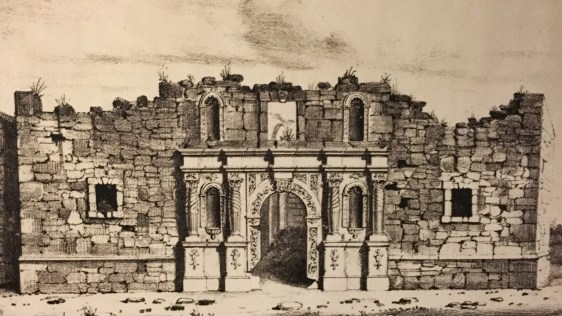

“Remember the Alamo,” was the battle cry at San Jacinto on April 21, 1836, when the forces of Sam Houston defeated Santa Anna’s army, ending the Texas Revolution. Yes, Texans remembered the battle and what Santa Anna had done to the defenders, but they soon forgot the Alamo battlefield and its buildings. On May 29, 2017, I published the article “The History of the Alamo: Mission to Fort.” In this post, I’ll continue the story, taking the Alamo as a fort through the Mexican and Texas Revolutions, how the Alamo was almost lost before the 1836 battle, and the neglect it suffered after the fighting ended.
The Alamo under the Spanish
At the beginning of the 19th Century, the Spanish increased the number of troops stationed at the old Alamo mission to help combat the intrusions by Anglo-Americans from Louisiana. This brought the need for a military hospital to be set up within the mission; this would be the first hospital in Texas. The hospital was most likely in the Convento building (today’s Long Barracks). The Alamo’s unfinished and rubble-filled church was mainly unusable.
Even though Spanish Mexico was afraid of wholesale attacks by Anglo Americans, they were still open to immigration by Americans. In 1806, one of those Americans who petitioned for settlement in Texas near the Alamo was the blacksmith Daniel Boone, a relative of the famous frontiersman.
During the war of Mexican Independence (1810-1821), the Alamo was occupied back and forth by both Spanish Royalists and Mexican Rebels. Other than being used as a military post, hospital, and prison, the Alamo saw little action during this war.
The Alamo under Mexican control
After Mexico won its independence, the Mexican army continued to be stationed in the old mission. However, the first threat to the Alamo came in 1825, when the need for funds caused the local political chief, Saucedo, to ask the Governor of the Mexican State of Coahuila y Tejas to sell the stones of the Alamo to raise cash. In 1827, the Coahuila y Tejas State Legislature approved the sale of the stone.
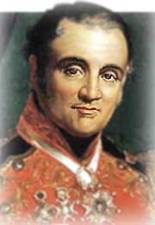
Before the sale could begin, Anastacipo Bustamante, the new commandant of the Eastern Provinces, demanded that the order be suspended. Bustamante saw the need for the Alamo to be a permanent post for the Mexican army because of the increase of illegal immigration by Americans into Texas. Bustamante would be the first to save the Alamo from destruction, nine years before the famous battle.
The Alamo during the Texas Revolution
In 1835, as the rebellion in Texas began to unfold, Mexican President Santa Anna sent his brother-in-law, General Martin Perfecto de Cos, with 500 soldiers to Bexar (San Antonio) to strengthen that post. Cos ordered 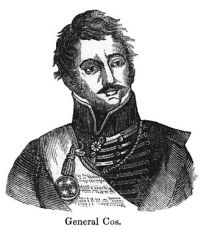 improvements made to the Alamo’s defenses: digging trenches, building platforms and ramps for cannon, a wooden palisade was built across the open gap between the church and the Low Barracks, strengthening the crumbling north wall, and building a gun platform at the rear of the church from the rubble inside. On this platform were placed three cannons that could fire over the walls of the roofless church.
After the Battle of Gonzales on October 2, 1835, which officially began the Texas Revolution, Gen. Cos found himself constantly on the defensive: losing at Goliad, Concepcion, and finally surrounded in Bexar itself by the Texan rebels. The Battle of Bexar began as a fifty-six-day siege and ended in a bloody house-to-house fight. The battle ended with Gen. Cos surrendering after being promised that he and his men would be paroled. Here’s an interesting twist of history: at the Battle of Bexar, the Mexicans were inside the Alamo, and the Texans attacked from the outside. Also, the Alamo’s defenses used in the Battle of the Alamo were those built by Cos.
Cos and his men did not honor the terms of their parole. Meeting Santa Anna and his army heading north, they returned and helped to retake the Alamo in the 13-day siege and battle.
After Santa Anna retook the Alamo in the predawn of March 6, 1836, he prepared to pursue Sam Houston and the Texan army. Not wanting to leave his rear open for a counterattack, he ordered Gen. Andrade, his commander in San Antonio, to rebuild the defenses of the Alamo. As Santa Anna and his army marched off to the northeast, work began instantly on rebuilding the walls damaged in the battle. Most of this work of rebuilding was done by those Mexican soldiers wounded in the battle.
After losing at the Battle of San Jacinto, Santa Anna sent counter orders back to Gen. Andrade to now destroy all of the Alamo’s defenses: its walls torn down, the gun platforms ripped up, and the canons spiked and disabled, making them unusable. This would be the first destruction of the Alamo compound.
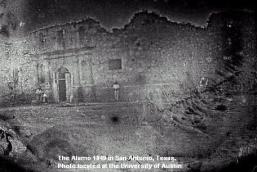
The Alamo becomes a source for building materials.
Soon, locals were using the stones and wood from the Alamo for building materials. By 1842, just six years after the battle, all that remained of the Alamo complex were a few buildings along the west wall; these were rebuilt as homes. The mission’s significant buildings: the Church, Long Barracks, and Low Barracks, continued to lie in ruin. For most Texans, the Alamo sat forgotten, with only a few tourists visiting what was left.
But this was only the beginning of what was to befall the battle site that Houston called to remember. I will continue my narrative of how the Alamo continued to survive, and of the changes that are predicted to come.
Resources:
Nelson, George. The Alamo: An Illustrated History. Third Revised Edition, Aldine Press, 2009.
Thompson, Frank. The Alamo: A Cultural History. Taylor Publishing Company, 2001.
Wikipedia. “Timeline of the Texas Revolution .” Wikipedia, Wikipedia , 27 Mar. 2018, en.m.wikipedia.org/wiki/Special:History/Timeline_of_the_Texas_Revolution.
Also read my post: The History of the Alamo, Part I: Mission to Fort
 Still Current