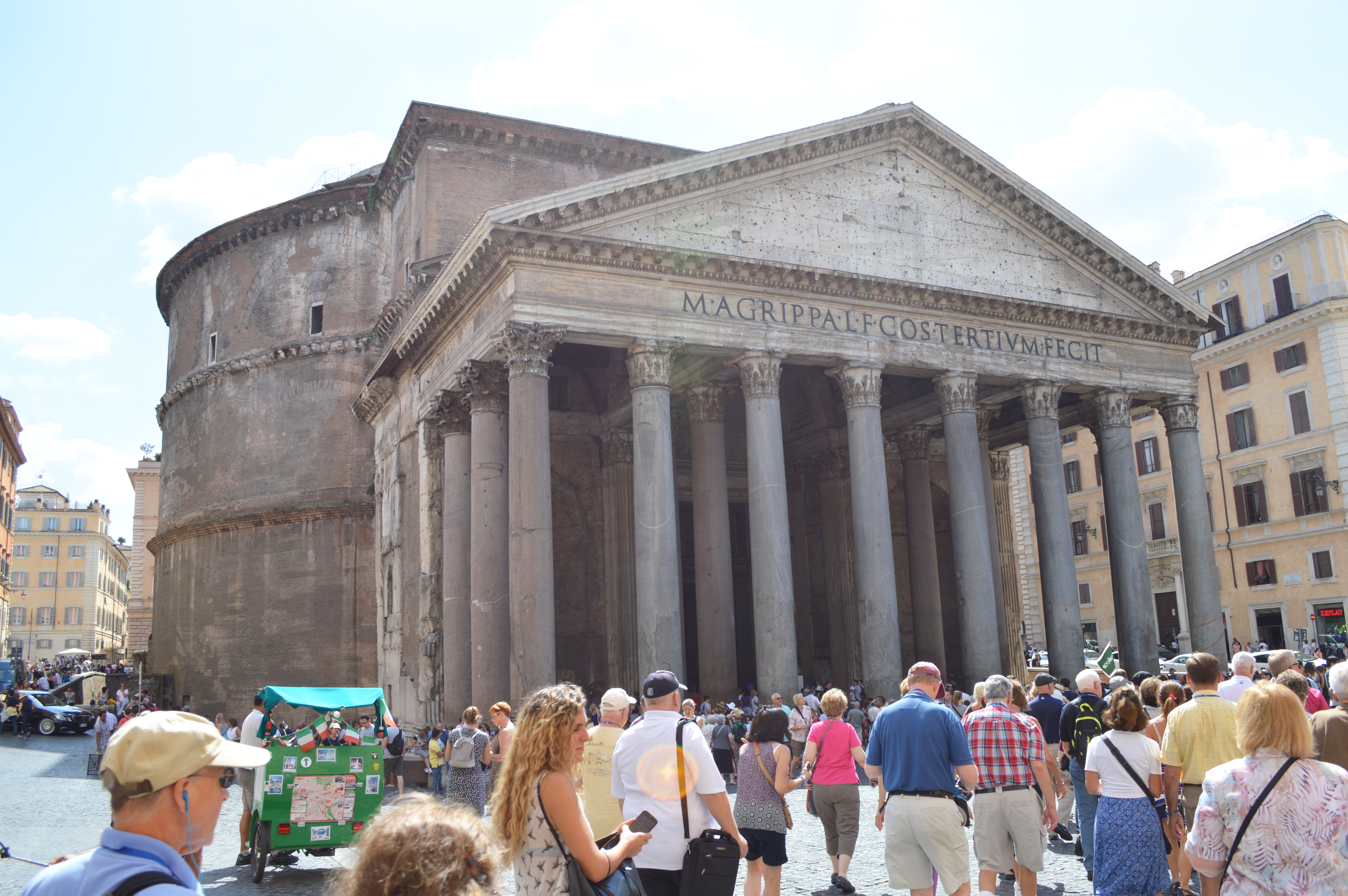

As you enter the Piazza della Rotonda and first see the Pantheon, what comes to mind is how good it looks. Unlike the other ancient structures in Rome, like the Colosseum and the Forum, that are in ruin, the Pantheon looks like it successfully survived the ravages of man and time over its almost two thousand-year history. That’s because the Pantheon is the best-preserved building from ancient Rome. So why was it built, and how did it survive the destruction that befell the other Roman monuments? What is the history behind this magnificent and breathtaking structure?
Roman legend says that the first temple built on that site was dedicated to Rome’s mythical founder, Romulus. However, most historians now agree that the first Pantheon was constructed by Emperor Augustus’s right hand, Marcus Vipsanius Agrippa, in 27 AD. The temple burned in 80 AD, followed by the construction of a second temple by Emperor Domitian. This building was also destroyed by fire after being struck by lightning in 110 AD. The Emperor Hadrian initiated the reconstruction of the current Pantheon in 120 AD, under the guidance of the Greek architect Apollodorus of Damascus, and completed it in 125 AD. Hadrian is known for rededicating buildings and monuments that he rebuilt or repaired after the original dedicator; this is why the name on the facade reads: M. AGRIPPA L.F. COS TERTIUM FECIT (Marcus Agrippa, son of Lucius, the three-time consul, made this). This facade is the only portion of the original structure remaining of the 80 AD Pantheon.
What does the name Pantheon mean? Records do not expressly state to what god the temple was built, but the name Pantheon in Greek means “Honor all gods.” A theory suggests that it was the place where emperors could make public appearances that reinforced their divine status to the citizens. A fantastic lighting effect occurred on April 21st, the date that ancient Romans considered the founding of Rome. Light radiates out into the courtyard when the midday sun hits a metal grille above the door. Picture the Emperor standing in the door with all the light streaming around him from inside the Pantheon; they would look like a god.
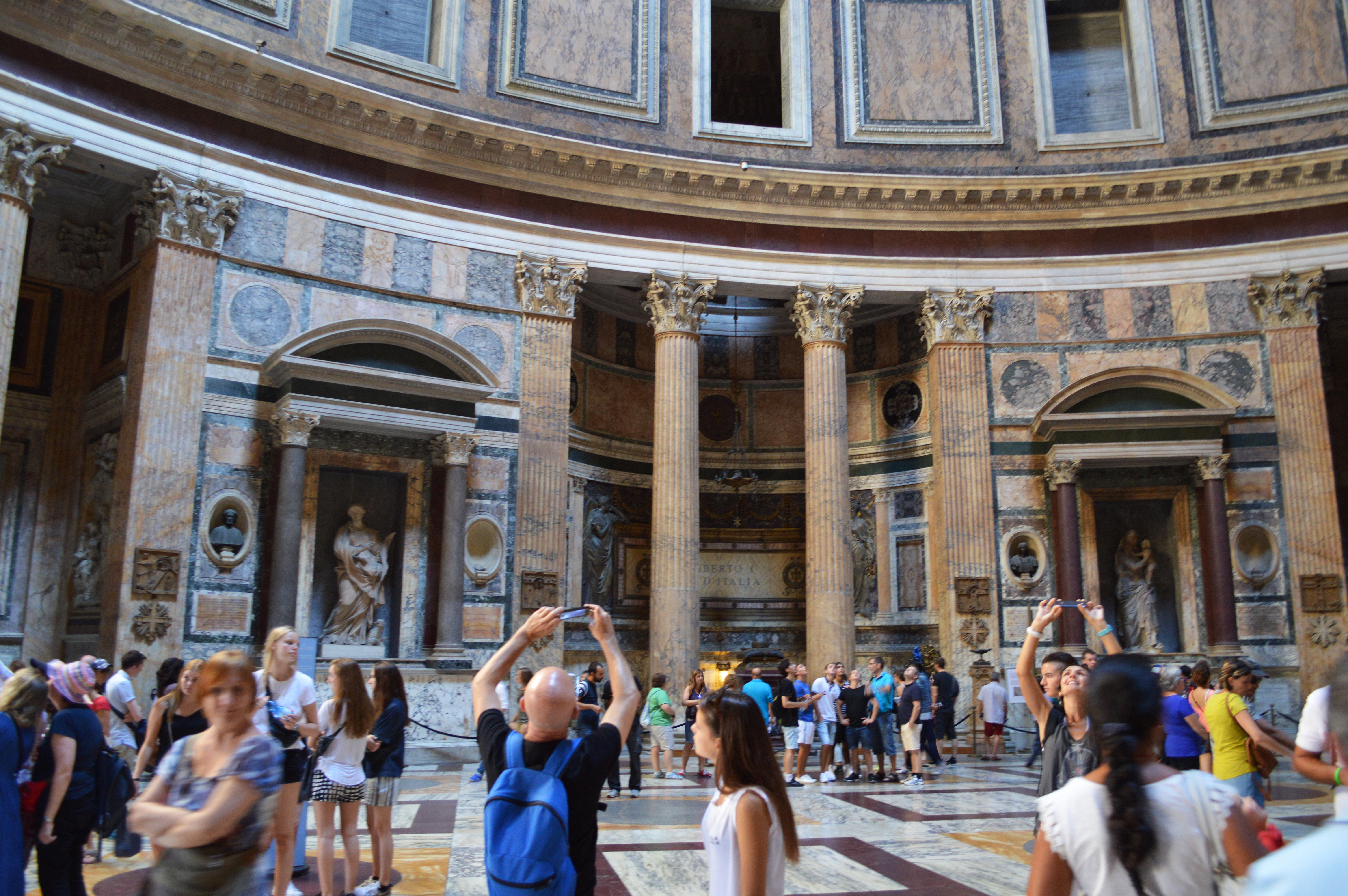
How did the Pantheon survive what happened to the other buildings in Rome through time, which suffered from neglect and had their materials reused for other buildings? The Pantheon would have likely followed a similar path if not for 609 AD, when the Byzantine emperor Phocas granted the Pantheon to Pope Boniface IV, who consecrated it as the Church of Mary and all the Martyr Saints, as it is still known today. This saved the Pantheon from being abandoned and ripped apart. The only losses to it were the sculptures that adorned the pediment above the front door. Pope Urban VIII also took all the bronze from the Pantheon’s dome and melted it down to be recast into canons. Another reason that helped preserve the Pantheon is that it was later used as a tomb for famous and noble individuals. The artist Raphael and several Italian Kings and poets are entombed there.
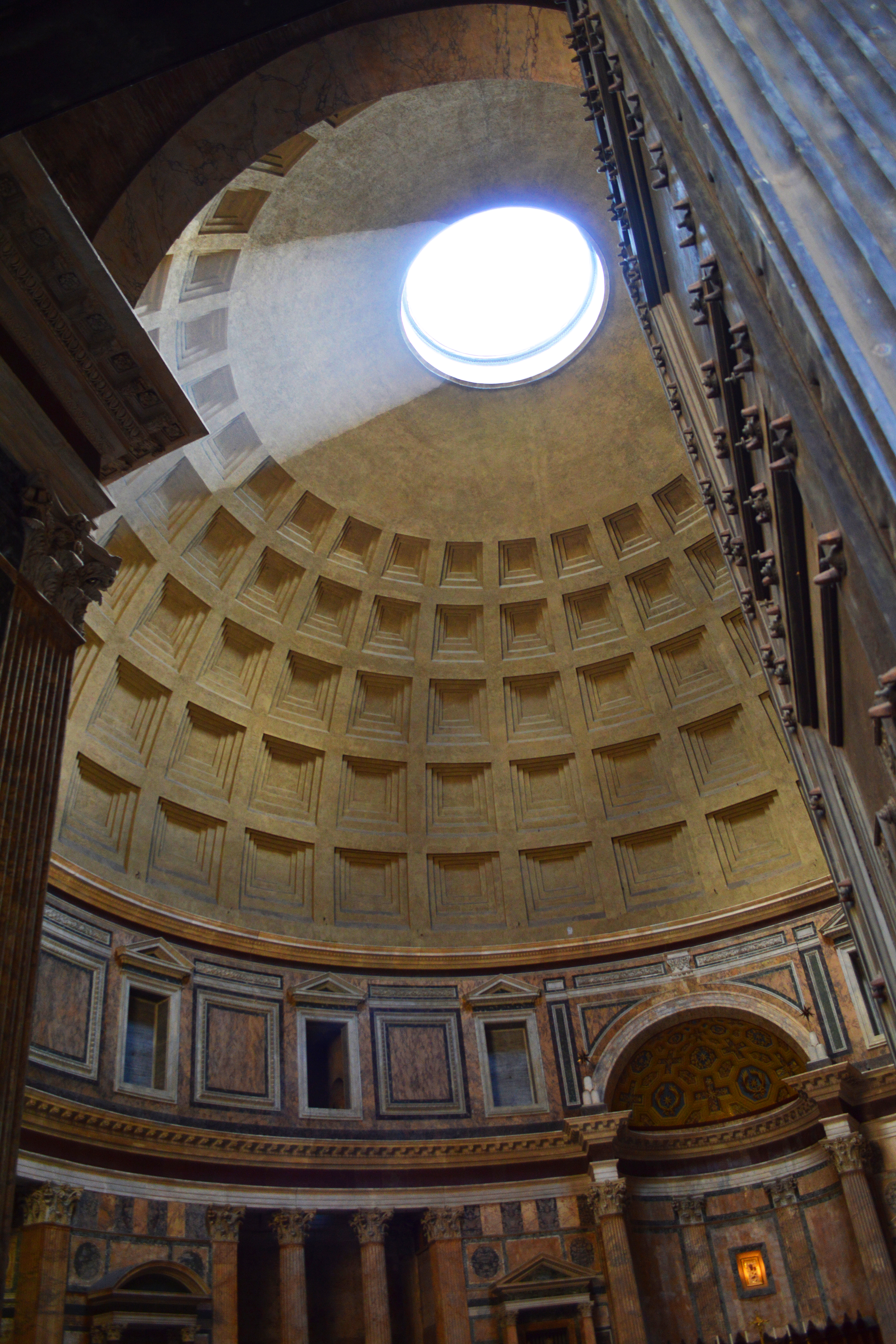
The Pantheon may be one of the first Roman buildings whose interior is more glorious than its exterior. As you enter through the two giant bronze doors, you’re told that although these doors are ancient, they are not the originals; those have been lost. Through the doors, you enter the most fantastic aspect of the Pantheon, its Rotunda. What’s awe-inspiring is the shaft of light coming in from the hole in the center of the rotunda’s dome. The photo I shot doesn’t do justice to what you see.
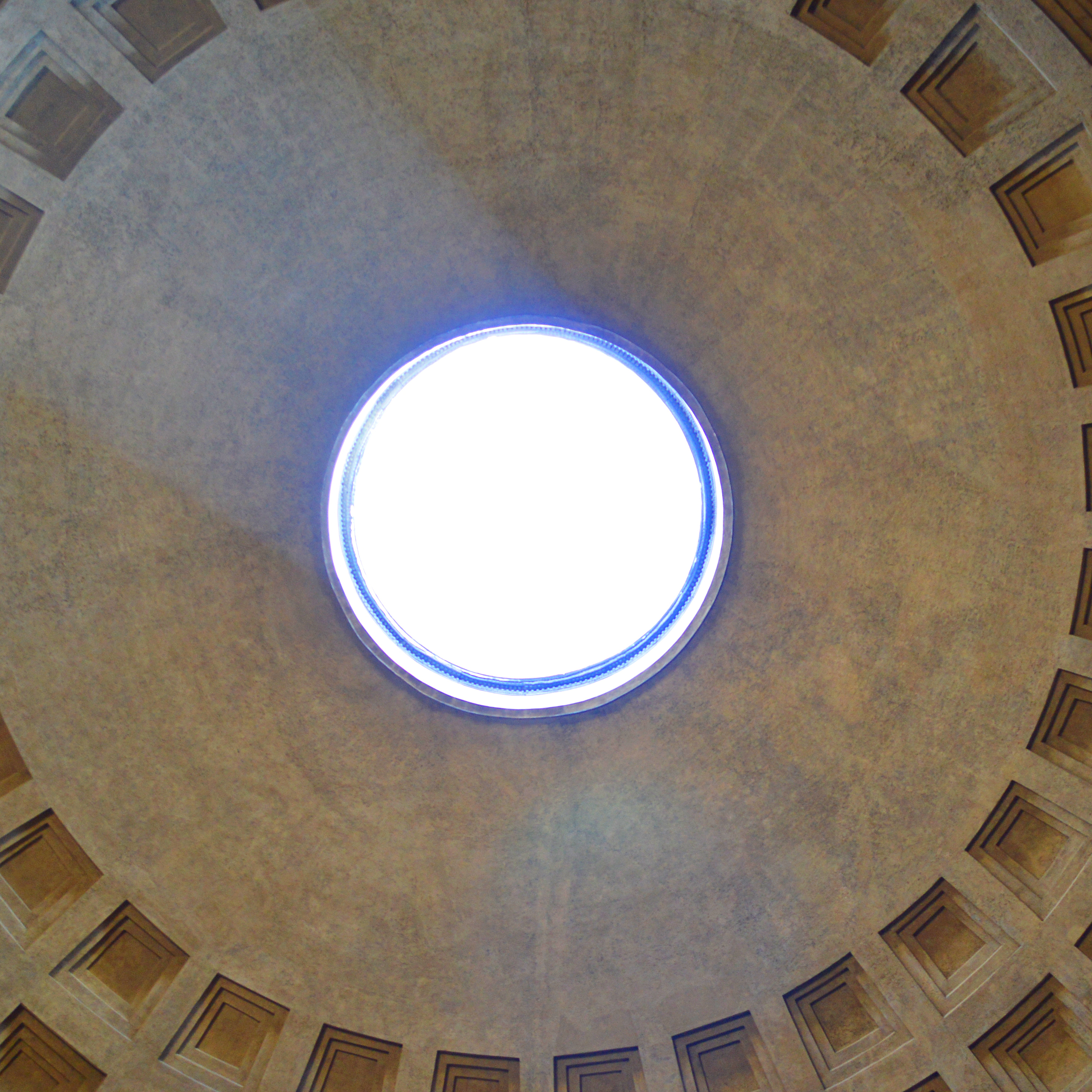
This hole, which is open to the sky and almost 29 feet in diameter, is called an Oculus (sky) and is the only source of light inside the rotunda. Even with this sizable hole in its roof, rain very seldom falls in, and if it does, the floor is slanted to drain the water.
You learn that the rotunda is a perfect hemisphere, where the room’s diameter is the same as the maximum height of the dome itself. This breathtaking dome, made of concrete, was initially covered in bronze on its exterior, but it was removed by Pope Urban VIII. The Pantheon’s dome was the largest in the world for over 1,300 years. It still holds the record as the largest unsupported dome in the world. Although it doesn’t look like it, it’s larger than the St. Peter’s Basilica dome. Comparing it to our U.S. Capitol, which is 96 feet in diameter, the Pantheon is much larger at 142 feet. It’s an impressive architectural feat accomplished by Roman engineers, who reduced the dome’s weight by progressively decreasing the thickness of its walls and creating internal spaces within those walls.
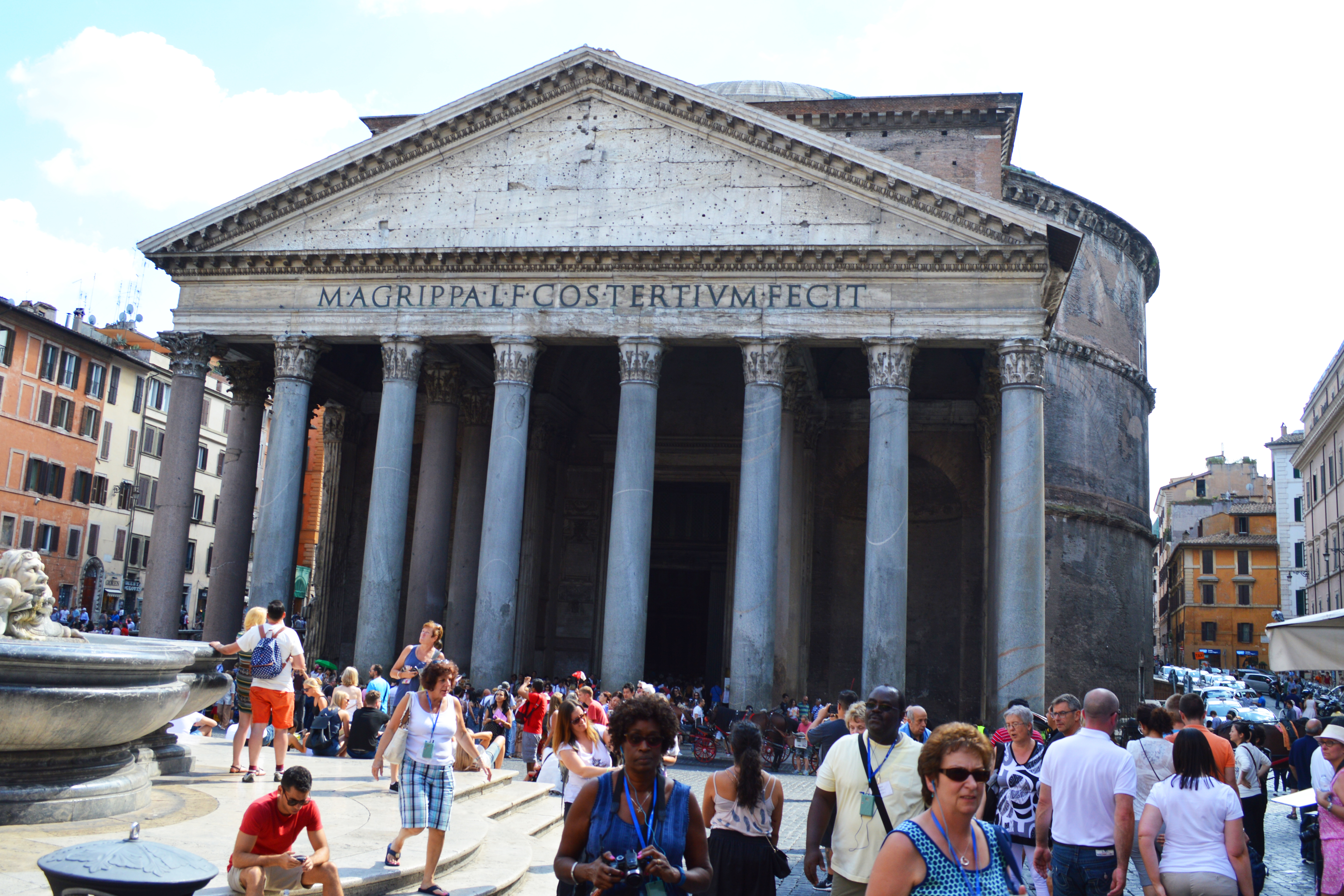
Everything about the Pantheon is impressive. The columns supporting the portico, which weigh 60 tons each and are 39 feet tall and 5 feet in diameter, came from Egypt.
The Pantheon is not only the most perfectly preserved building from the ancient Roman era, but its magnificent dome and interior design are also masterpieces of Roman architectural and engineering skills.
 Still Current