
Although golf is the first thing that comes to mind when you think of St. Andrews, this city on the shore of the North Sea has a deep and ancient history. Besides golf, St. Andrews is home to one of the oldest universities in the world and a cathedral that is said to have held the bones of one of the Apostles.
St. Andrews and the game of Golf:

A form of the game of golf has been played on the links of St. Andrews since the 15th century. Links golf is also the oldest style of golf, and was developed in Scotland. The term “links” refers to the coastal sand dunes or open parkland. The word “links” means rising ground or ridge in Scots. In 1457, King James of Scotland banned the game of golf because he thought young men were playing too much golf and not enough time practicing their archery. This ban was lifted in 1502 by King James IV, who was a golfer. In 1552, Archbishop John Hamilton gave the people of St. Andrews the right to play on the links. The links were maintained by the Town Council of St. Andrews. In 1797, the town, being near bankruptcy, allowed rabbit farmers to use the golf course. The golfers and rabbit farmers battled for twenty years until 1821, when a farmer and golfer named James Cheape purchased the course and transferred it to a public trust for golf use only.
“The Old Course” is one of the oldest golf courses in the world. Although the Clubhouse of the Royal and Ancient Golf Club stands at the 1st Tee and the 18th hole, they do not own the course; it’s public. There are seven public golf courses in St. Andrews, the Old Course being just one. Tee times are given by a lottery. The Royal and Ancient Golf Club of St. Andrews is one of the oldest (The Royal Burgess Golfing Society of Edinburgh may be older) and the most prestigious of the golf clubs.
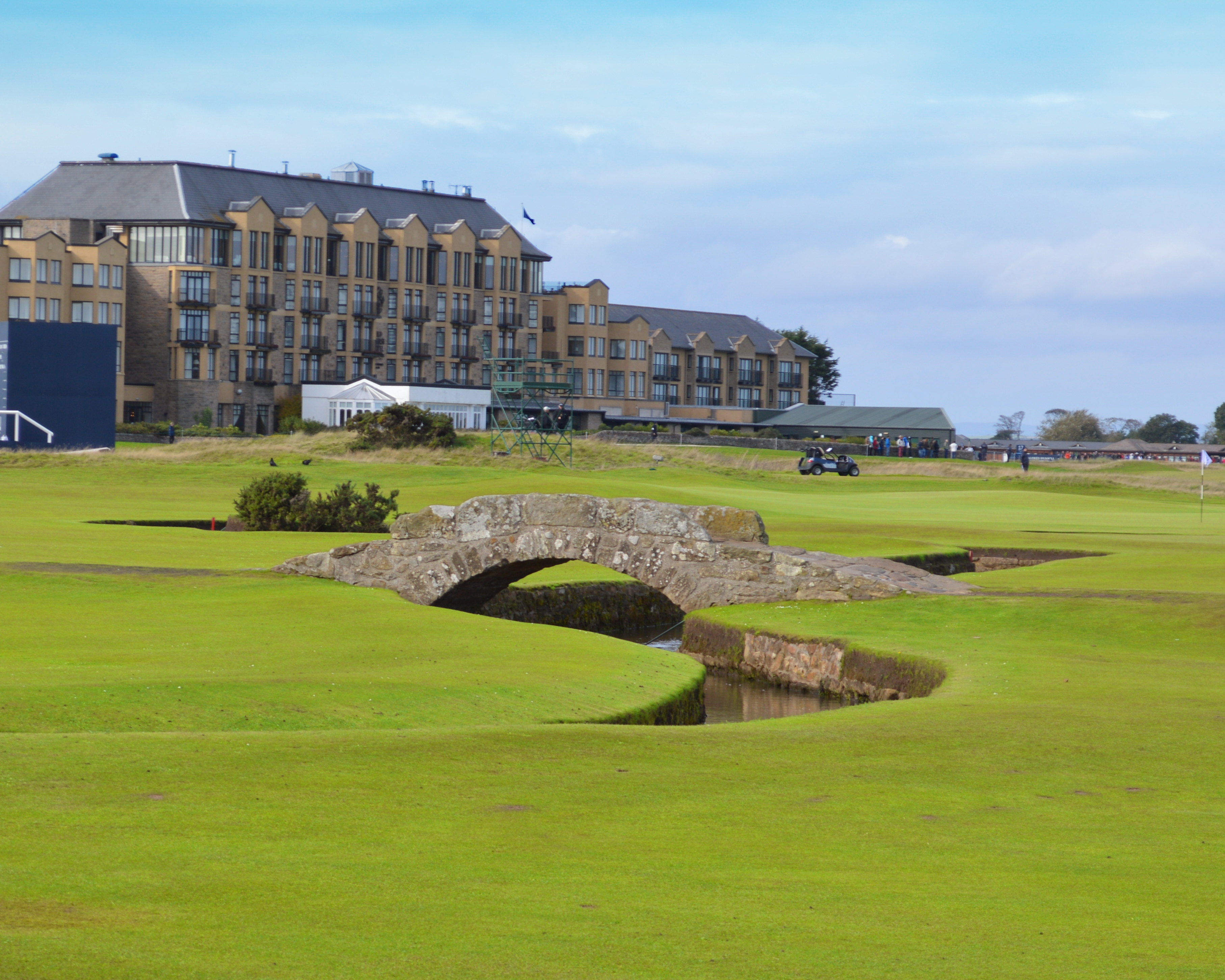
One of the most famous little bridges in the world is the Swilcan Bridge, which spans the first and 18th fairways; it’s a high point in the life of a golfer to walk across this 700-year-old structure.
The University of St. Andrews:
St. Andrews University was founded in 1410 by a group of Augustinian clergy. In 1411, the Bishop of St. Andrews bestowed a Charter of Privilege on the schools. In 1413, Pope Benedict XIII, then residing in Avignon, granted the school University status. In 1532, King James V granted it a royal charter. St. Andrews University is the oldest of the four ancient universities in Scotland and the third-oldest in Britain, after the University of Oxford and the University of Cambridge.
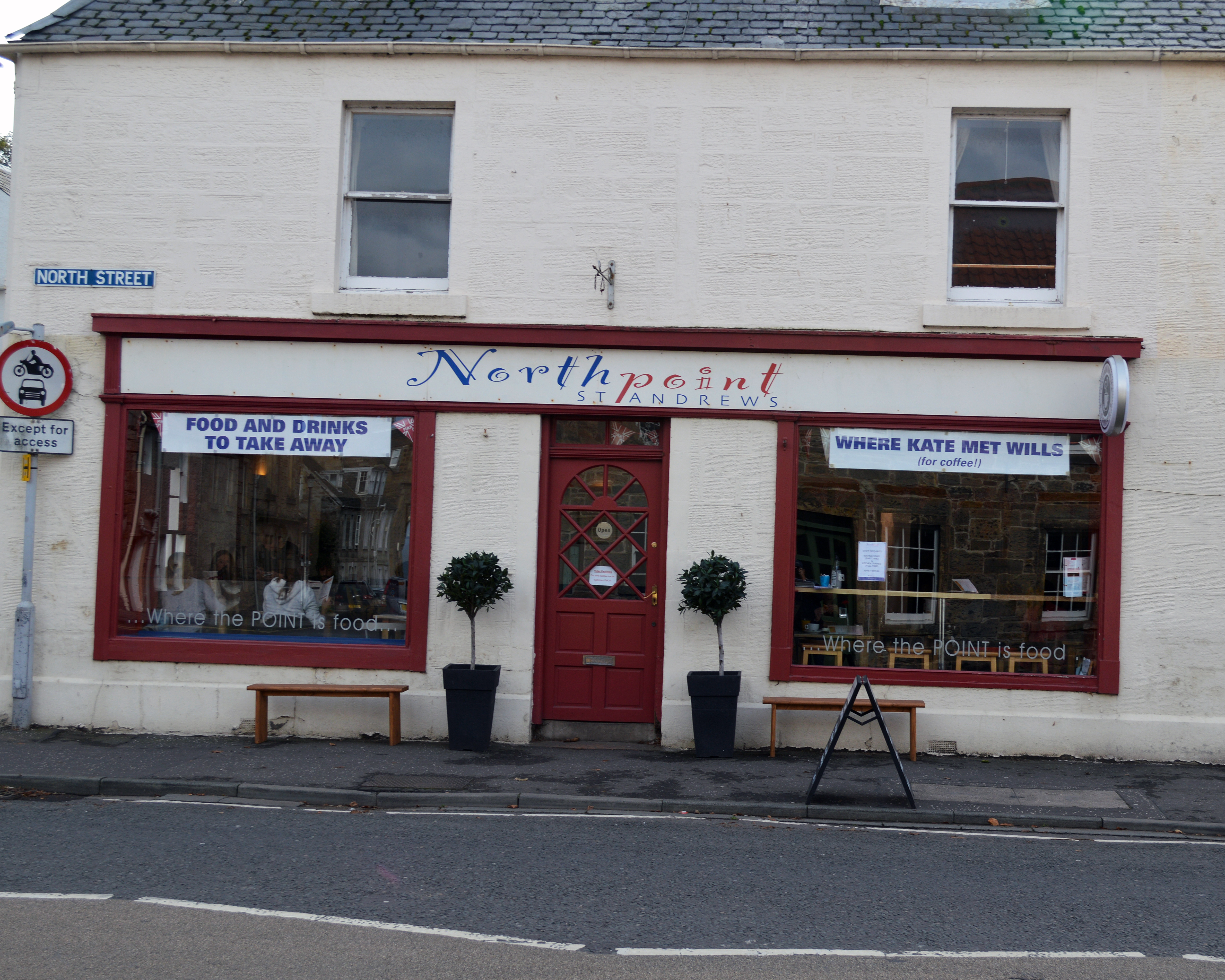
St. Andrews is a public (meaning private in Britain) research university, comprising three colleges: St. Mary’s College, St. Leonard’s College, and United College. Some of the University’s buildings date back to the 16th century. Two of the most historic buildings still in use are St. Salvator’s Chapel and the St. Mary’s College quadrangle.
There is also a historical link with St. Andrews University and the United States; three signers of the Declaration of Independence attended or received degrees from there: James Wilson, John Witherspoon, and Benjamin Franklin. Currently, St. Andrews is known as the place where Prince William and Princess Kate met while students there.
St. Andrews Cathedral:
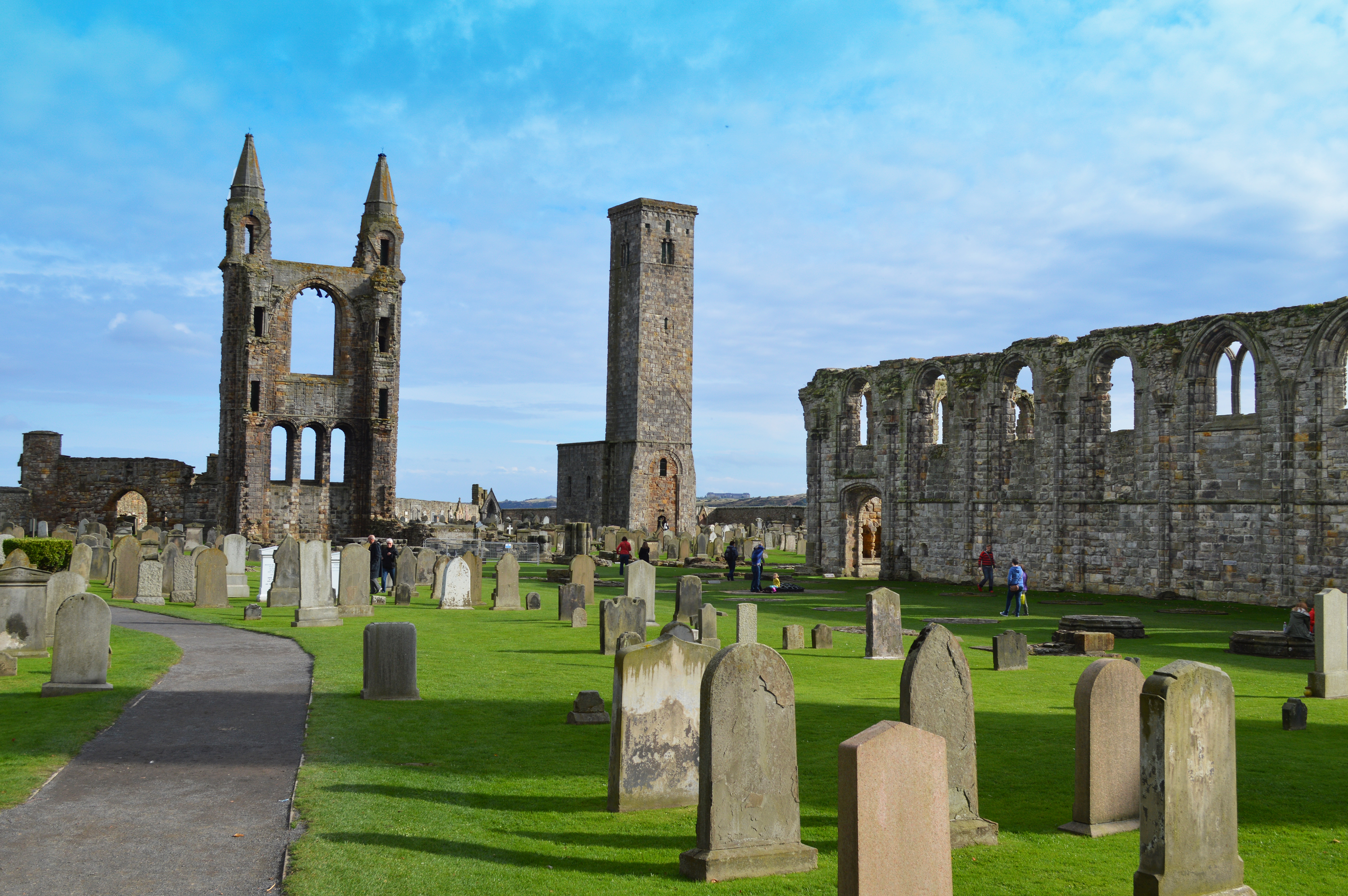
There were three different churches on the site of the cathedral, all of which are now in ruins. The oldest was the Church of St. Mary on the Rock. The second, the church of St. Regulus or St. Rule, has an interesting biblical connection. Legend has it that the 4th-century monk St. Regulus, who was from Petra, Greece, was told in a dream by an Angel to take some of the bones (relics) of the Apostle St. Andrew to “the end of the world” for safekeeping. St. Regulus was shipwrecked on the coast of Scotland, near the location of the city of St. Andrews; the town derives its name from the relics of the Saint. The Church of St. Rule was built to honor and to hold those holy relics of the Apostle. St. Rule Church was used through the 12th century until the larger cathedral was built. All that remains of St. Rule Church is its tower, which stands at 108 feet.
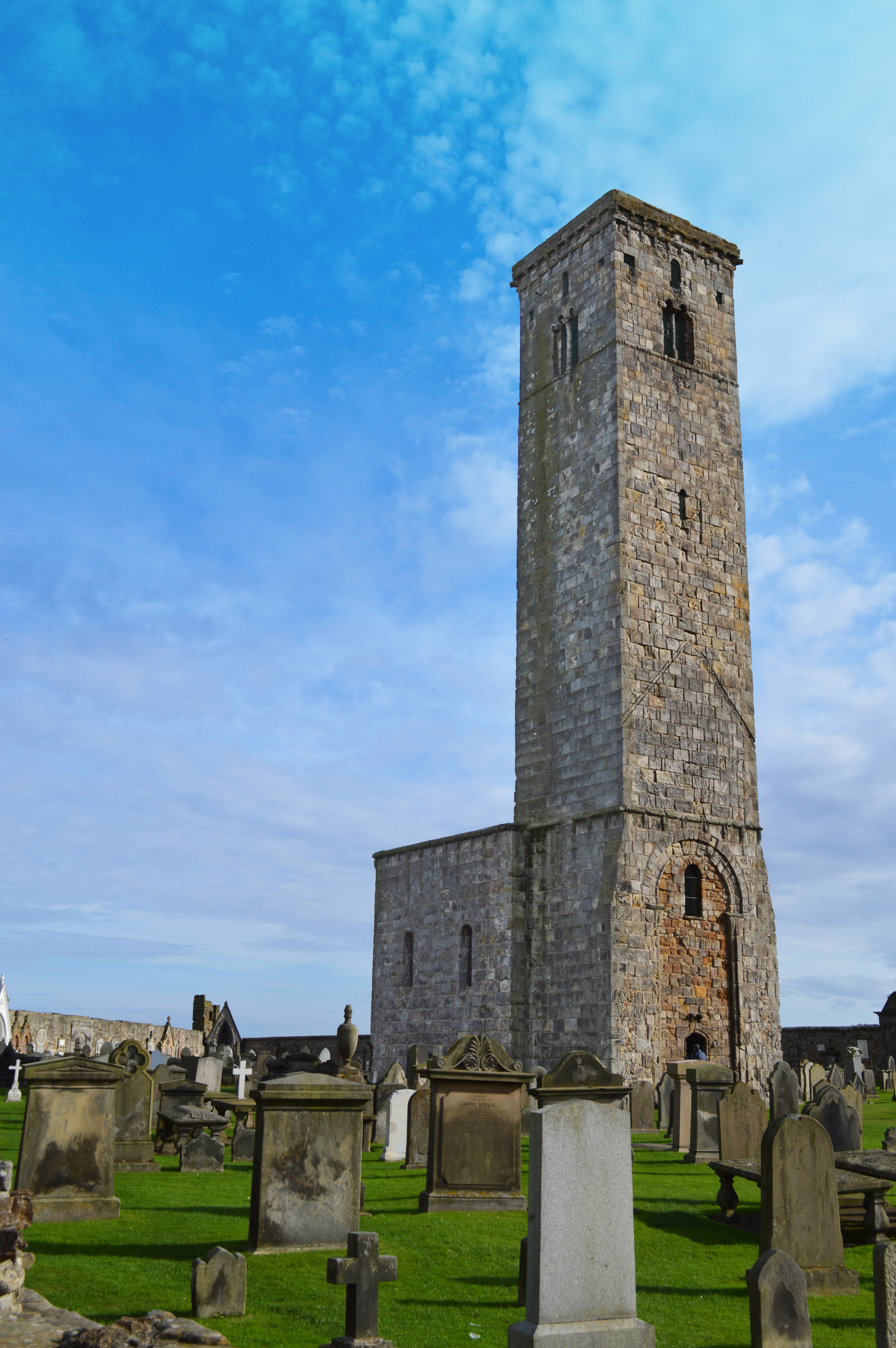
St. Andrews Cathedral’s construction began in 1158 and was dedicated in 1318. The cathedral served as the center for the Medieval Catholic Church in Scotland until the Scottish Reformation of 1559, when the building was stripped of its altars and images. In 1561, it was abandoned and left to ruin. In its day, the Cathedral was 391 feet long, 168 feet wide, and 100 feet high, making it the largest church ever built in Scotland. Again, the legend has it that the relics of St. Andrew were transferred from St. Rule’s Church to the cathedral after its dedication; however, there is no record of what happened to these relics after the church was abandoned.
 Still Current
One thought on “Tour of Britain: St. Andrews, Scotland”