Chester sits on the border between England and Wales and was founded as a “Castrum” or Roman fort in 79 AD, the same year that Pompeii was destroyed by the eruption of Mt. Vesuvius. After Rome fell its province of Britannia (Britain) dividend itself into petty kingdoms. It is believed that Chester was part of the kingdom of Powys. Legend has it that King Arthur fought his ninth battle at Chester. Later, the English Saxon ruled the city and the area until the Norman Conquest. William the Conquer built one of his castles there. In 1541, it became an English city. 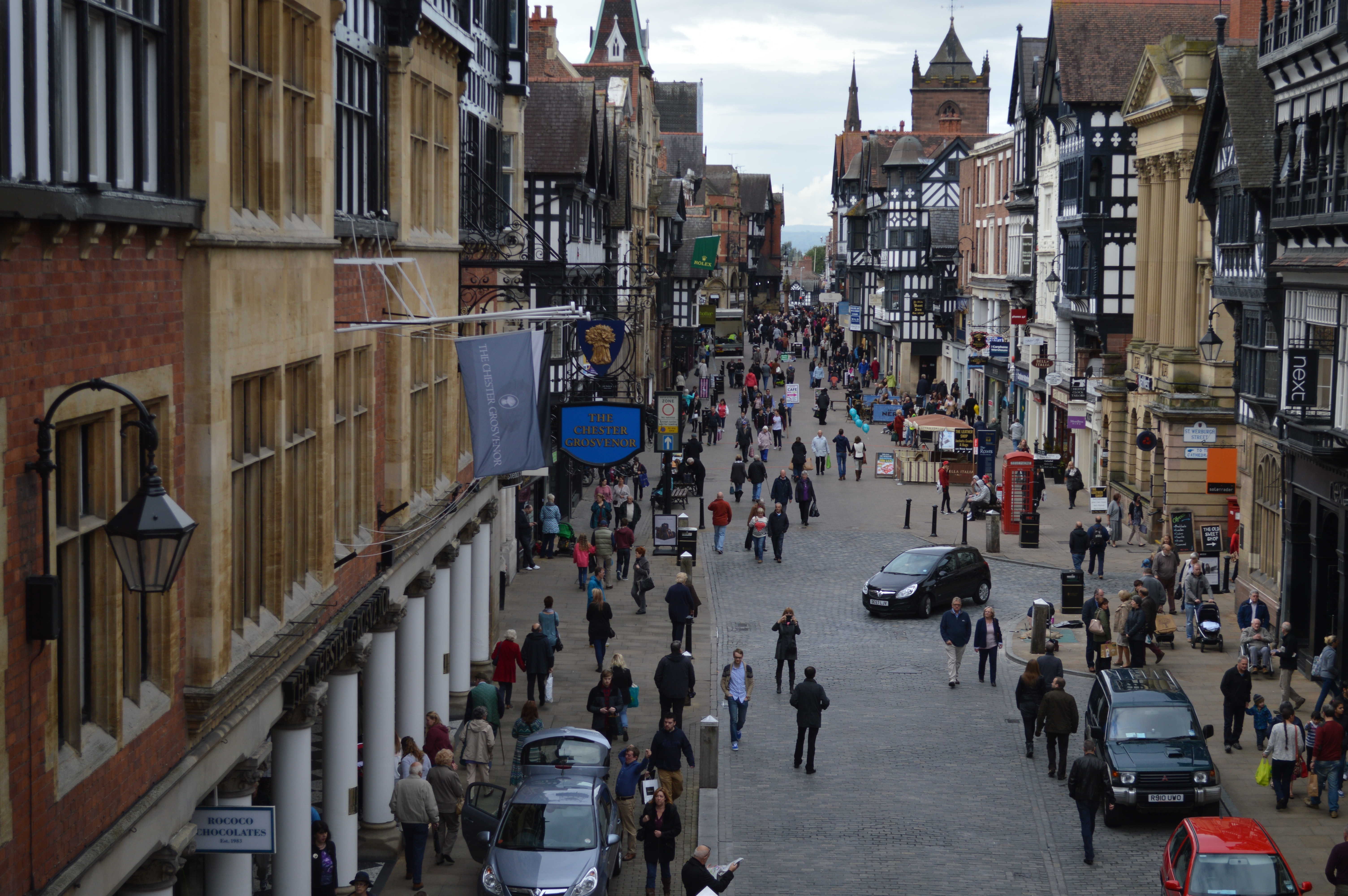
Today, Chester is a vibrant city of over 300,000 and is considered one of the best-preserved walled cities in Britain. The city’s four main roads were laid out by the Romans 2,000 years ago.
It was fascinating to experience the blend of Roman, Medieval, and Modern architecture. 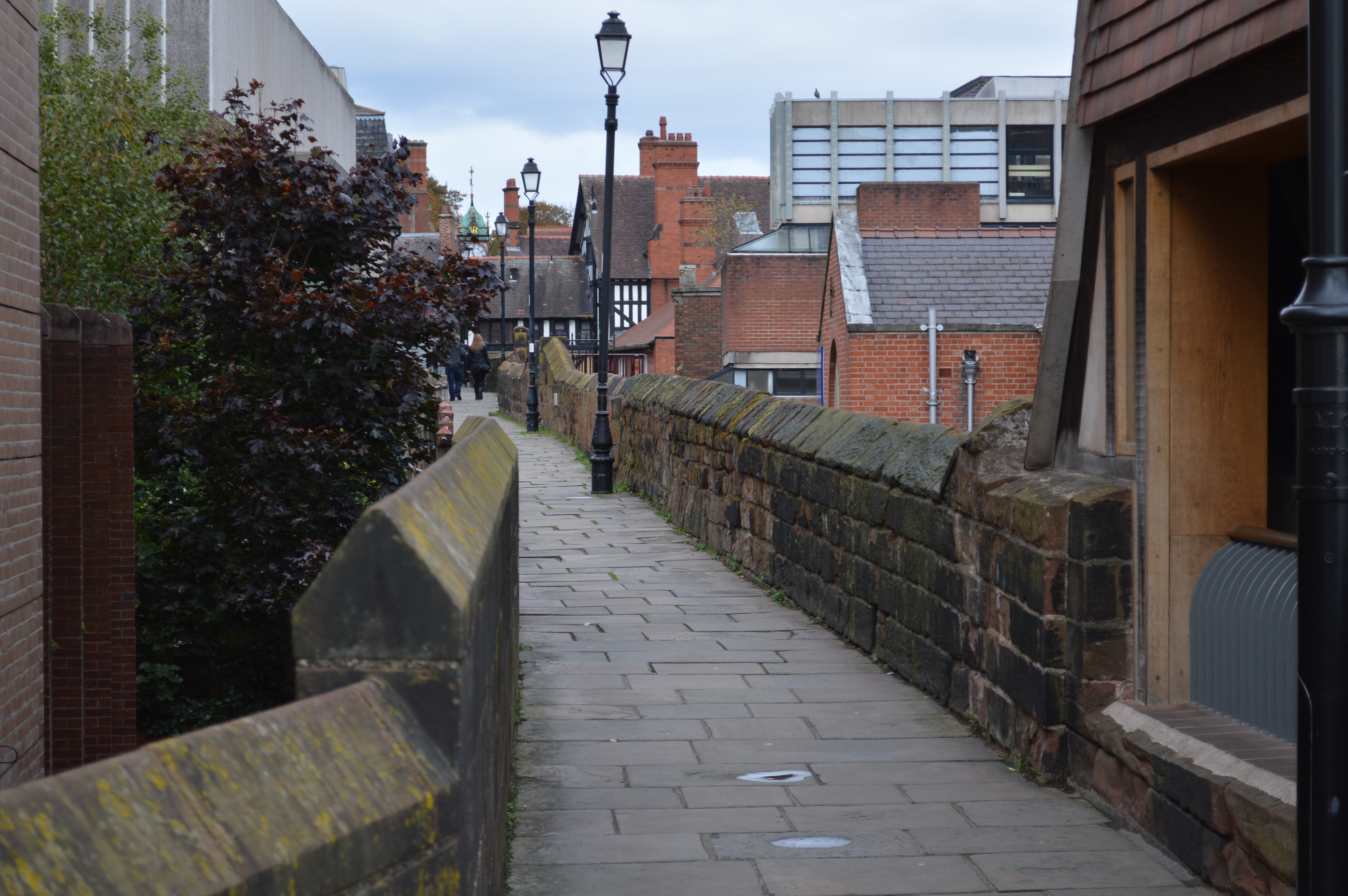 You can walk on the medieval walls, look down on a Roman Forum and then turn and enter a high end shopping mall. Chester is noted for its medieval “Rows.” These Rows are covered walkways on the first floor level, behind which are entrances to shops. Then, at street level, is another set of shops that can be accessed by taking a few steps down. Chester’s Rows are unique to this city and can’t be found anywhere else in the world.
 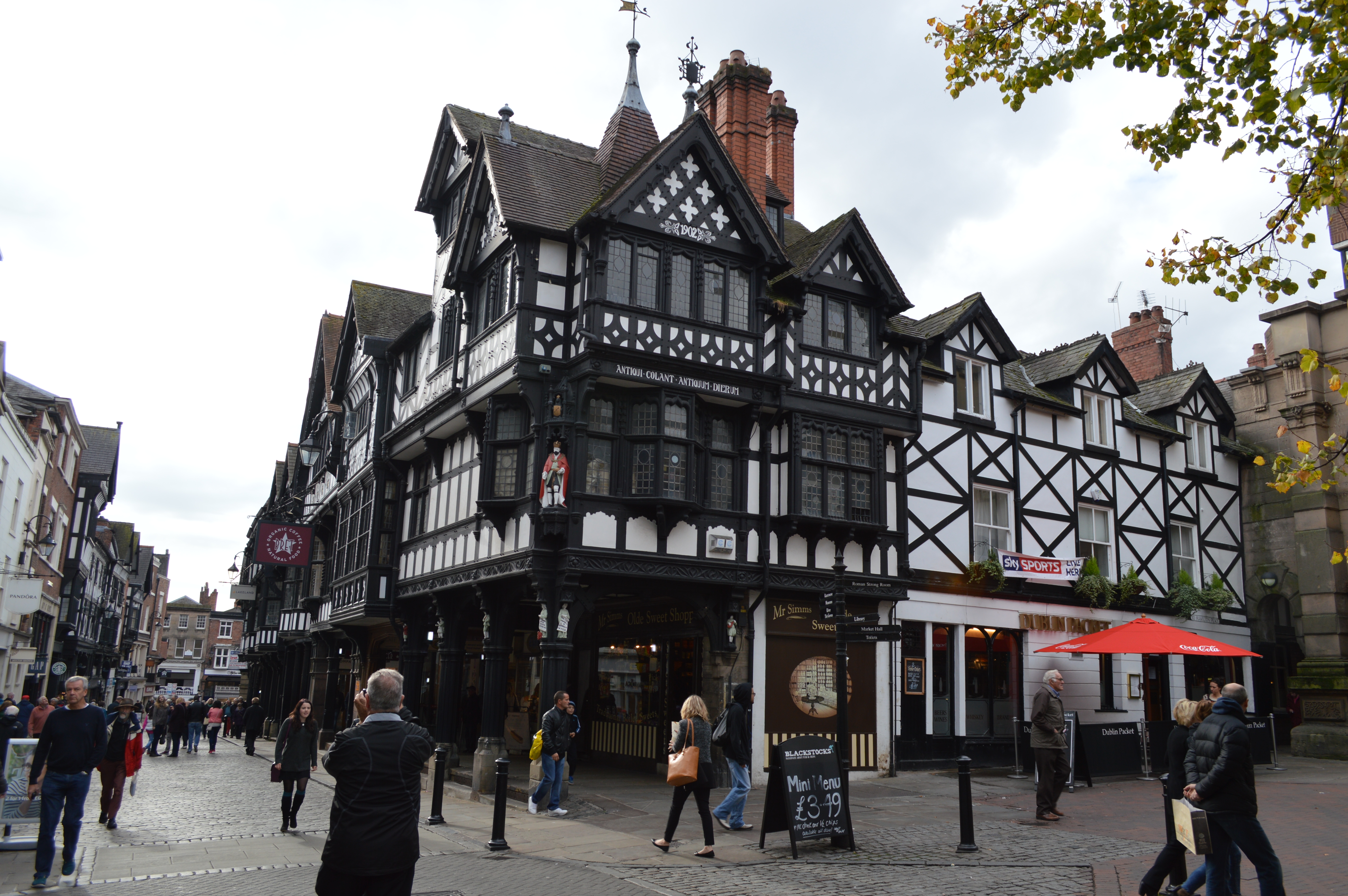 Chester is also known for its black-and-white buildings; however, some of those in the city centre are Victorian restorations.
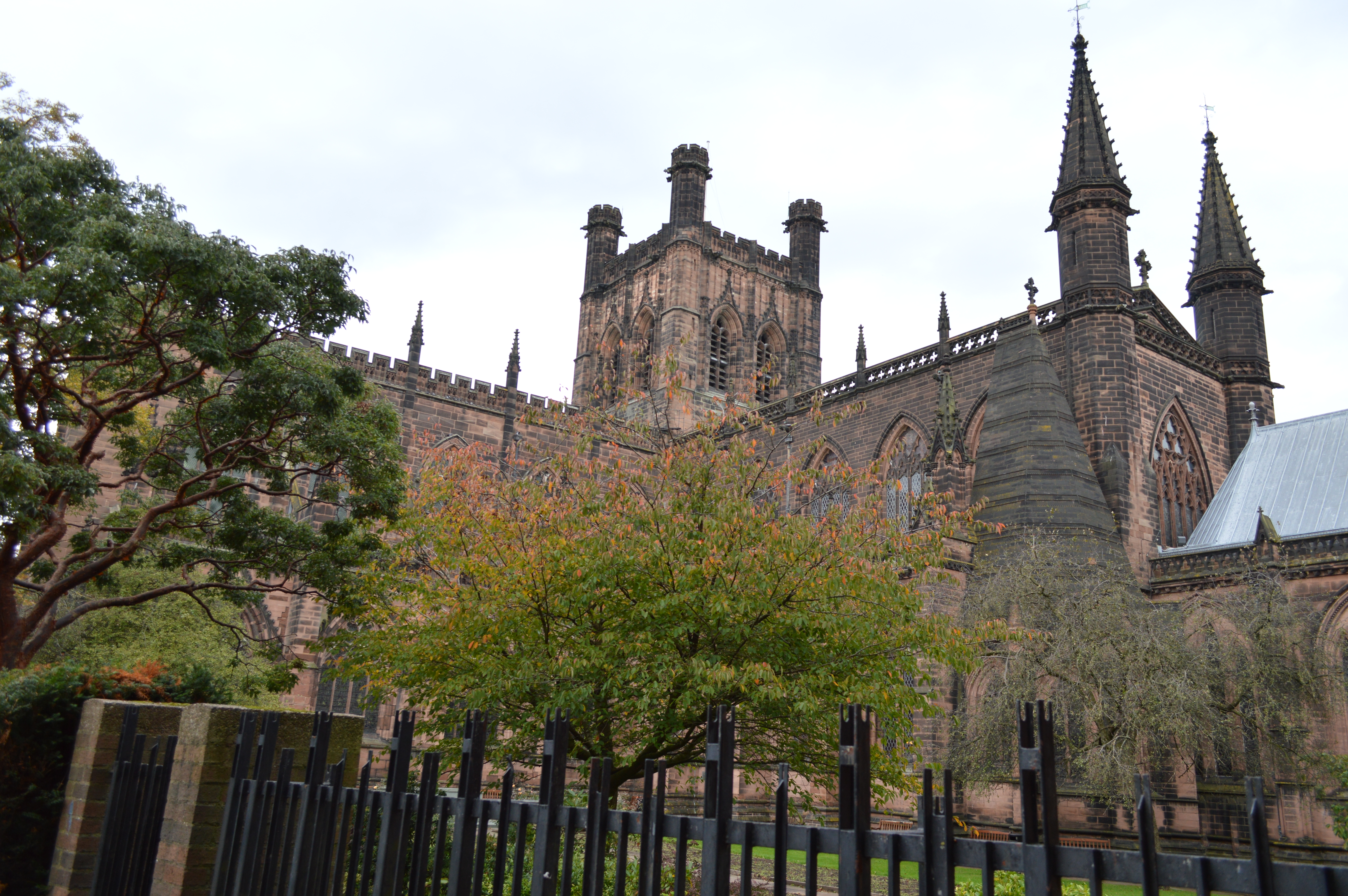 Chester Cathedral is one of the best-preserved medieval churches. The history of this church dates back a long way, and there is a belief that an early Christian church once stood on the site of the present Cathedral in the late Roman era. The first basilica was dedicated in Saxon times to St. Paul and St. Peter. Soon the name was changed from St. Peter to St. Werburgh, the patron Saint of Chester; the Saint’s remains were placed in a shrine in the church in 907 AD. In 968, the church was converted into a college of secular canons by King Edgar.
It was then converted into a church and restored in 1057 by Leofric, the Earl of Mercia, and Lady Godiva (yes, that Lady Godiva). In 1090, the church was destroyed, leaving no trace. An abbey was then built on the site in 1093 by the Earl of Chester, of which parts of this structure still survive to this day. 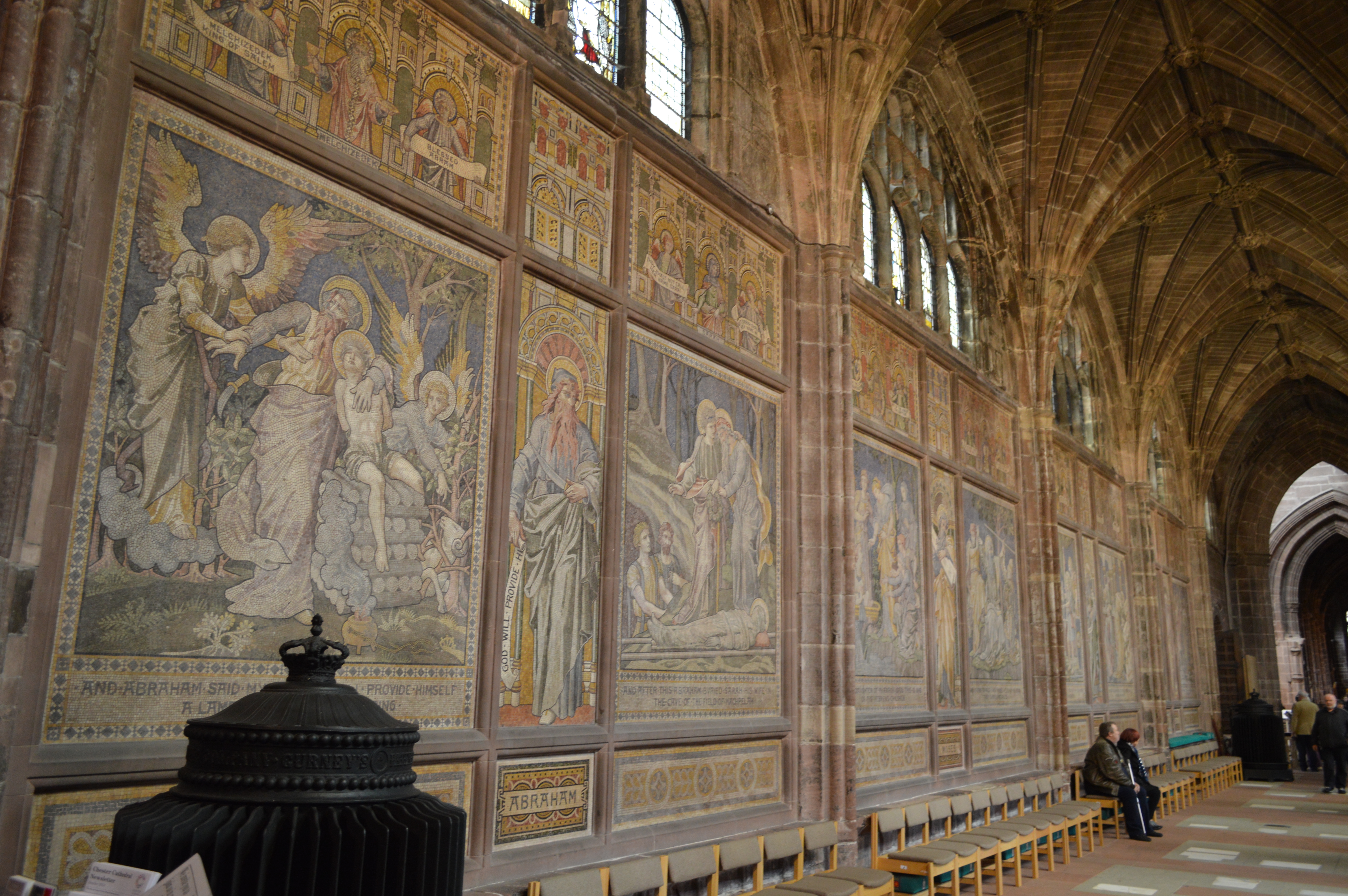 The abbey church was made the Cathedral of the Church of England by Henry VIII in 1541. With some controversy, an extensive restoration of the cathedral was done in the 19th Century, and a free-standing bell tower was added in the 20th Century. Today, it is still an active church, as well as a venue for concerts and exhibitions. The church is filled with frescoes, woodcarvings, and statuary from various periods and is a major tourist attraction.
There is a cafeteria in what was once the monks’ dining hall, where my wife, Karen, and I stopped to get something to eat. It was there that one of the more memorable encounters of our trip happened. As we were sitting at our table, we had two empty chairs, and an elderly English lady approached and asked if she and her husband could join us. Of course, we said yes. She sat down while her husband was still in line getting their food. During our small talk, I mentioned that Karen’s family came from England. “Where about?” the lady asked. ‘Yorkshire,” I said. “Oh, don’t tell my husband that when he gets here,” she stated, “He’s from Lancashire, you know, the War of the Roses.” Wow, a 527-year grudge! But she did say it with a twinkle in her eye and a smile on her face.
 Still Current