We left Athens early in the morning for a six-hour bus ride to the northern village of Kallabaka, but on the way, we stopped at one of my “must-see” spots—Thermopylae!
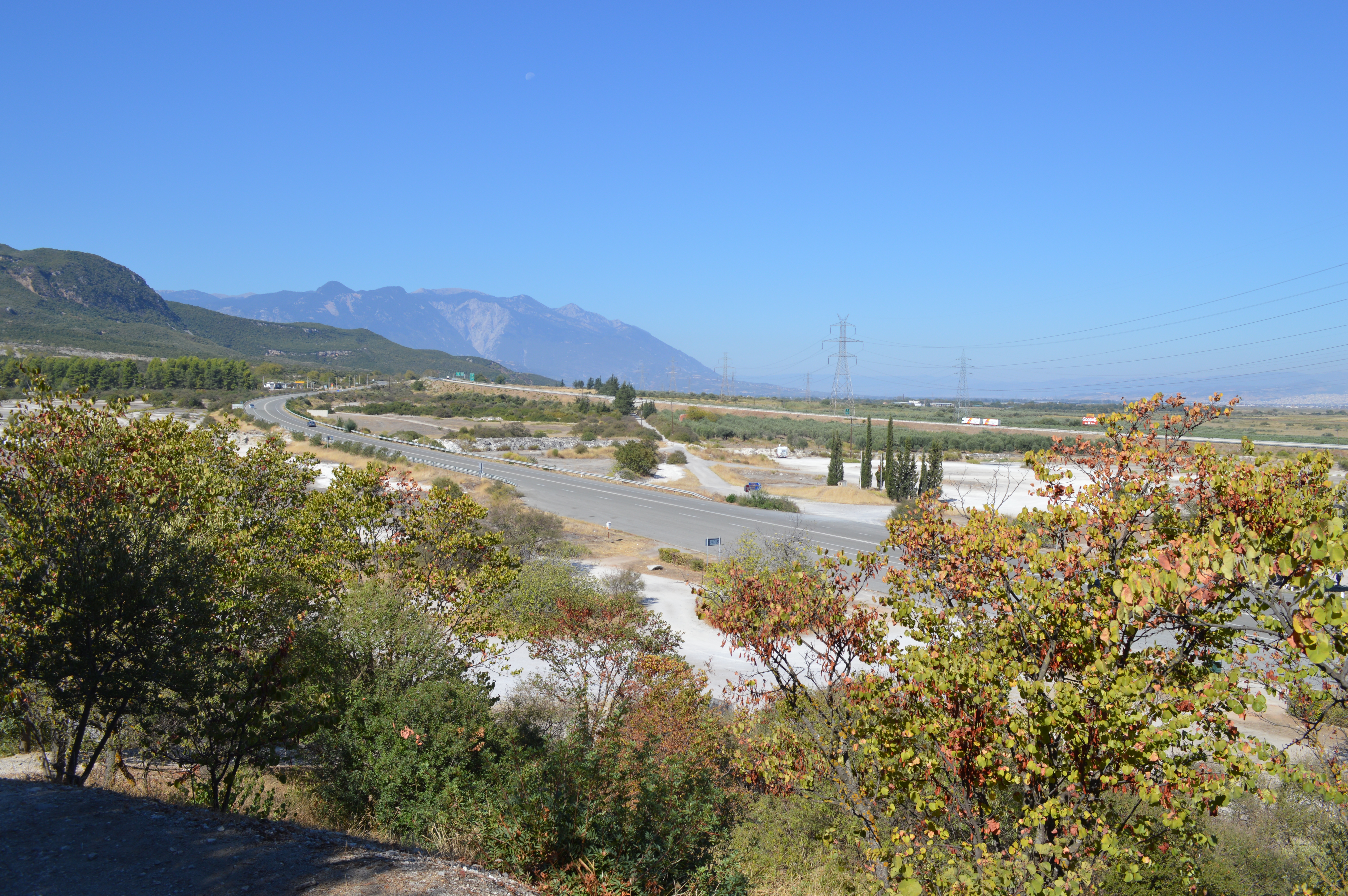 As it is today, looking north from the top of Kolonos Hill, where the Greeks made their last stand. The Persians came from this direction.
The name Thermopylae is translated as “Hot Gates.” It refers to the hot sulfur springs in that area (hence thermo in the name). However, what Thermopylae is most known for is the battle that took place there in 480 BC, involving the 300 Spartans. This battle and that spot are as dear to me as my other passion- the Alamo.
Today, Thermopylae appears very different from its appearance in 480 BCE, as river silt has shifted the coastline by four to five miles. To best understand what happened there almost 2,500 years ago, picture Thermopylae in 480 BC as a pass between the sheer mountain cliffs on the west side and the sea on the right, less than 300 feet wide. At the time, this passage was the only direct route into the Greek heartland from Asia Minor. The Persian King Xerxes, the son of Darius, who attempted to conquer Greece and was defeated at the Battle of Marathon (from which the name of the 26.2-mile race is derived) in 490 BCE, sought to achieve what his father had failed to do: conquer Greece. Xerxes amassed one of the largest armies of that day. Herodotus, the world’s first historian, wrote that the army had over 1 million men. However, some believe a few zeros could have been added during the translation. The most logical number would be closer to 100,000, which is still massive. The Greeks were unprepared for such a large-scale invasion and needed time. The theories for this lack of preparedness ranged from religious festivals to the Olympics, which kept the Greeks from manning a defense. Whatever the reason, they weren’t ready.
Leonidas, the King of Sparta, was put in charge of the defense, taking his 300 personal Spartan guard along with those that he could muster from other city-states. He marched off to meet the Persians. The Greek army numbered around 7,000, against 100,000 – good odds for the Greeks.
Here comes Xerxes with his great army, and there in front stands these pitiful few Greeks. Feeling compassionate, Xerxes offers Leonidas a way out: lay down your arms, and you can live. Leonidas sends back the famous answer- “Come and take them!’ One of the other famous sayings of that battle that I like is that when told that the Persian archers’ arrows would be so thick that they’d block out the sun, the Greeks responded, “Good, then we can fight in the shade.” For two days, Xerxes attacked, and for two days, the Greeks threw them back. The Persians lost thousands of men, and the Greeks lost only a few. Then fate stepped in, a local Greek sold out his countrymen, telling Xerxes that there was a goat path over the mountain and behind the Greek forces. Sending his best men over that path, Xerxes planned on outflanking Leonidas’ men.
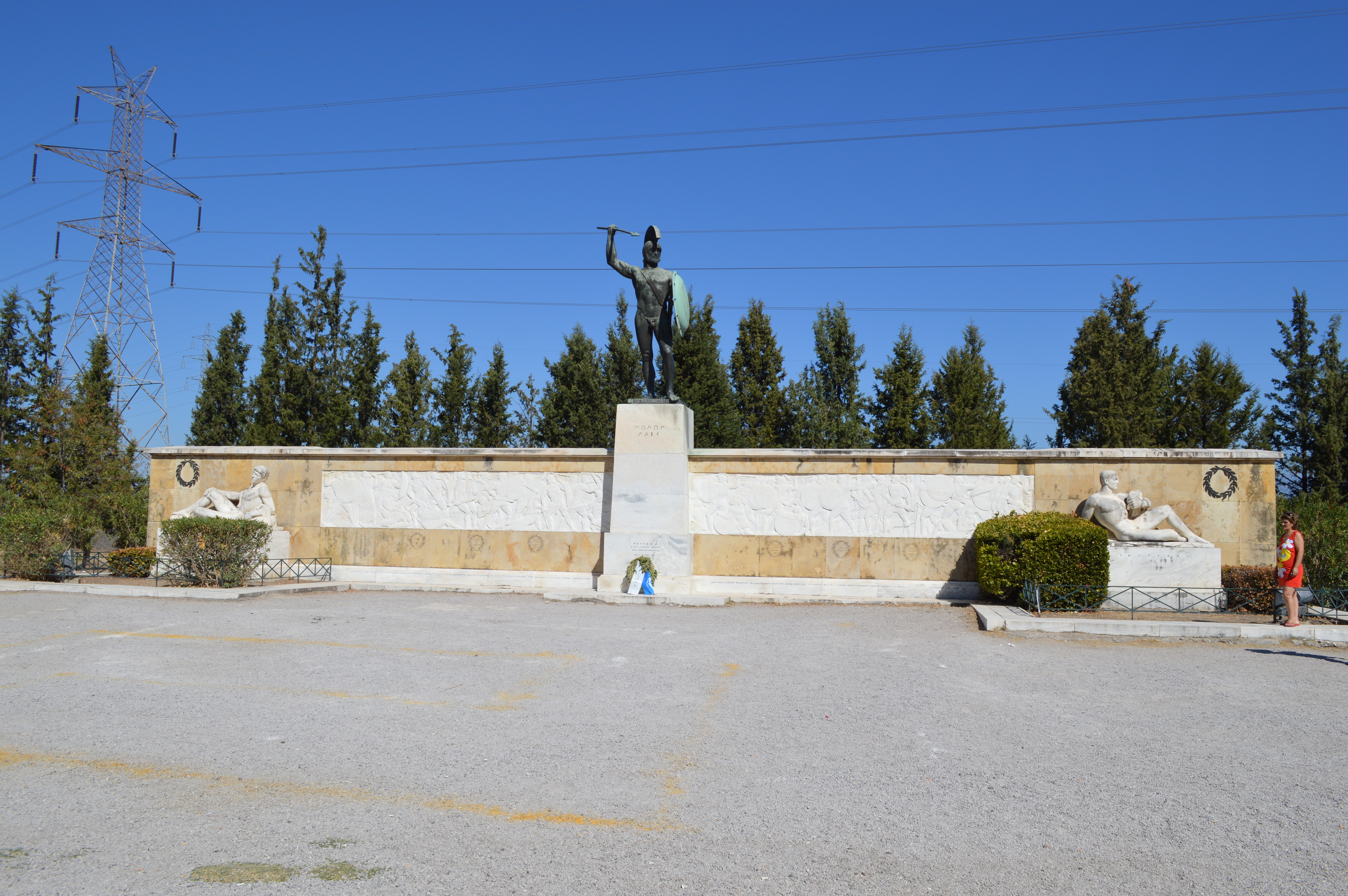 Leonidas Statue and Memorial to the 300 Spartans
Leonidas heard of the attacking force and, knowing that defeat and death were a sure thing, sent his support Greeks back, planning to use his 300 Spartans and their helots, along with the 400 Thebans, as the rearguard. Then another heroic thing happened that is often overlooked or overshadowed by the legend of the 300 Spartans- General Demophilus and his 700 Thespians refused to leave, choosing to die with their fellow Greeks. From two sides, the Persians attacked, with the Greeks fighting to the last man. These three days allowed the Greek city-states to get organized and defeat Xerxes at the sea battle of Salamis.
Today, at Thermopylae stands a monument to Leonidas and his 300 Spartans, which is situated where the shoreline was at the time of the battle. Next to the Spartans’ monument is a newer monument, dedicated to the Thespians who stood with the Spartans.
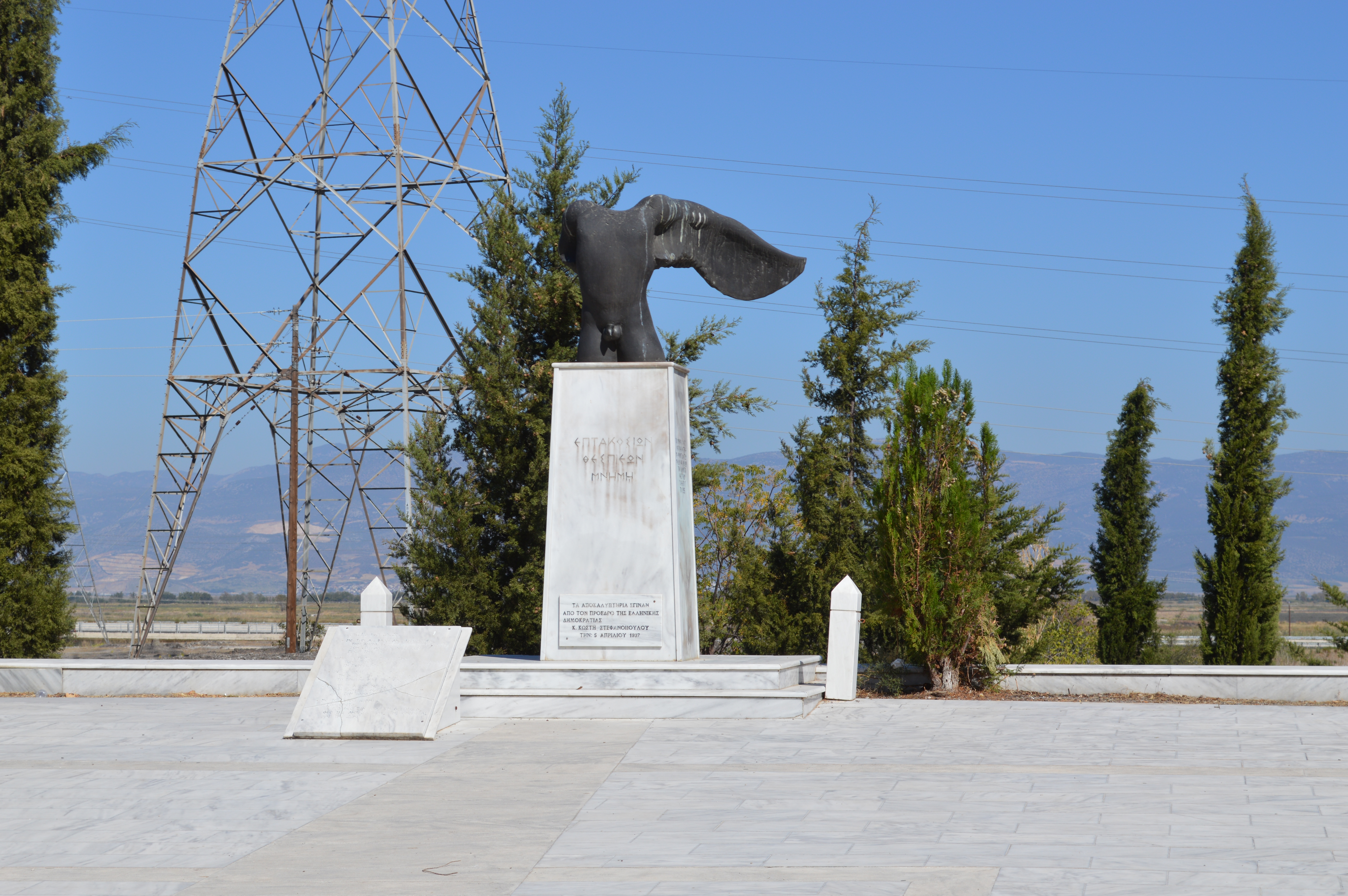 The newer memorial to the Thespians is near that of the Spartans
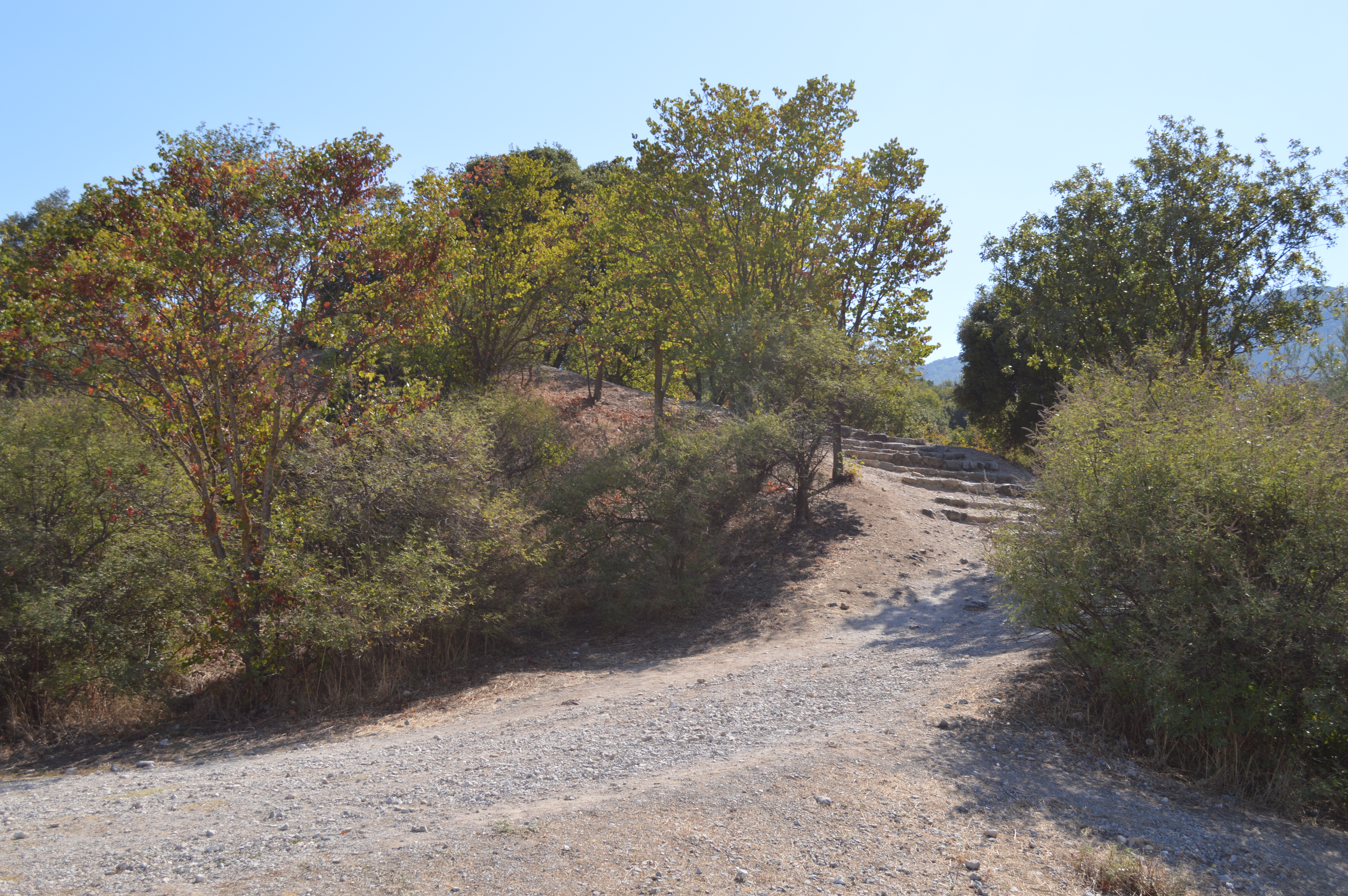 . The trail to the top of Kolonos Hill, across the road from the monuments
For me, walking (I ran) across the road and climbing to the top of Kolonos Hill, where the Spartans and Thebans made their last stand, was a major highlight of the whole trip. At the top is a reconstruction of the first memorial to the Spartans. Engraved on it in Greek are the famous words of the Greek poet Simonides of Ceos: “Tell them in Lacedaemon (Sparta), passer-by, That here, obedient to their word, we lie.”
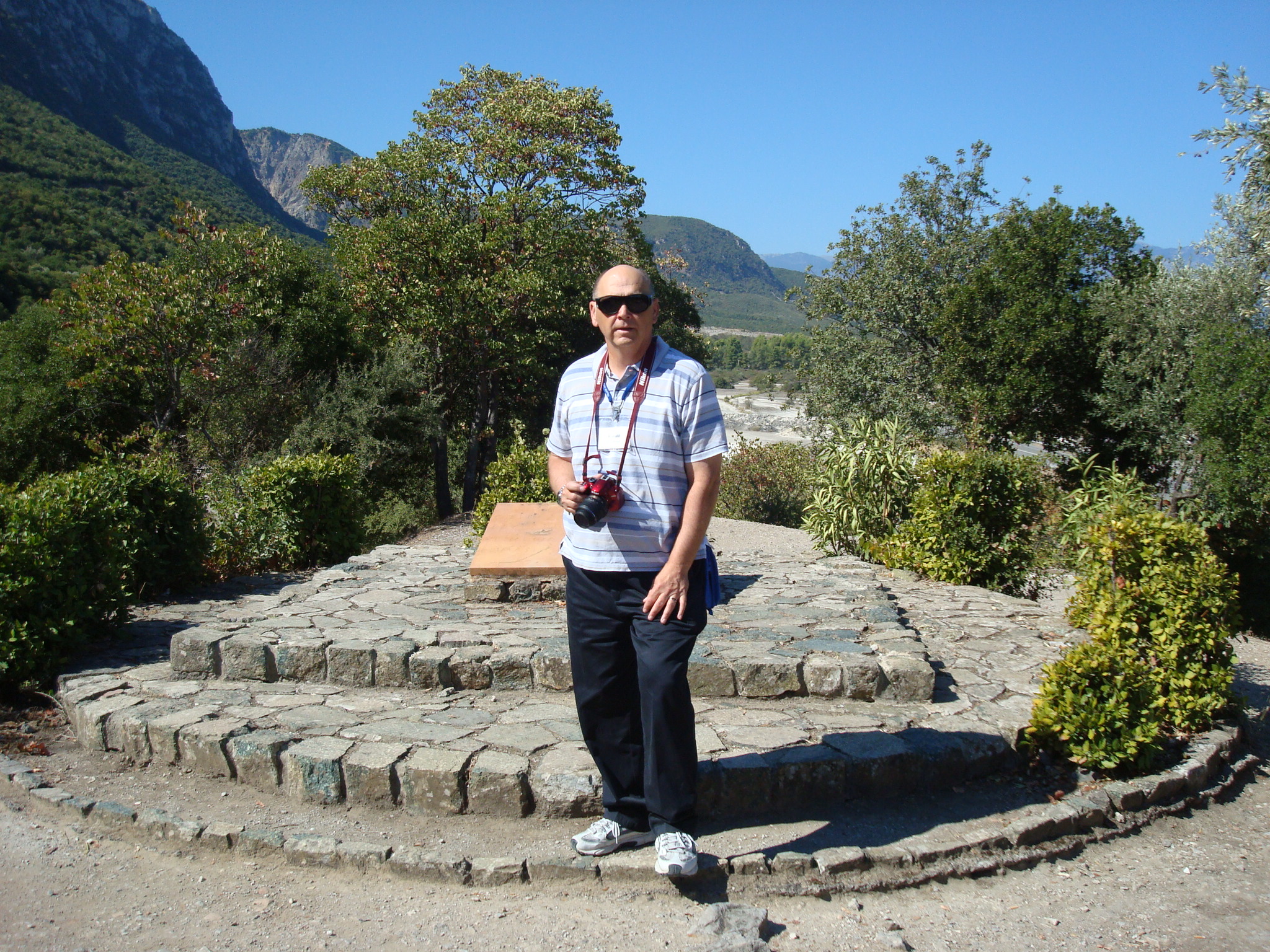 Standing on top of the Last Stand Mound by the memorial.
 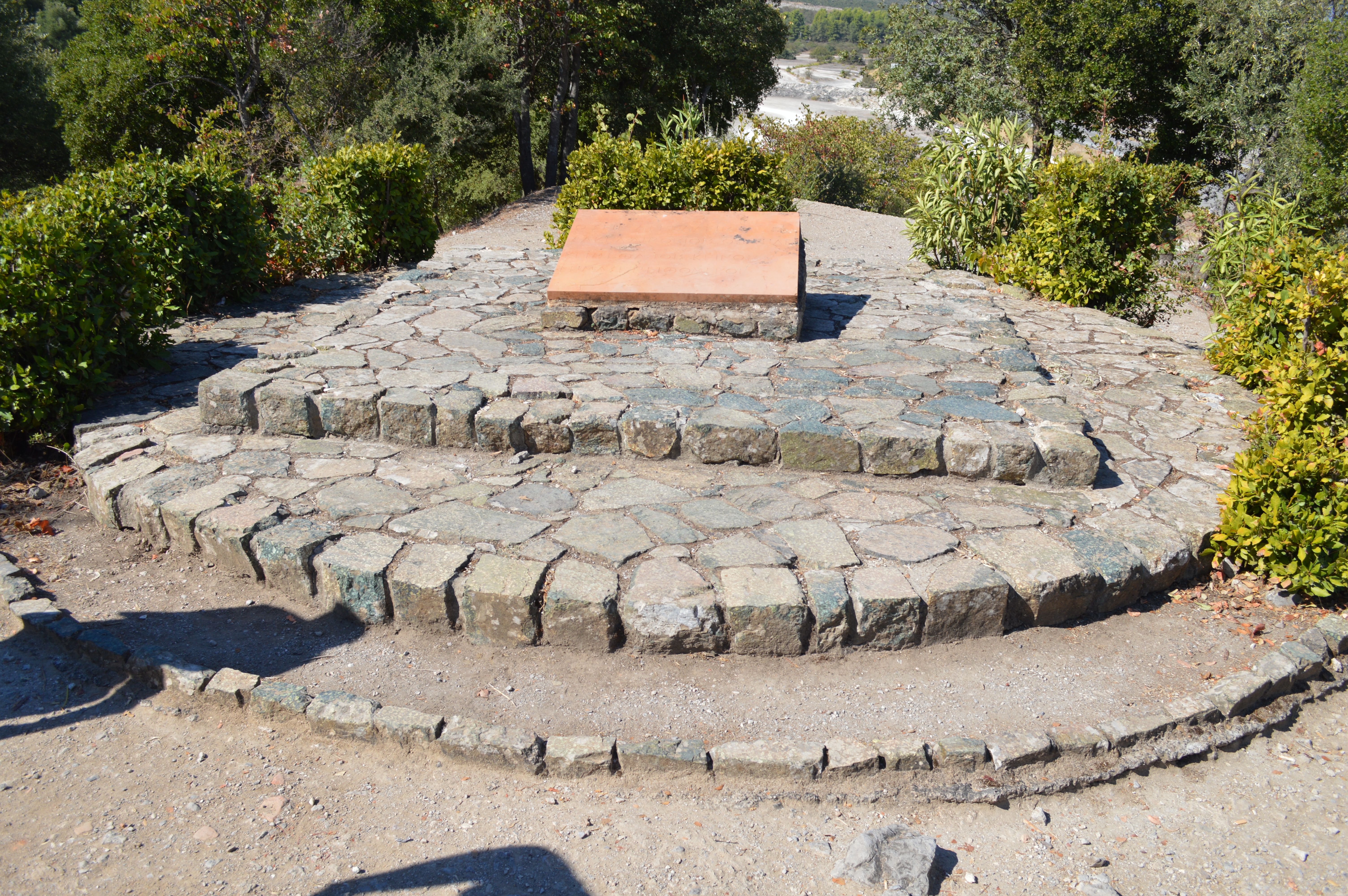 “Tell them in Lacedaemon, passer-by, That here, obedient to their word, we lie.” The memorial atop the Last Stand Mound.
A few days later, after leaving Kallabaka and Meteora, we again came close to the Thermopylae battle site. Before Thermopylae, we turned off the main road as we made our way to Delphi. Looking out the bus’s window at the battlefield below, it came to me that this road we were taking over the mountain could have been the goat path used by the Persians in 480 BCE to outflank the Greeks.
Next: Parallels of History: Thermopylae and the Alamo
 Still Current
Wow you are like a history lesson. Obviously you were not there just for the weather and blue water
LikeLike